
We've just returned from a bucket list trip to the Galapagos Islands, where we enjoyed an exciting 5-night expedition cruise on the Ecogalaxy Catamaran. Here's everything you need to know before you book your own Galapagos cruise!
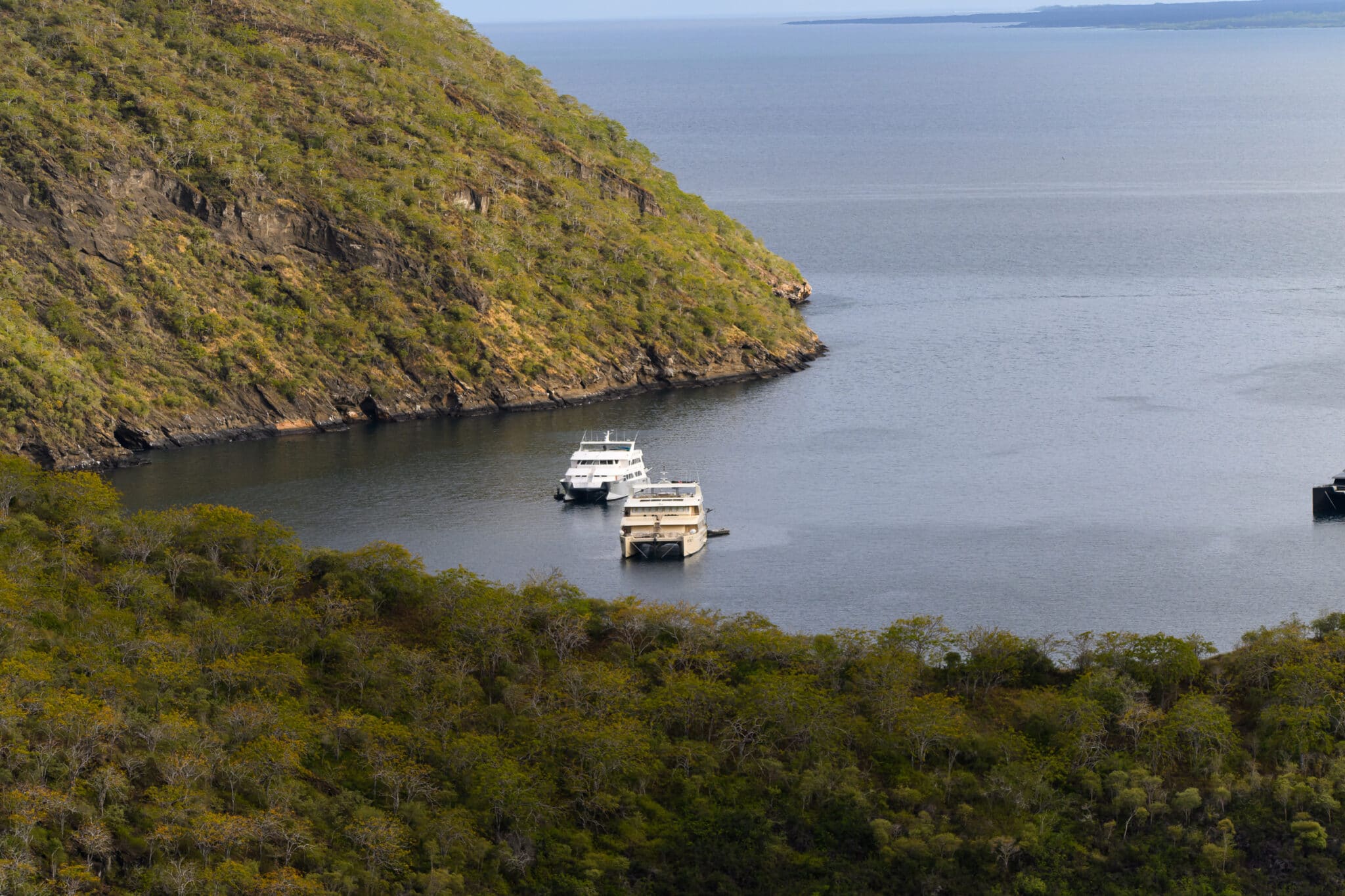
This Galapagos cruise has been on my wish list for literally decades, so you can say I've had a little time to plan for it. In fact, I'm pretty sure I looked at every single cruise ship and itinerary available as I planned our trip.
So... this is a long post. In fact, it's quite possible it's the longest and most thorough Galapagos cruise review you'll find on the internet. And I hope it's the most helpful! I've done my best to cover everything you need to know to plan your own trip.
Who are we?
I always like to start off my reviews by sharing a little about us, so you know what type of travelers we are. We are a family of three, travelling with an 11-year old child. So this review is coming from the perspective of a family traveling with kids. Although, I think it will be helpful for anyone considering a Galapagos cruise or the Ecogalaxy in particular.
I should also mention that we are from Florida. So while we are not expert snorkelers or divers, we are very comfortable in and around the water. As for fitness level, we workout a few times a week but aren't any kind of athletes. My son is a very athletic multi-sport kid, so his fitness level is quite high for an 11-year old. I hope that helps you gauge the difficulty level of activities as I share our experience. This is a very active trip!
Getting to Ecuador
First things first - you need to get yourself to Ecuador in order to start making your way to the Galapagos Islands. From your home country, you will need to fly into either Quito or Guayaquil, and catch a flight to the Galapagos from there. I strongly recommended that you fly into Ecuador at least 24 hours before you are scheduled to fly to the Galapagos, in case of any interruptions to your flight schedule.
I also strongly recommend choosing to fly into Quito if you have the option, as it's an interesting spot to spend some time and is also considerably safer for travelers than Guayaquil. It's worth spending a few nights to see the city of Quito if you have the time.
We opted to fly into Quito and stay for a few nights to explore the city before heading off to the islands.
Flying to Galapagos (from the mainland)
Once you arrive in either Quito or Guayaquil, you will need to catch another flight over to the Galápagos Islands. These flights nearly all depart in the morning hours, so you will need to be in your departure city at least the night prior to your flight.
Note that if you fly from Quito, there is a good chance your flight will have a stopover in Guayaquil anyway. This is typically a short stop where you remain on the plane while they refuel and add additional passengers.
There are two possible airports for arriving into the Galapagos - Baltra and San Cristobal. Baltra is the primary airport, handling over two thirds of the flights, giving you access to the major island of Santa Cruz.
You will need to take care of two things before boarding your flight to the Galapagos - a special baggage inspection and purchasing your TCT card. There are more details on both of these things in my Galapagos Logistics article.
Galaxy Cruises (the operator of Ecogalaxy) had a representative, Alejandro, meet us at Quito airport to help with these extra steps. He had already secured the TCT cards for us and our boarding passes, which allowed us to skip that long line. He also walked us to the agricultural inspection and made sure we got our bags through without any issue.
Arrival in Galapagos!
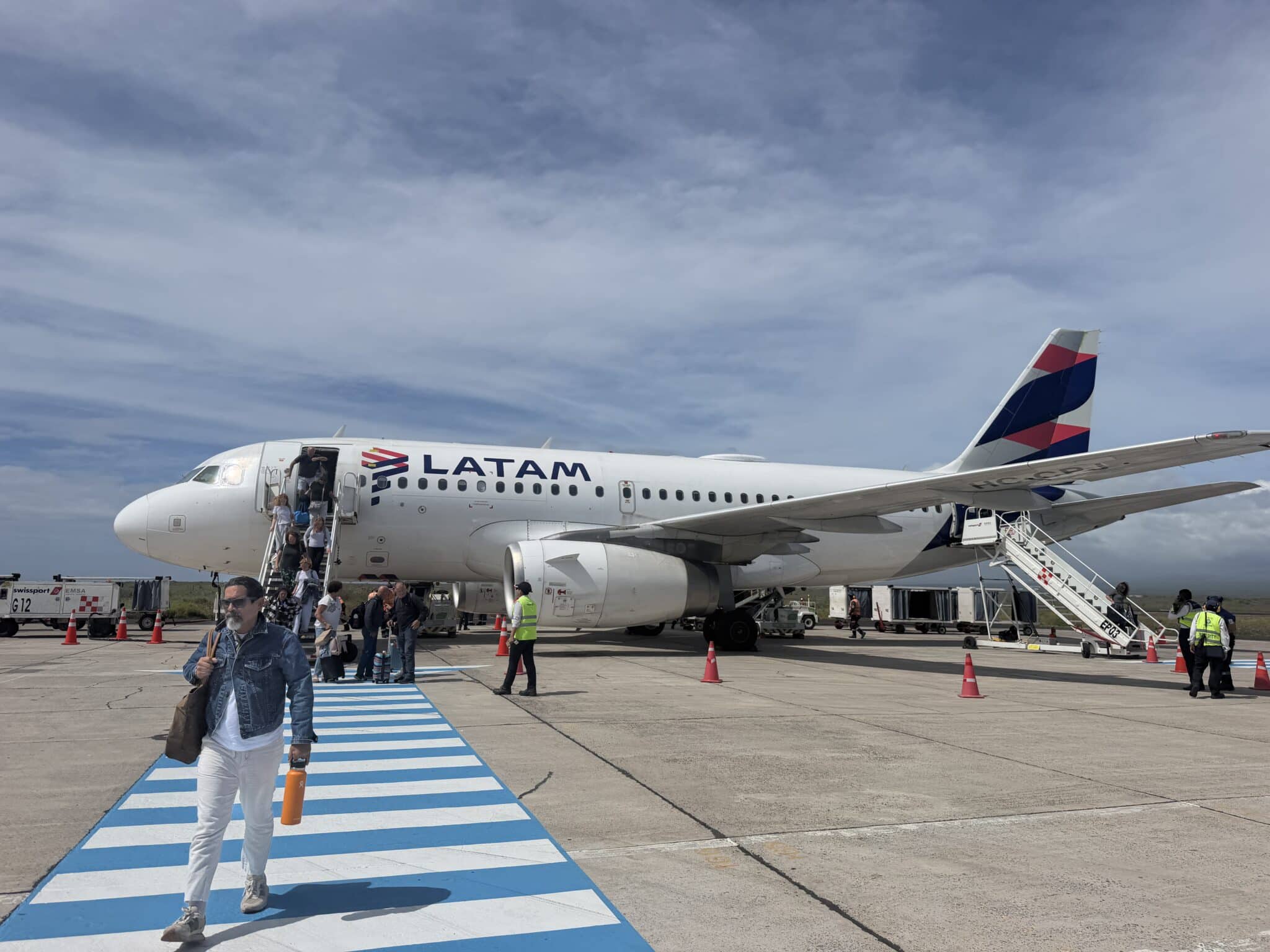
We arrived in Baltra Airport, which you'll find is a very small operation. We deplaned directly onto the tarmac and made our way into the building. You are first met with an immigration queue. Here you will need to show those TCT cards and pay your Galapagos National Park entry fee, which is $200 per person. ($100 for children.)
The park entry fee had already been pre-paid for us as part of our cruise fare. We were instructed to let the staff know upon arrival, and they looked up our names on a list to verify.
Next, we moved on to retrieve our luggage. But first, they lay out all of the bags to be sniffed by a dog, which is looking for any disallowed agricultural products. Note that it is fine to bring packaged snacks and such, just not fresh foods like fruits, meat, or dairy.
Once we picked up our bags, we headed to the bus. That took us to the ferry crossing, which took us across the Itabaca channel, to the island of Santa Cruz. From here, we caught a taxi into the town of Puerto Ayora.
Pro tip
Should you have the cruise arrange your flights?
If you are joining a cruise, you will have the option of having the cruise operator arrange the Galapagos flights for you. I highly recommend doing this as they will ensure you make it to your cruise and will wait for you in the event of any travel snafus. As I've mentioned above, the cruise operator pre-arranged several things for us, such as prepayment of the park fees and securing TCT cards, as part of booking our flights.
One Night Stay in Puerto Ayora
Now, we had originally planned to fly into Baltra on the day of our cruise departure. In that case, we would have been met by cruise staff at the airport and taken directly to the ship.
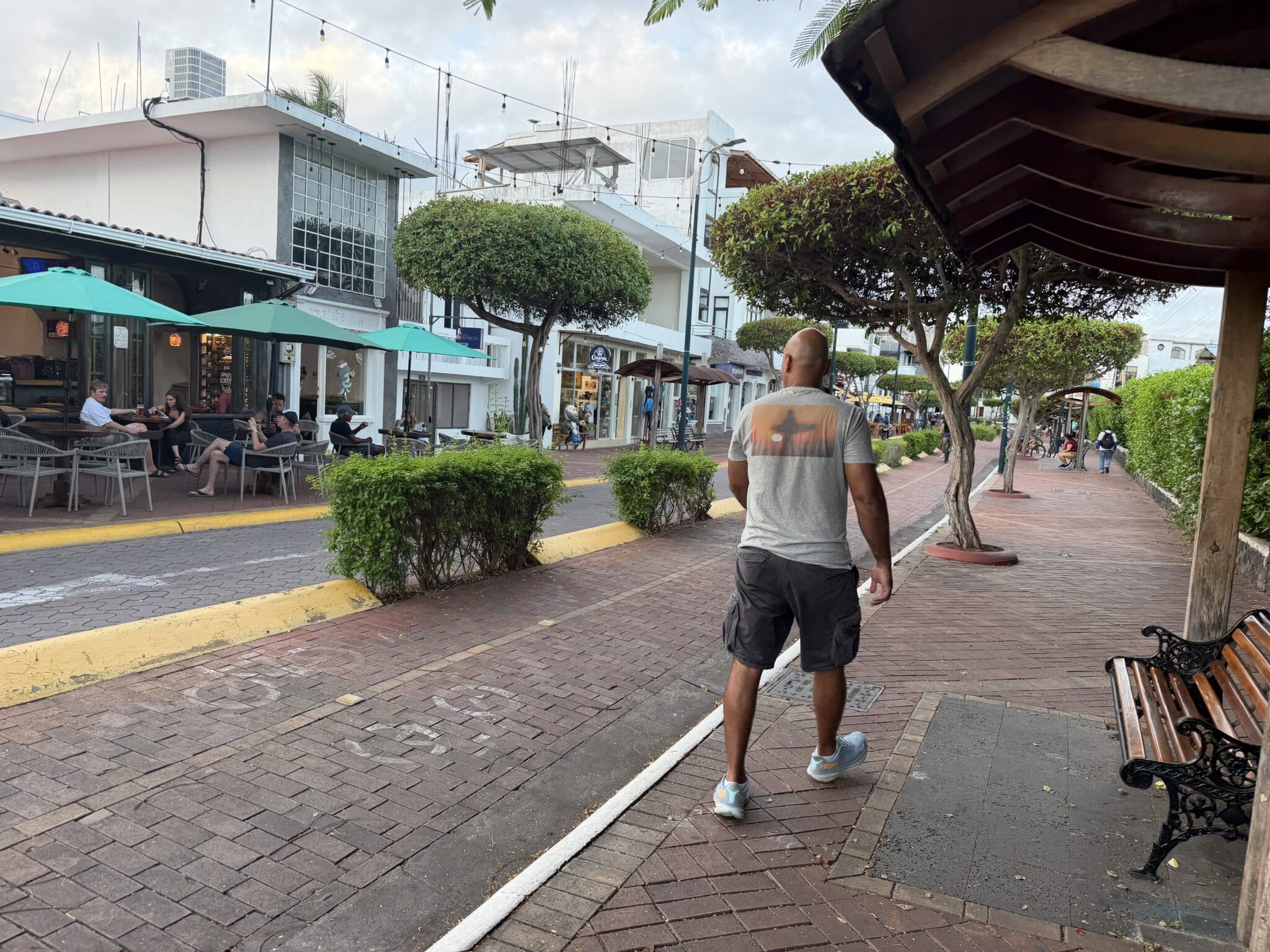
But Quito airport actually had a short shutdown scheduled on the morning of our cruise departure. (You can check the Quito Airport website for any such announcements during your own trip.) So we opted to fly in the day prior and enjoy some time on our own exploring Puerto Ayora, the main town on Santa Cruz island.
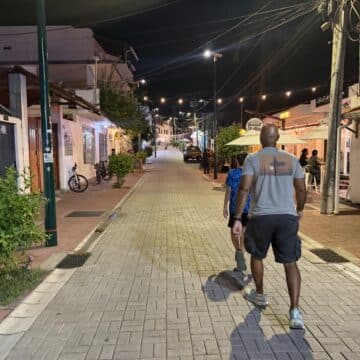
We enjoyed lunch and a bit of downtime by the pool at our hotel, Hotel Ikala. Then we spent some time walking around the downtown shops, looking for sea life by the marina, and enjoying dinner out at a lovely little restaurant.
The Cruise Itinerary - Day by Day
The Ecogalaxy sails three different itineraries that visit different parts of the Galapagos Islands. We specifically chose the one that sails up the western coast of Isabela island. This area is known to be rich in wildlife that isn't easily seen on the other islands, and is only accessible by liveaboard cruise.
Day One - Embarkation and El Chato Tortoise Ranch
After a great breakfast at the rooftop restaurant at Hotel Ikala, we did a little souvenir shopping in town. Then, it was time to meet up with our cruise ship at the main pier in Puerto Ayora, which was just a short walk from our hotel.
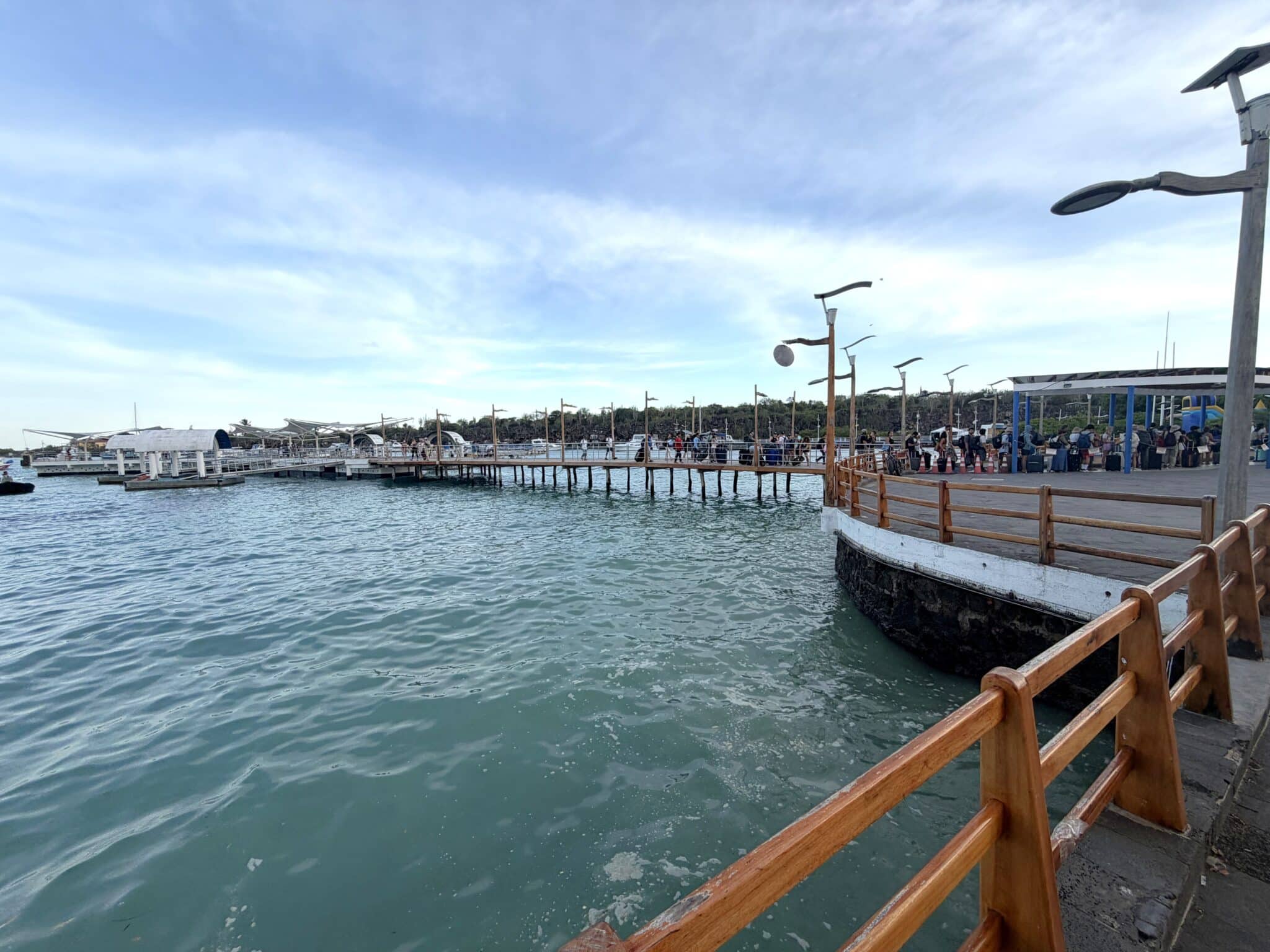
The cruise staff collected us (and our newfound travel companions) from the pier, where they took our luggage and gave us all life jackets for the panga ride to the boat. I guess I was expecting the ship to dock at the pier, but that is not the case. All the cruise ships are reached by panga, an inflatable style motorboat, often referred to as a Zodiac. That was an unexpectedly adventurous start!
I wasn't expecting to go straight to the ship, as I thought we were visiting the tortoise ranch first thing, so I had not taken any seasickness meds yet. And wow - that boat was rocking! So another pro tip - take that Bonine before you head to the dock!
We then had a chance to get settled in our cabins, were very nice and spacious. (All the cabin details and pictures are below in this article.) Then, we had a short briefing with our naturalist guide, explaining about the ship and processes, before being served our first multi course lunch!
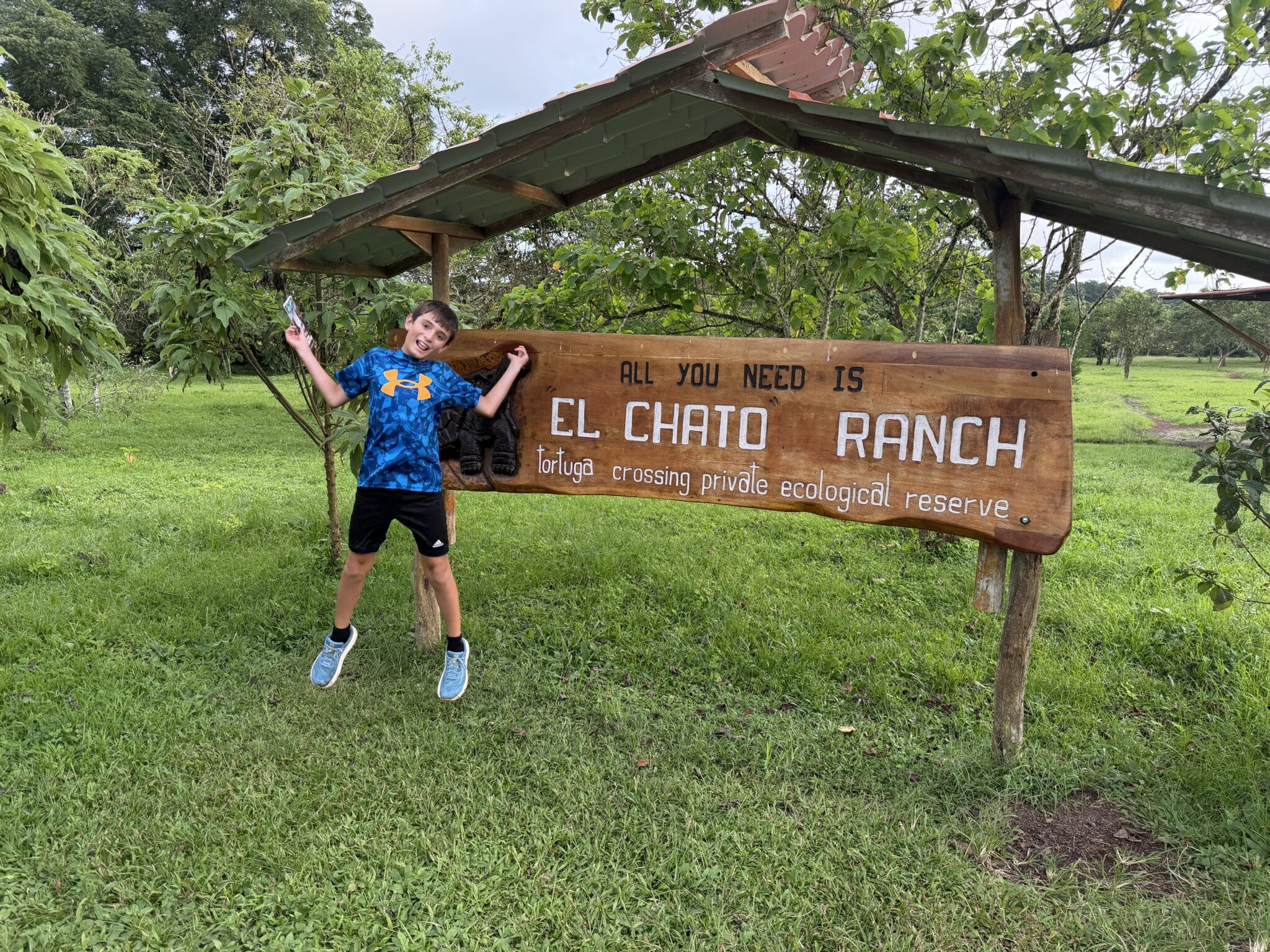
Then we took another panga ride back to the town, where a bus was waiting to drive us all to El Chato Tortoise Ranch. This is a great spot in the Highlands of Santa Cruz, where you can observe the famous Galapagos Giant Tortoises in their natural habitat.
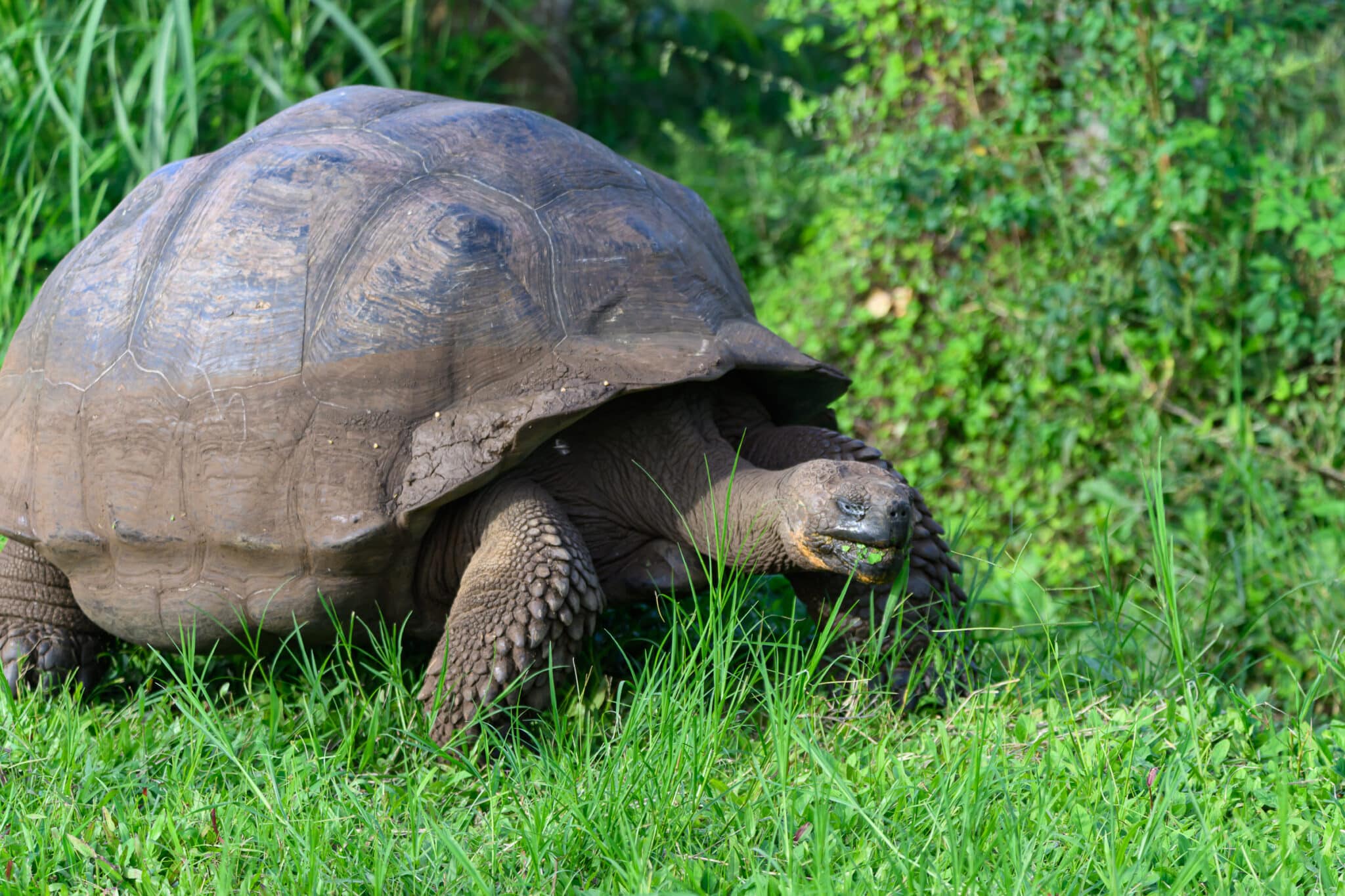
As soon as we arrived, we were greeted by a giant tortoise in the parking lot. He seemed indifferent to the gathering crowd. These guys are just massive! They are the world's largest tortoises and can easily weigh over 600 pounds. They are also an endangered species and are very carefully protected throughout the islands.
If you have more time to spend on Santa Cruz, another great place to view them is at the Charles Darwin Research Station in Puerto Ayora.
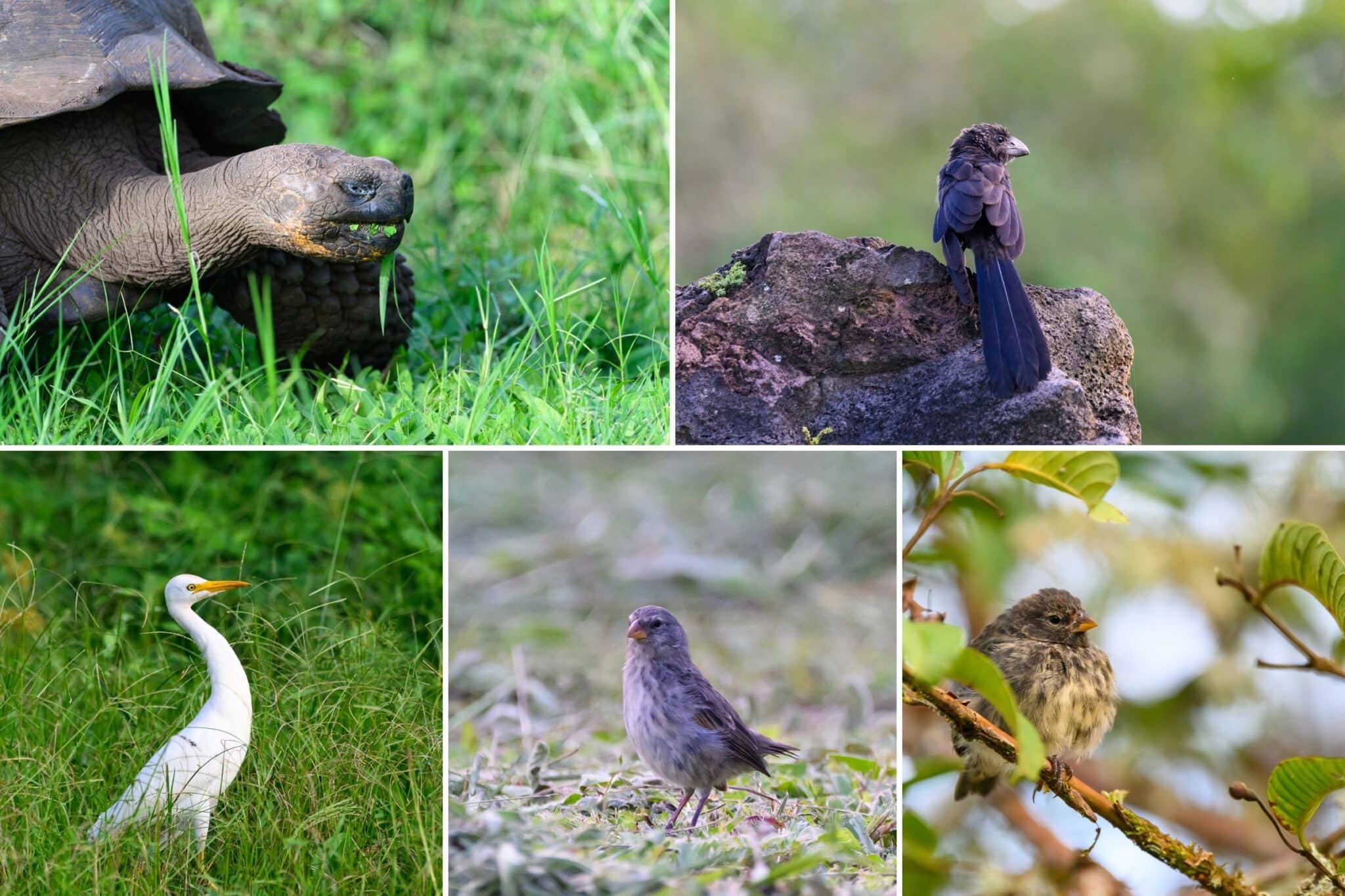
Then we walked the grounds of El Chato with our naturalist guide, Jorge, where he talked to use about the tortoises, as well as the various types of birds that we saw along the way. There were many of the famous Galapagos Finches that played a pivotal role in Charles Darwin's theory of evolution too.
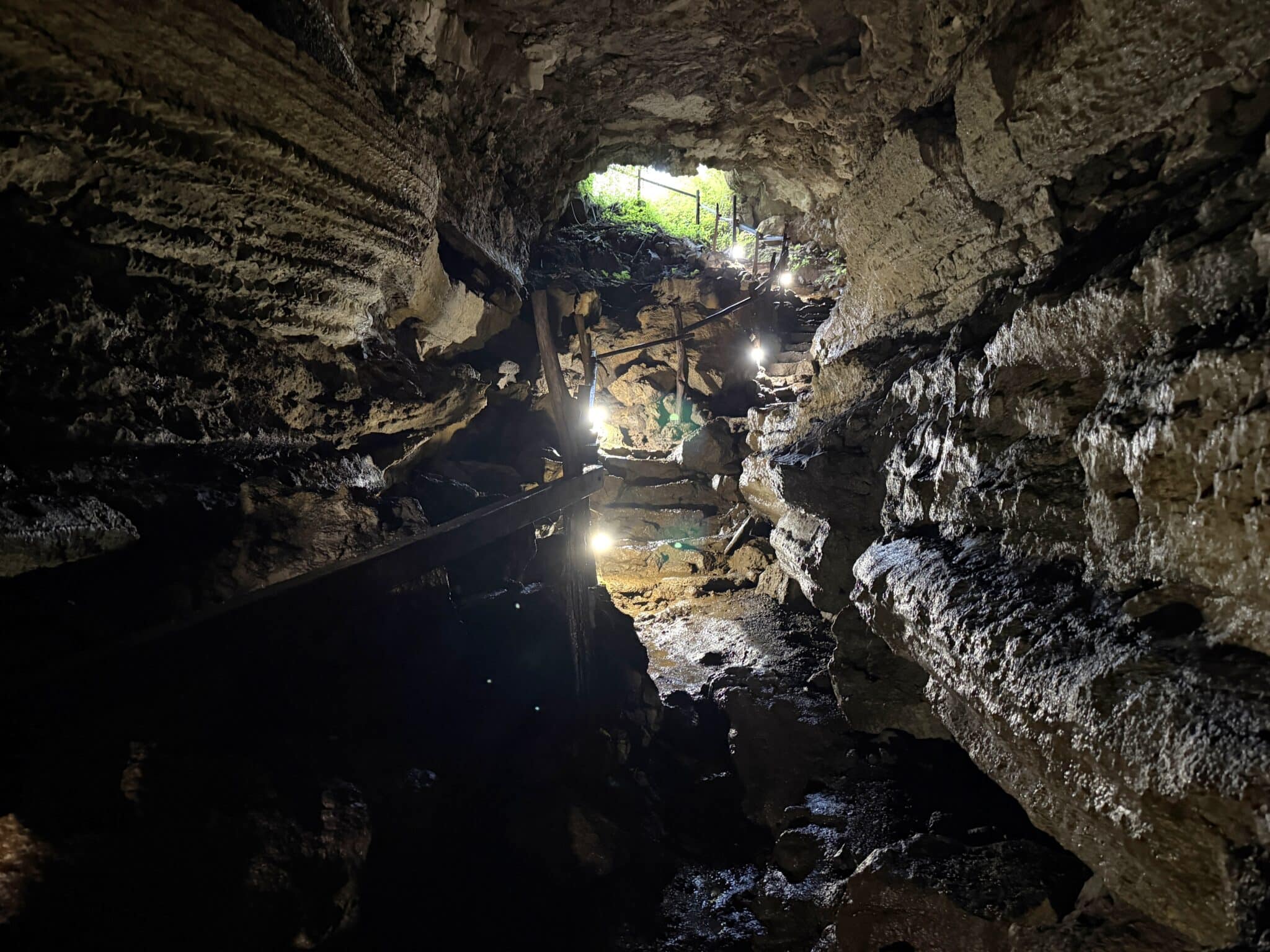
We also had a chance to walk through a lava tunnel, and learn about how it was formed. While small, this tunnel was actually much better than then the one we saw at Volcano National Park in Hawaii. Thanks to a bit of lighting, you could actually see all the features inside the tunnel.
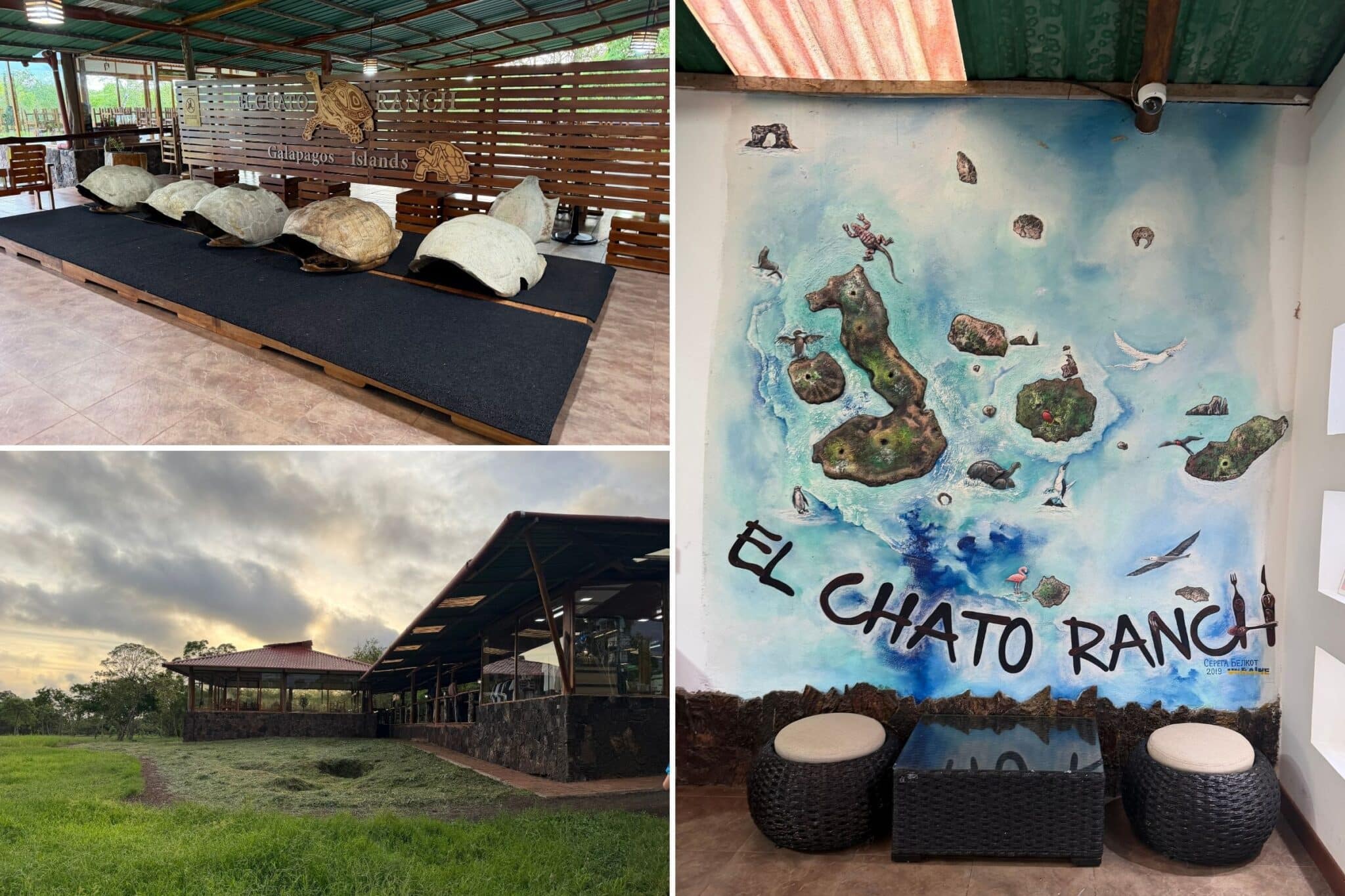
At the end of the visit, we took a short break at the cafe. You can get snacks and drinks here or check out the gift shop. They also had this neat display of tortoise shells, where you can get a closer look at just how big these tortoises actually are.
Then we headed back to the ship for a five course dinner, and a briefing on our agenda for the next day. Each evening we had a short briefing before dinner, where the guide would explain our activities for the next day and let us know the best way to dress, ideal footwear, and what should we bring along. More on all that later!
Day Two - Punta Moreno and Elizabeth Bay
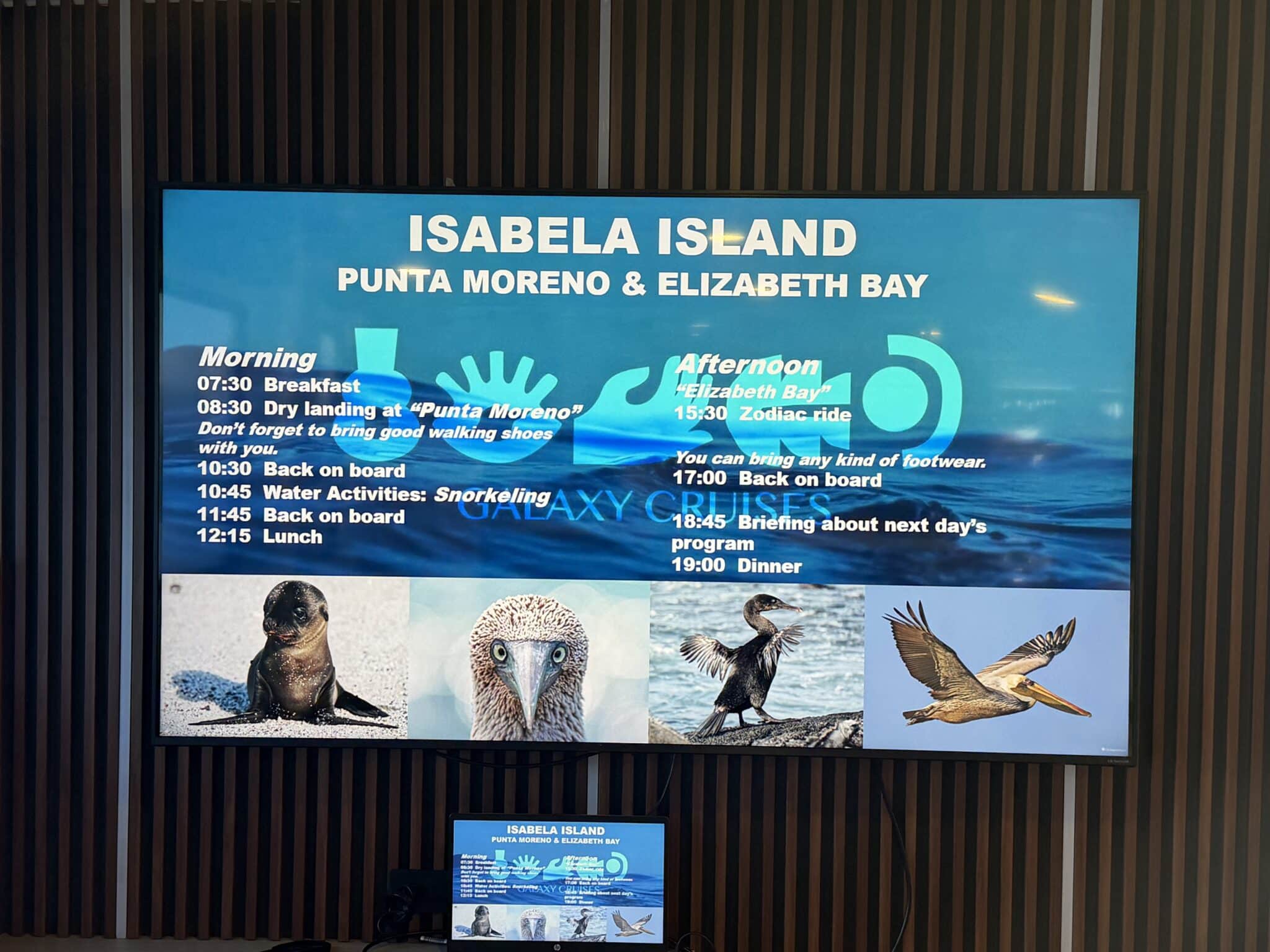
We started off the day with a hike over the lava rocks at Punta Moreno. We took a panga ride from the ship to the shoreline, where we had a dry landing. This means that we were exiting the panga onto dry ground. And that's good, because we really needed our hiking shoes here!
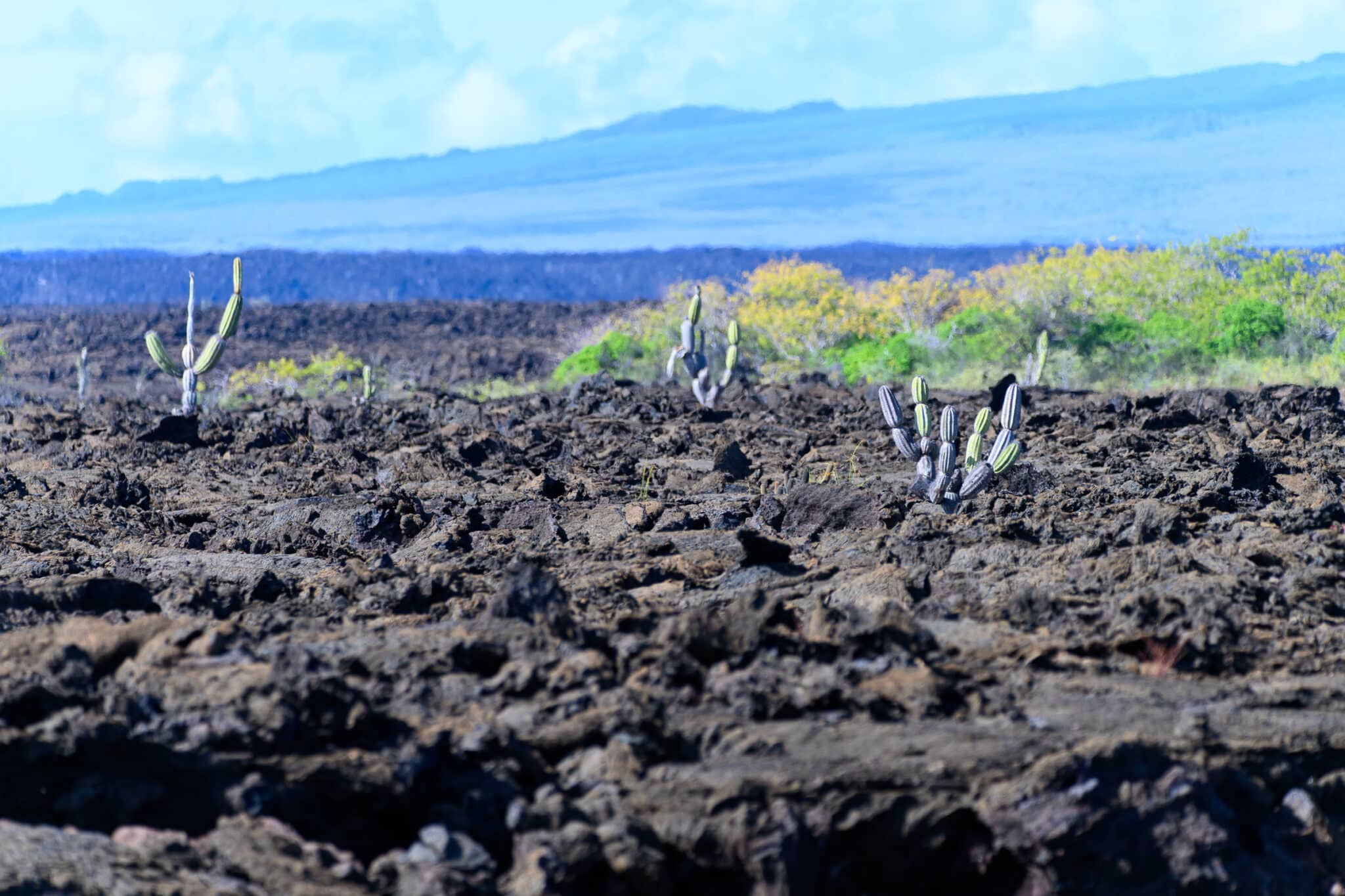
The landscape at Punta Moreno is otherworldly - it almost feels like hiking on the moon. The hike itself was not challenging, as it's more of a slow paced walk. But the footing was very rocky and some folks did need to use walking sticks (which the ship provided) or get a hand from fellow passengers. See how rocky that ground is? That's what you're hiking on!
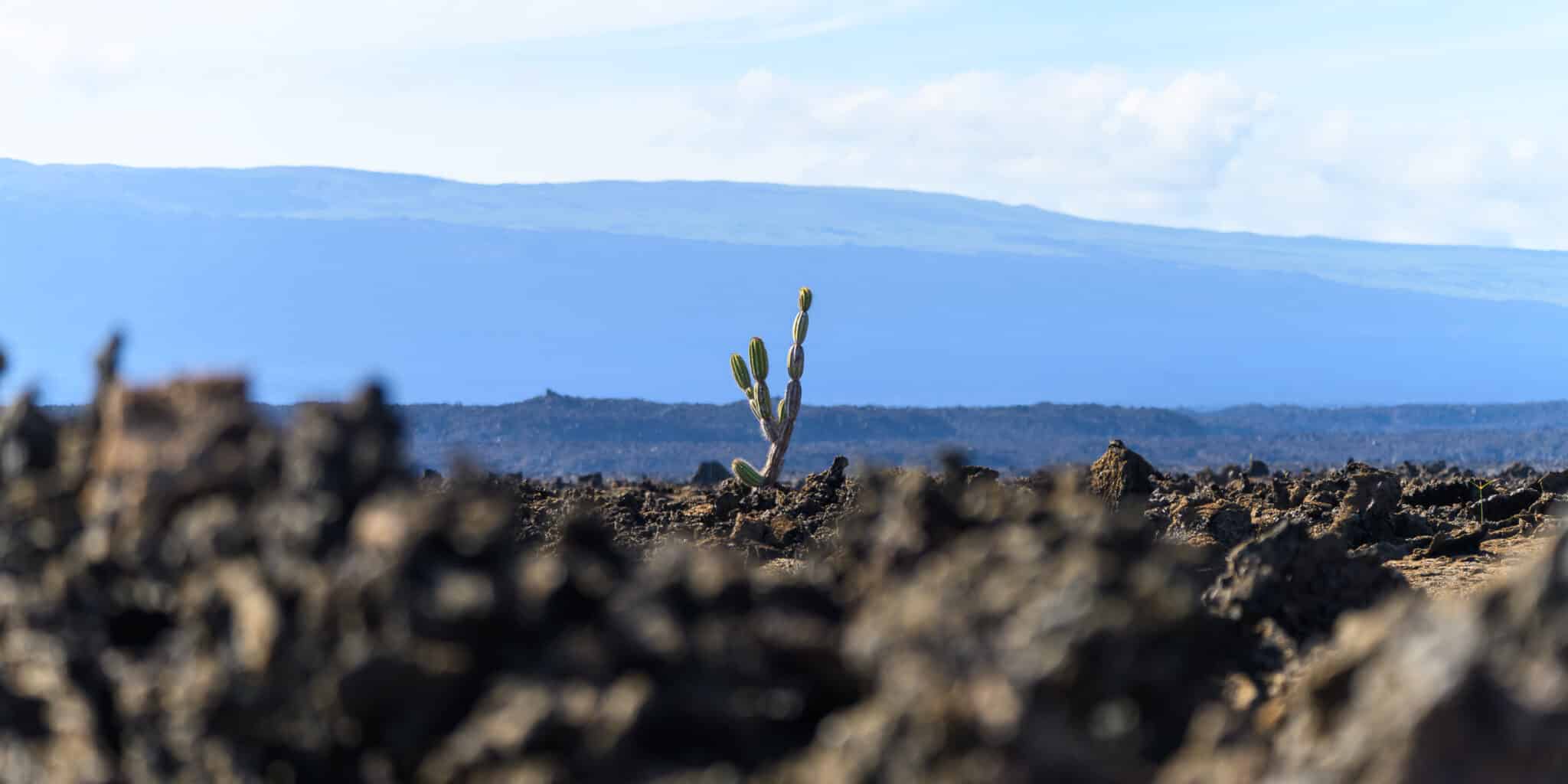
Jorge pointed out the many interesting features here, such as the unique cactuses and ferns that have managed to grow in such a hostile environment. As they say in Jurassic Park - life finds a way!
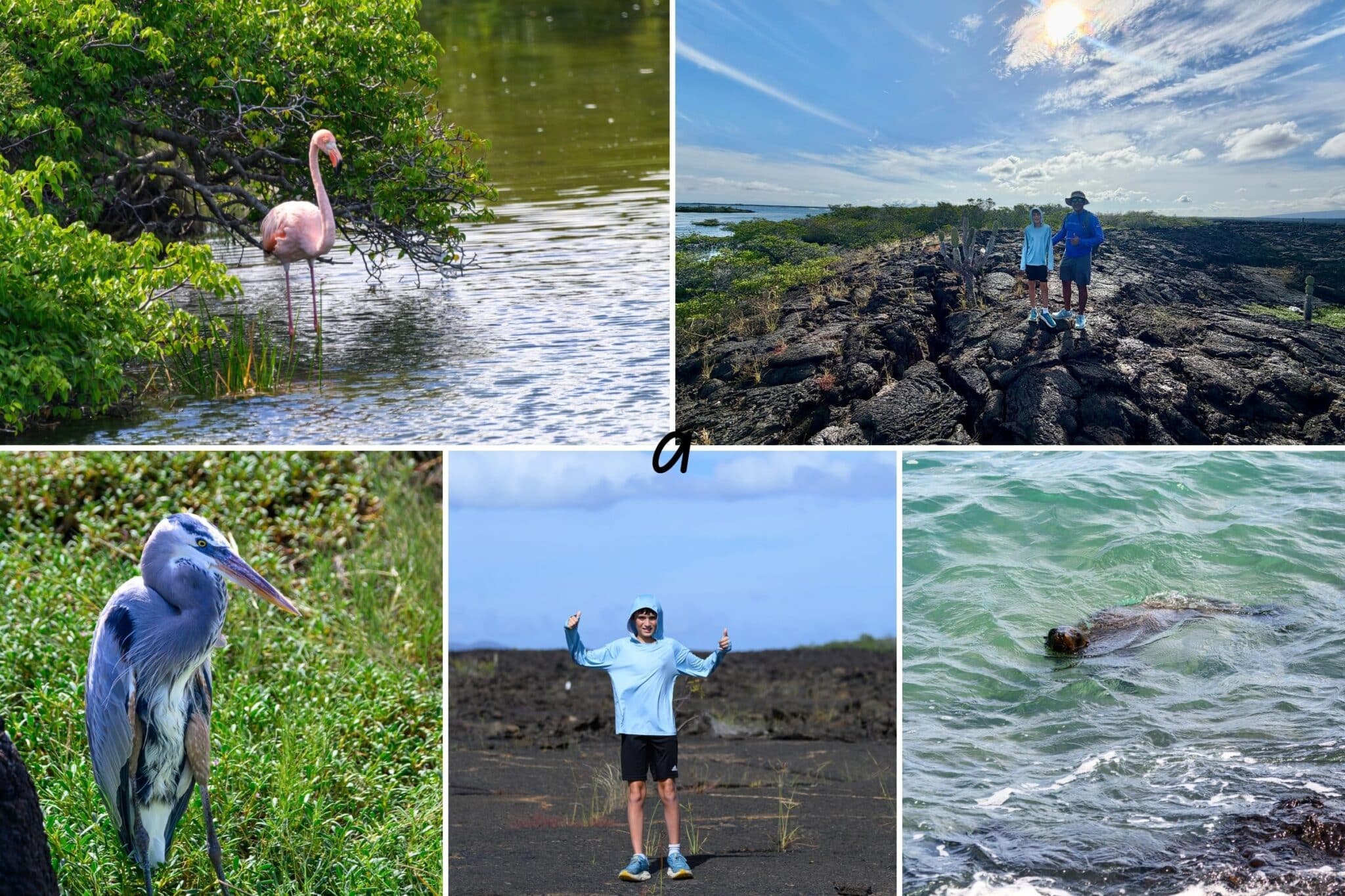
We saw a flamingo and a beautiful Blue Heron along the hike. And when we reached the end, we enjoyed watching a playful sea lion and several rays splashing in the water. We even spotted some small sharks!
Next, we had snorkeling on the agenda. We returned to the ship and changed into our snorkeling gear, then loaded up into the panga again. But the water was extremely rough. We did snorkel for a short time, but we all turned back pretty quickly. Between the rough waves and the poor visibility, it just wasn't a good day to snorkel. So that was a bust.
Lunch was another five course feast... and while we were enjoying lunch and a short rest, the ship moved on to our second location for the day, Elizabeth Bay!
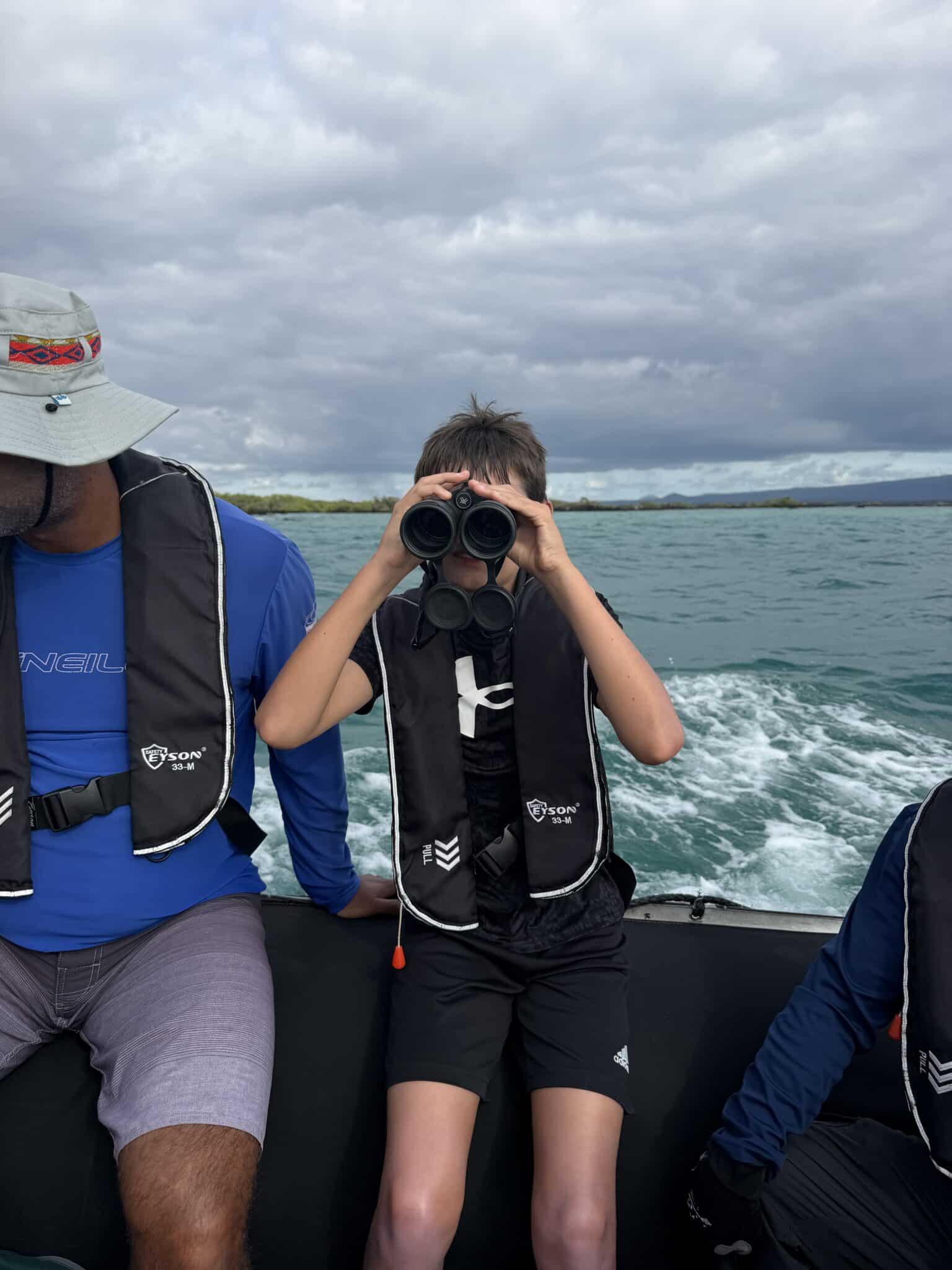
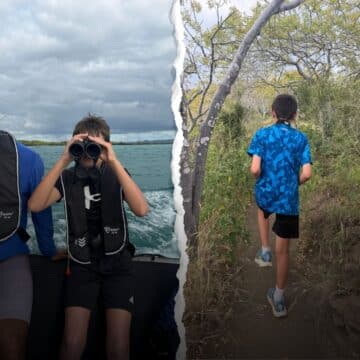
And Elizabeth Bay made up for our rough snorkeling by delivering a whole mess of wildlife! Here we took a panga ride through the mangroves. That's my son above, all geared up with his life vest and binoculars.
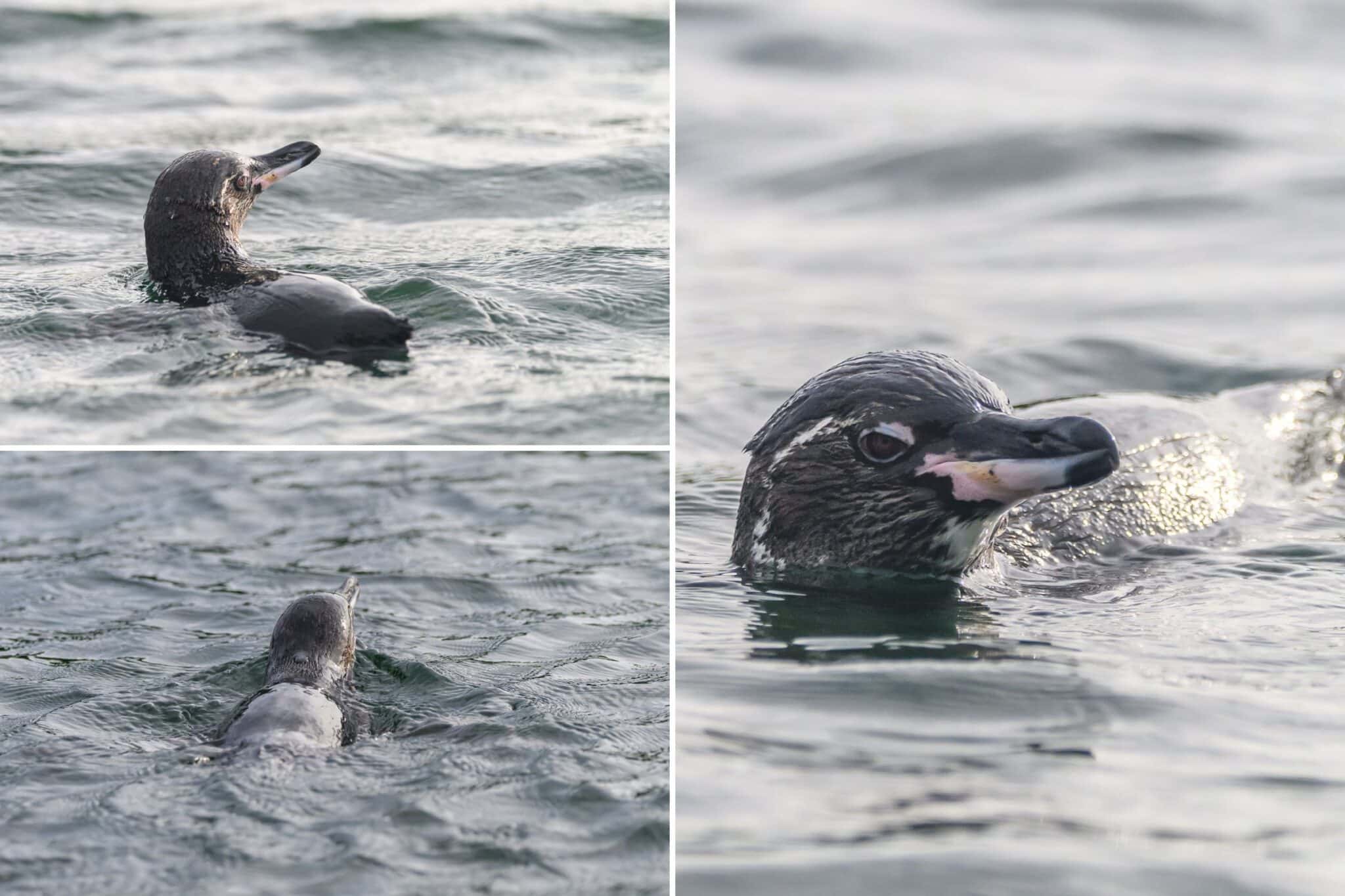
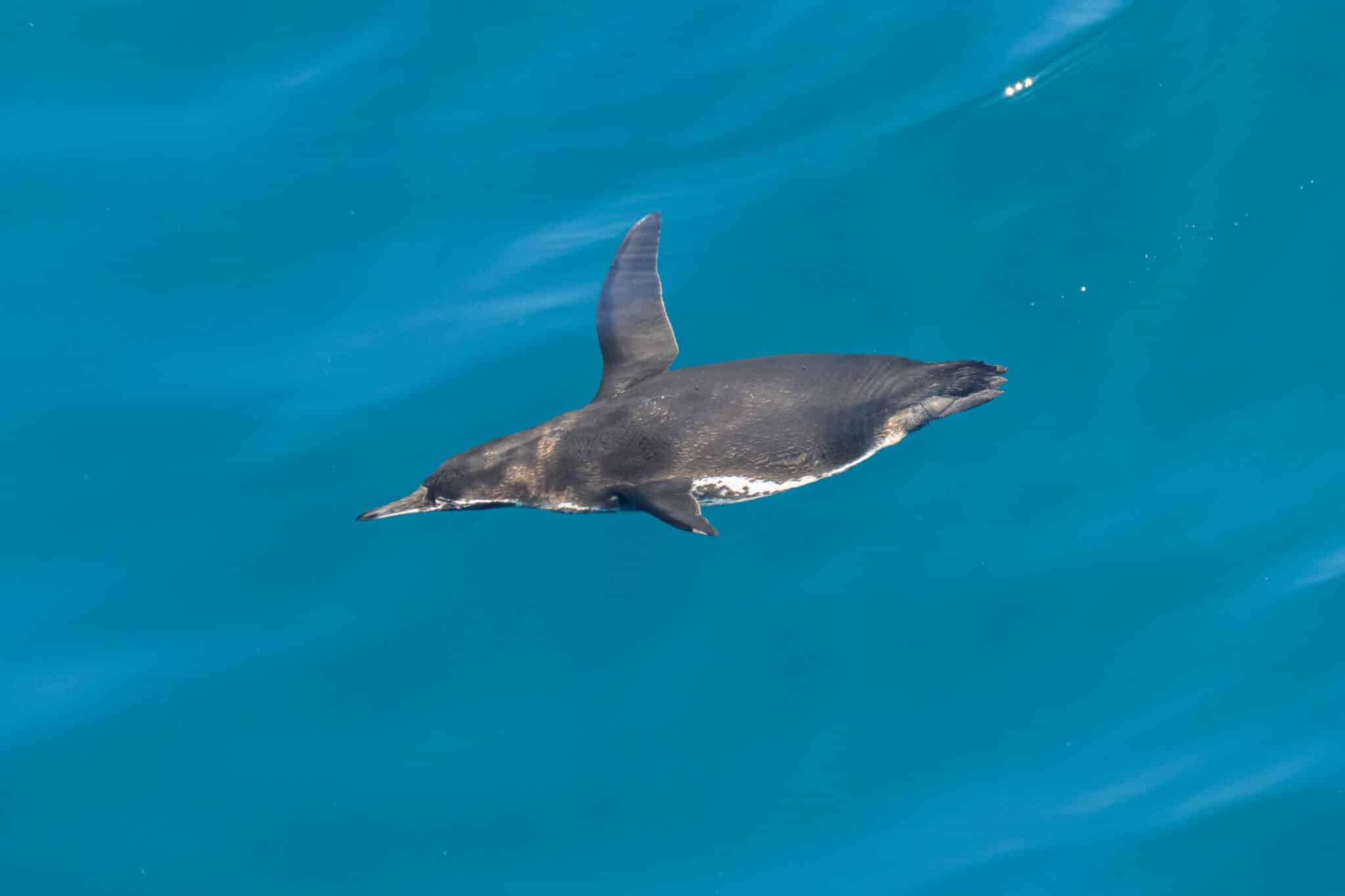
And this is where we got our first glimpse at the Galapagos penguins, which were #1 on my wildlife wish list! In fact, we saw so many penguins, playing in the water all around our boats.
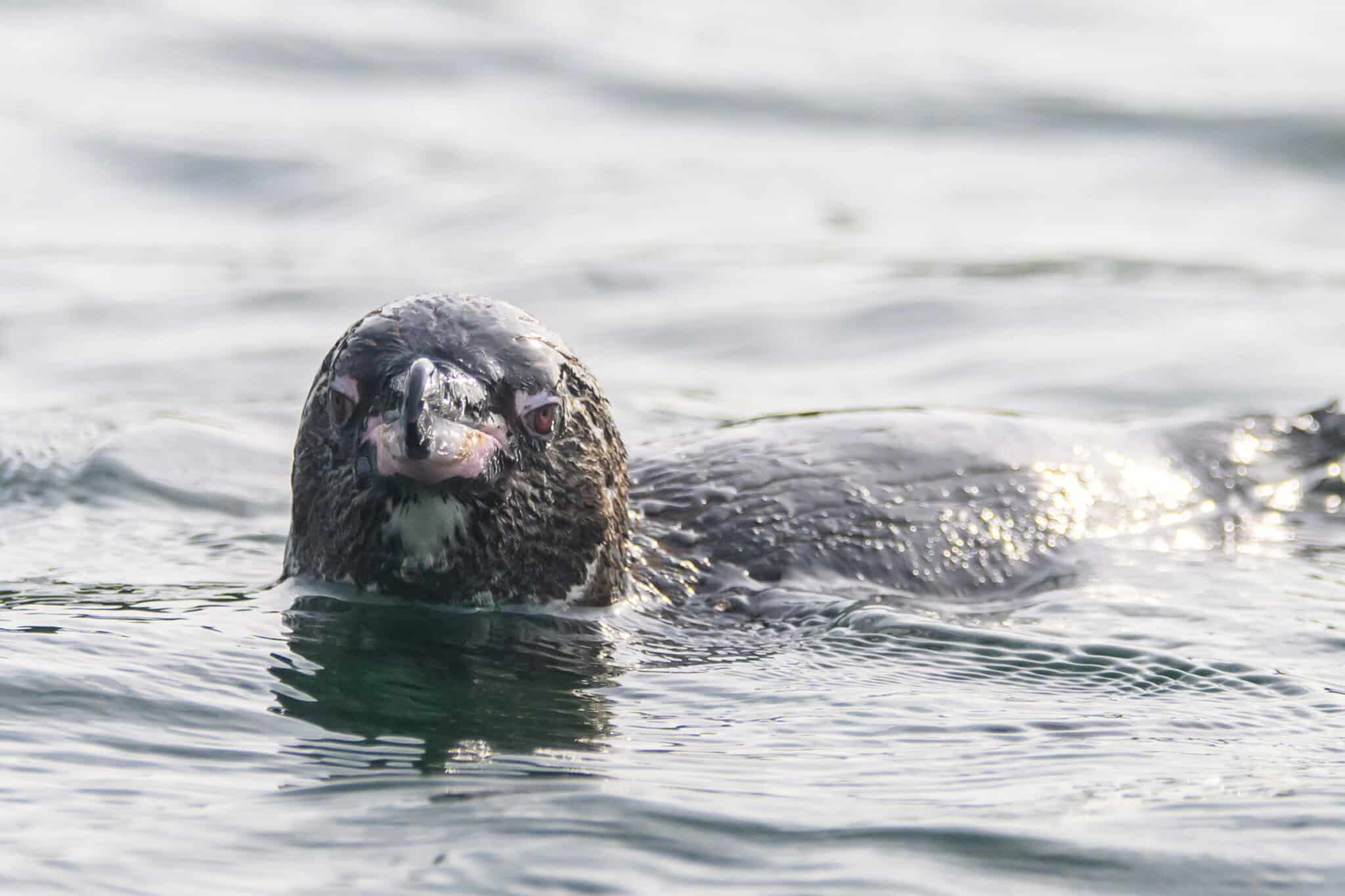
And because these little guys were my favorite, I have to give you a few more pictures of them before we move on. (All taken with a Nikon Z8 and 150-600mm lens.)
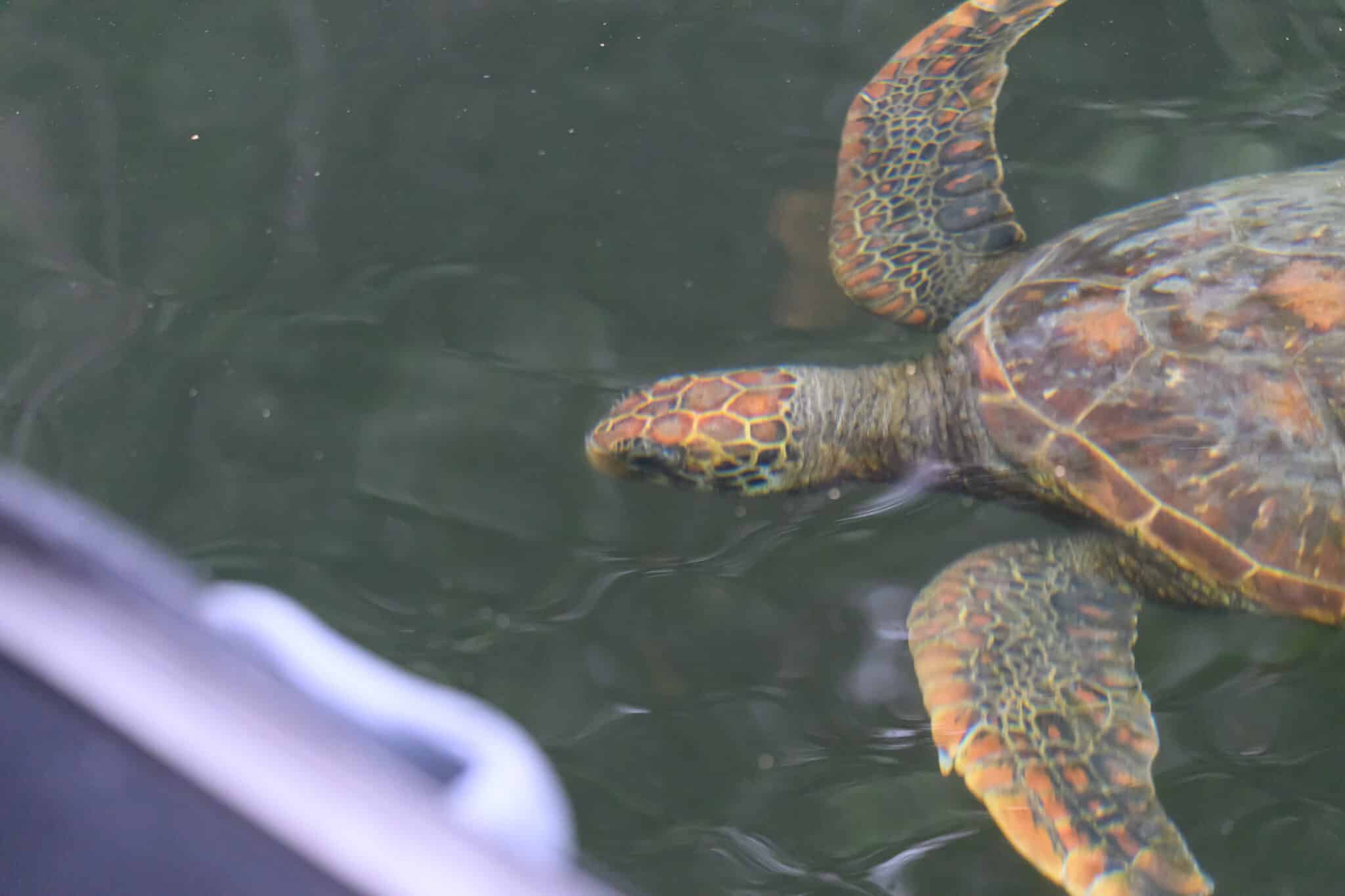
There were also a ton of Galapagos green turtles! My son enjoyed sticking the GoPro in the water to see what he could catch underneath the water line. They swam right up to the panga to check us out.
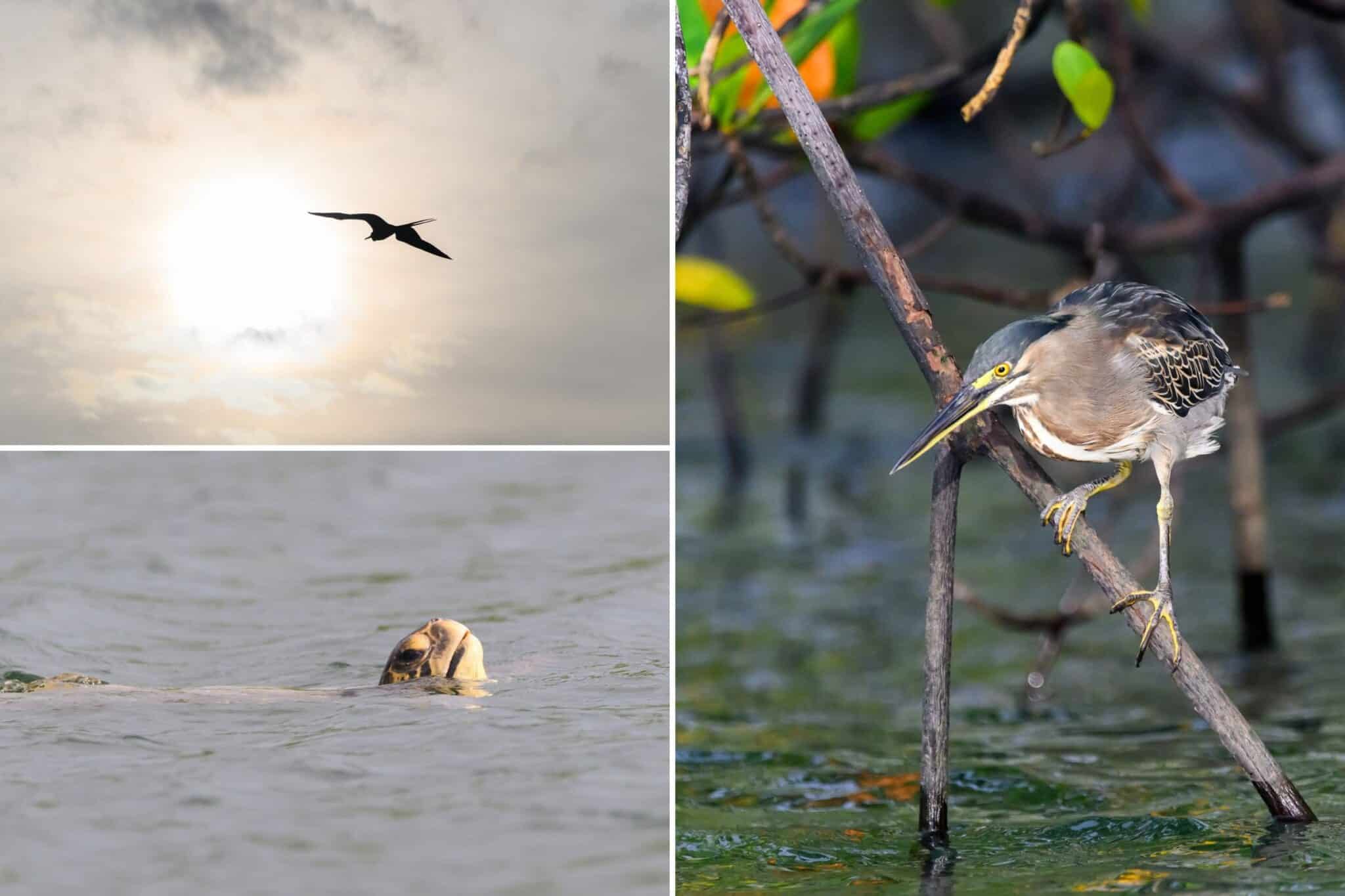
There were many interesting birds in the mangroves as well, including a beautiful Lava Heron and Frigate birds flying overhead. We spotted tarpon jumping out of the water. Plus many pelicans and and other smaller birds.
And then as we headed back to the ship, we came up on this tiny outcropping. And what is hanging out there? Well, a trio of famous Galapagos creatures!
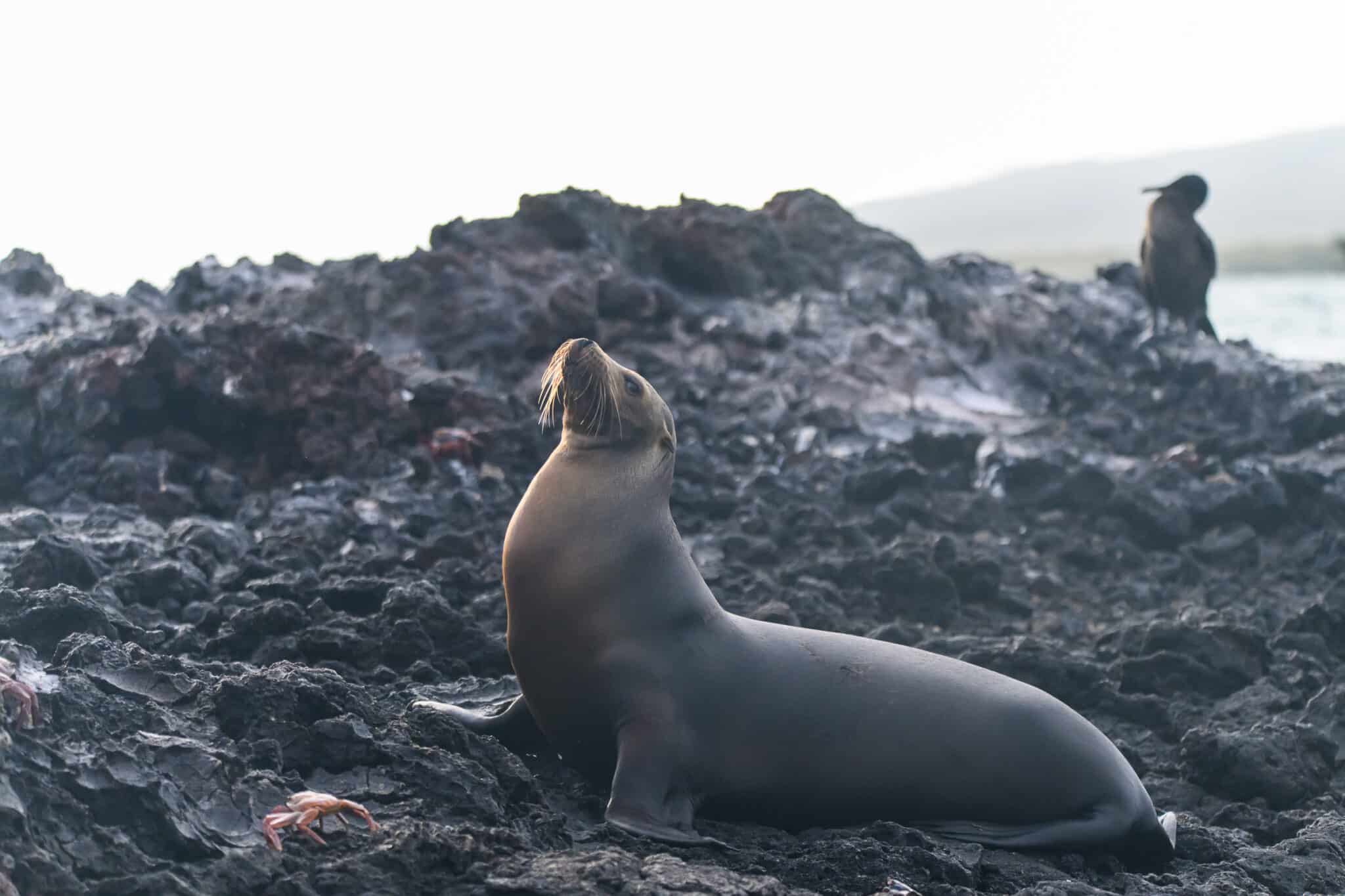
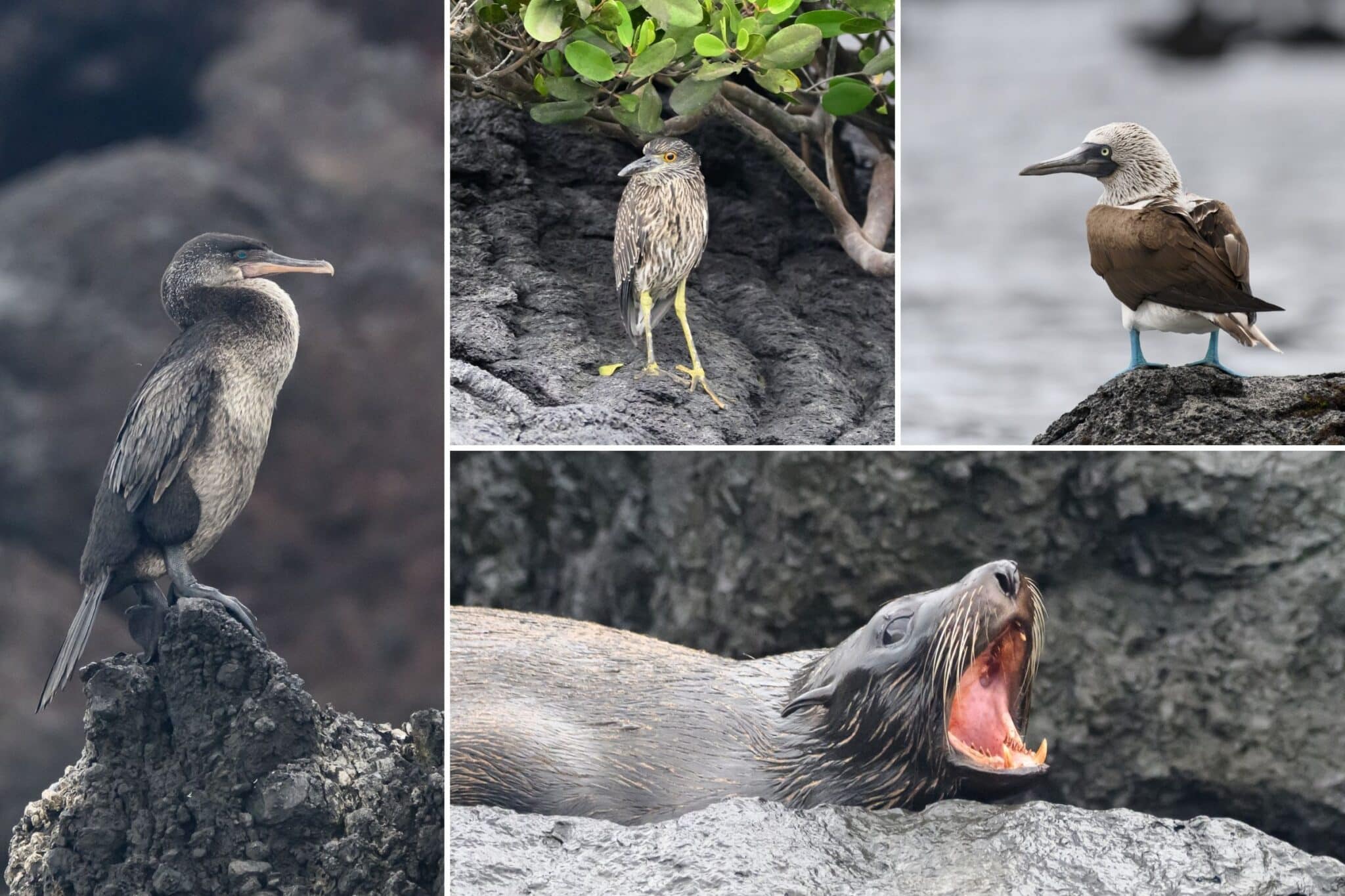
First, we spotted this Sea Lion as we approached the rocks. He seemed happy to greet us. And if you look in the background, you'll see our next creature.
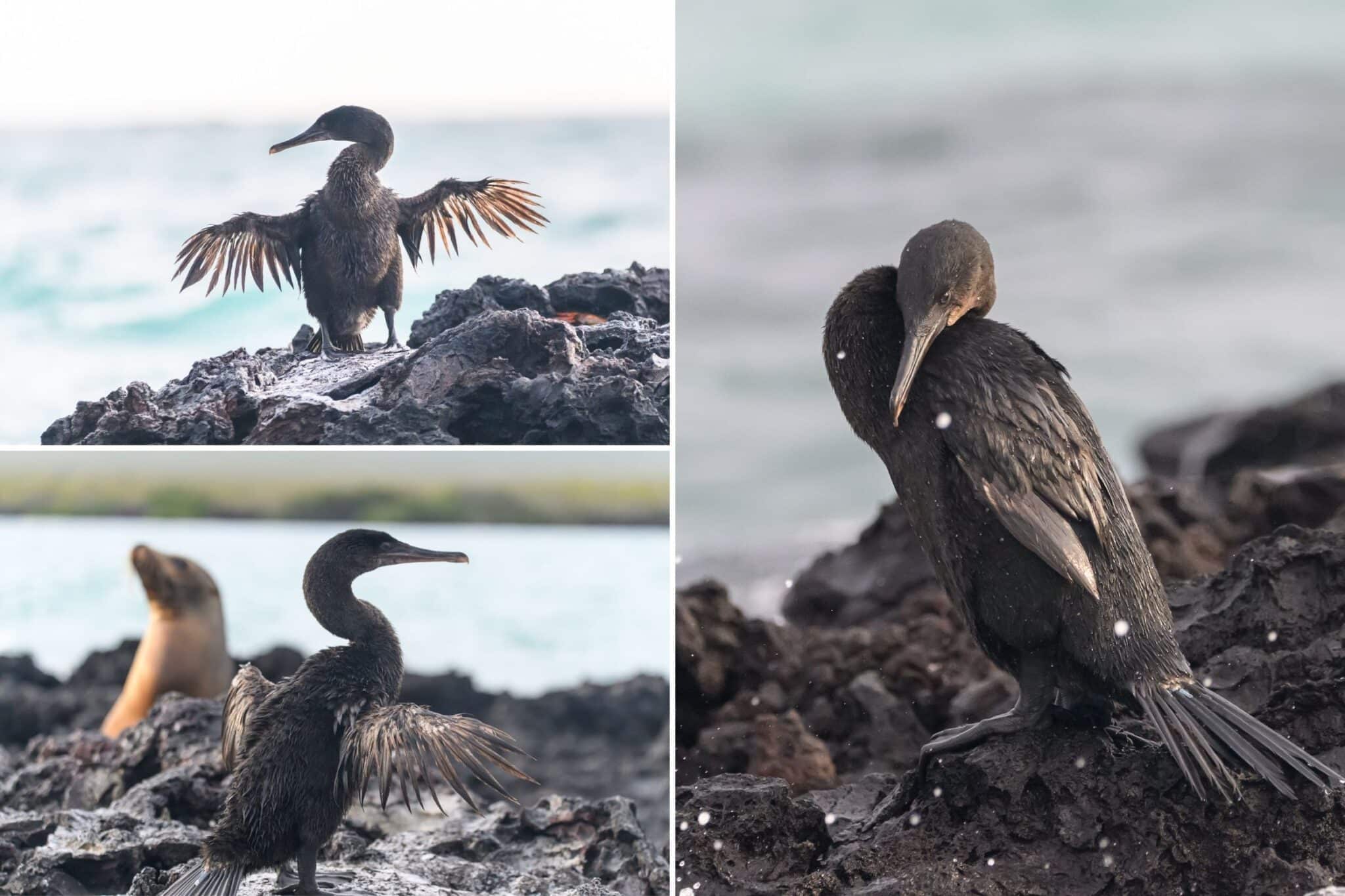
Next up was the famous Flightless Cormorant. This unique species has evolved to swim rather than fly. Our guide told us this is a product of evolution, as they have no natural predators in the islands, so no need for flight. But swimming allows them to dive down into the water to catch fish for food!
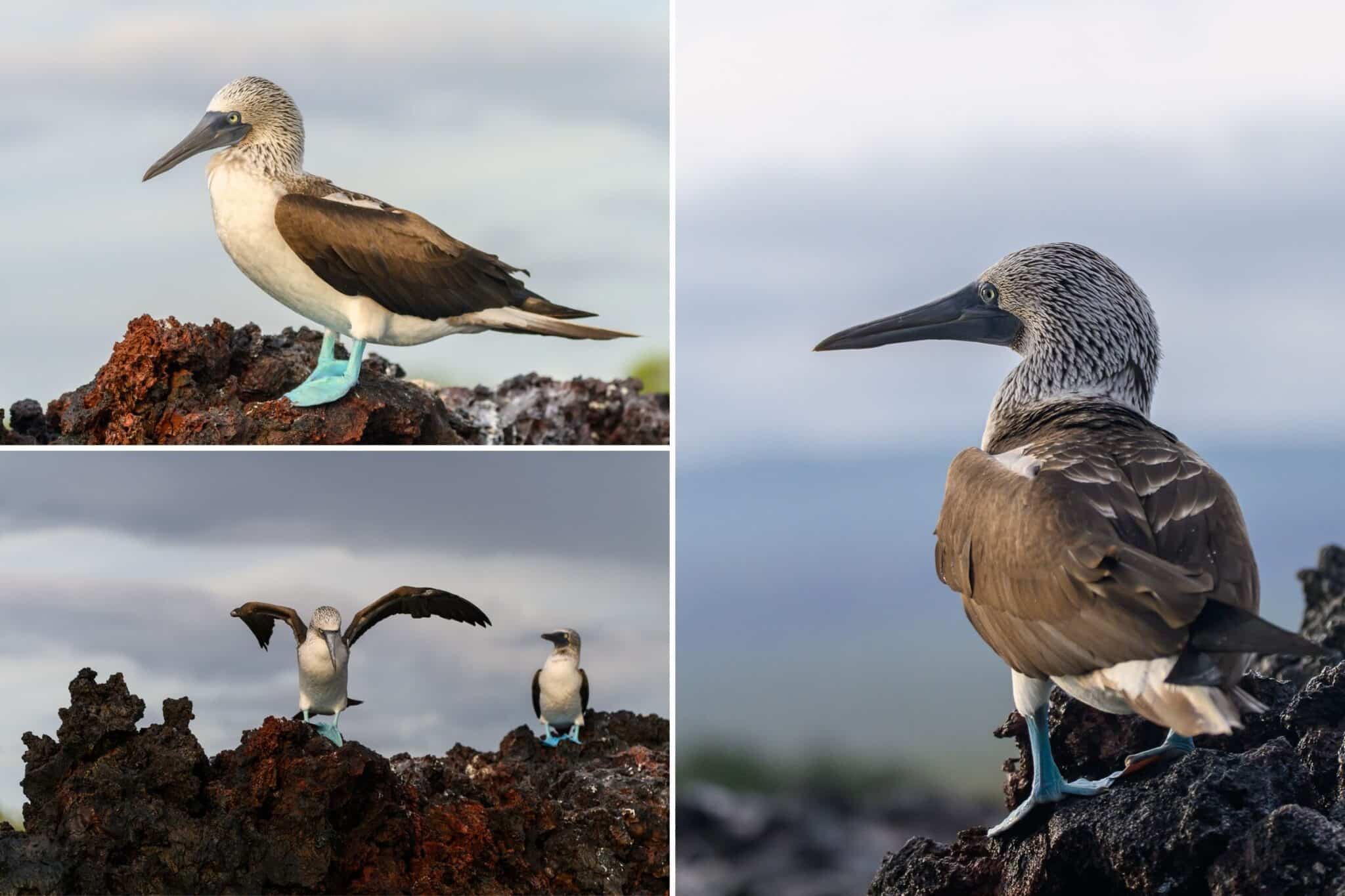
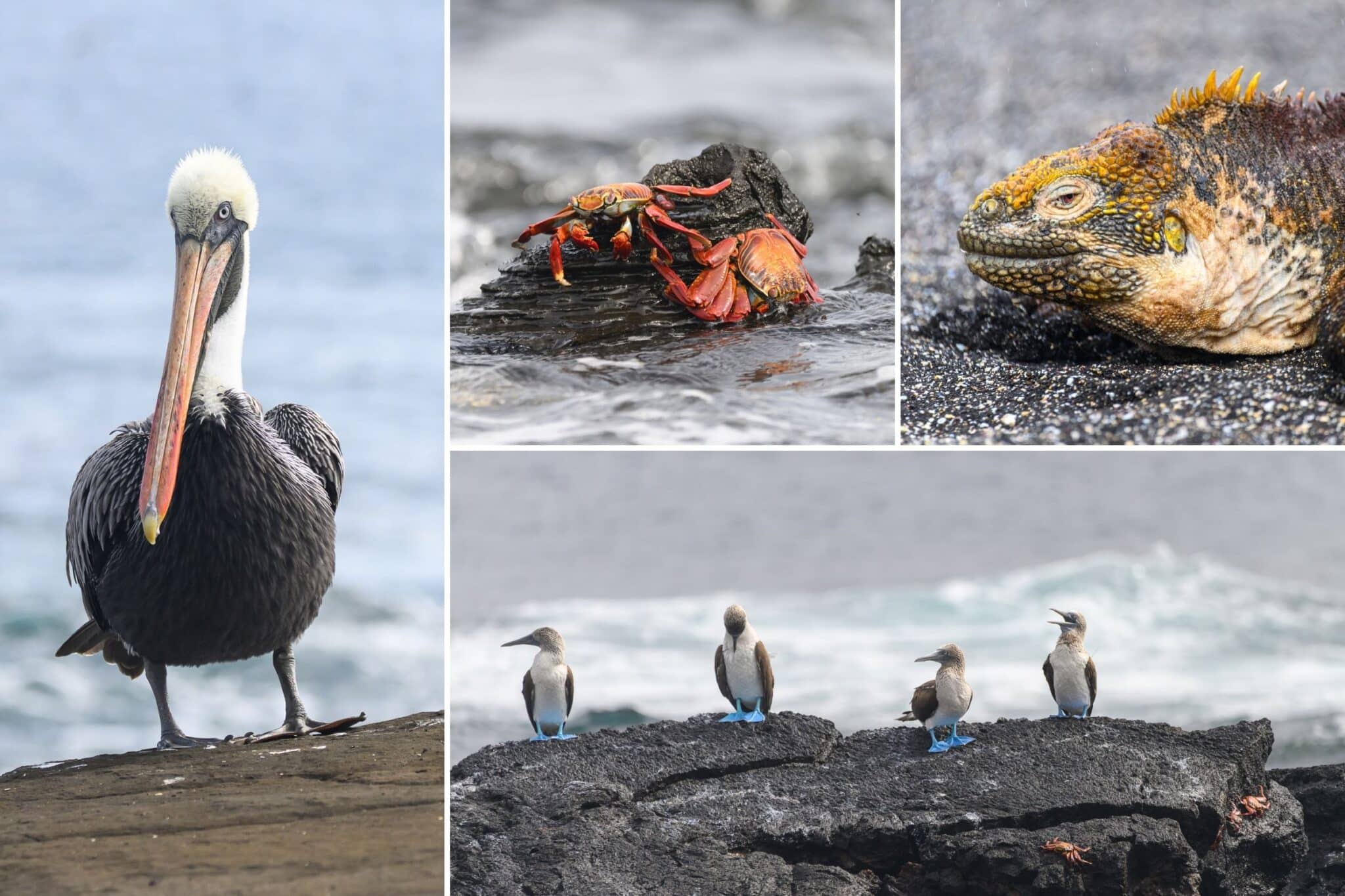
And then as we turned the corner, we came face to face with a family of Blue-footed boobies! These are perhaps the most famous, or at least the most well-marketed of the Galapagos birds, as you'll find booby themed merchandise all over the islands. ;)
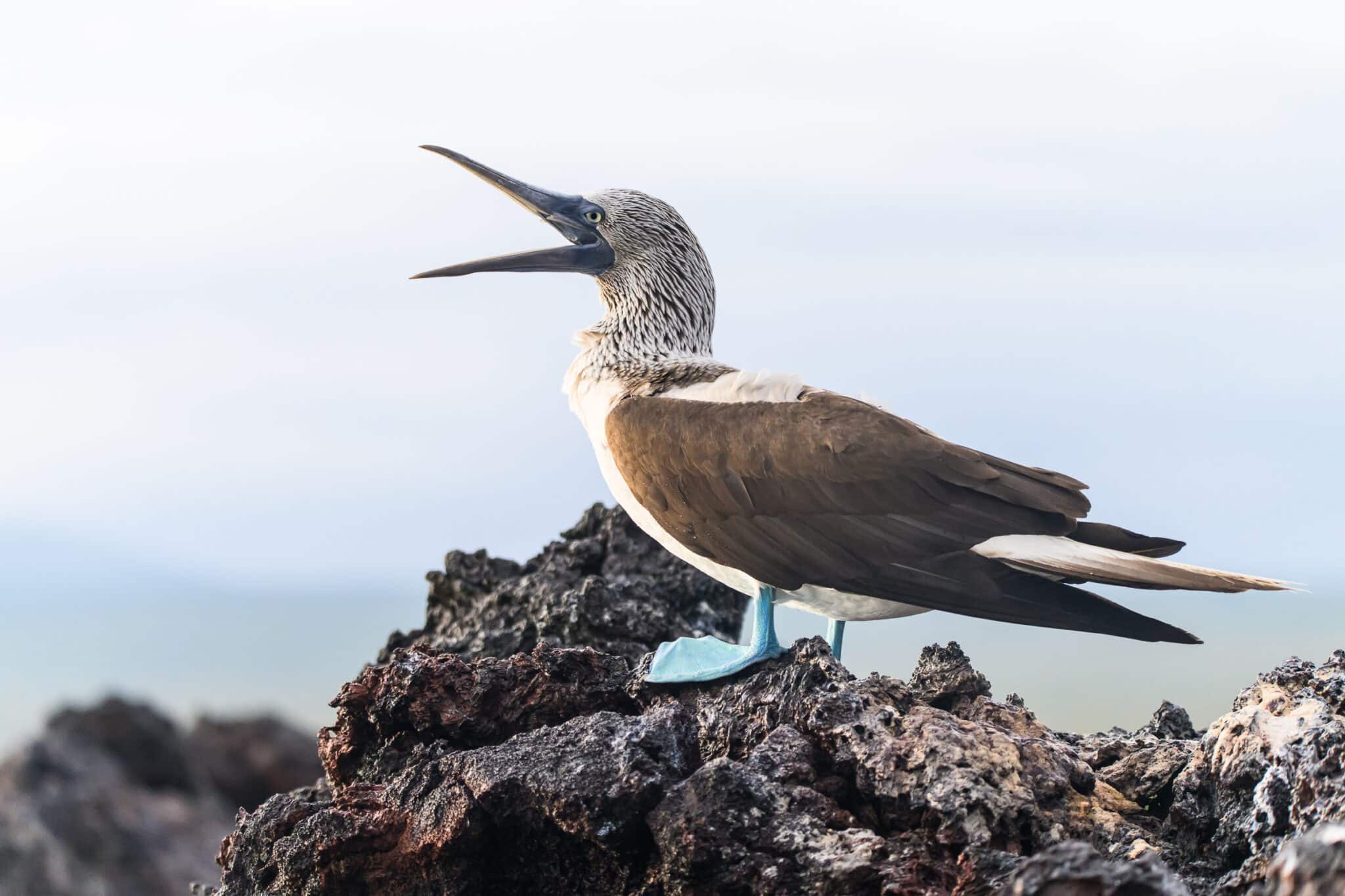
And when you view them up close, you can see how they ended up with such a silly name. They are almost cartoonish in appearance! Their blue feet are the result of their fish-based diet, and can be an indicator of health and nutrition.
A Sea Lion, a Flightless Cormorants and Blue-footed boobies! Basically, we crossed off most of my wildlife wish list with just this one panga ride. ;)
We headed back to the boat to shower, debrief and enjoy another five course meal for dinner! I had wahoo as the main course tonight, and my husband had lobster and octopus. The chef was kind enough to make pizza and fries for my son, which he very much enjoyed!
Day Three - Urbina Bay and Tagus Cove
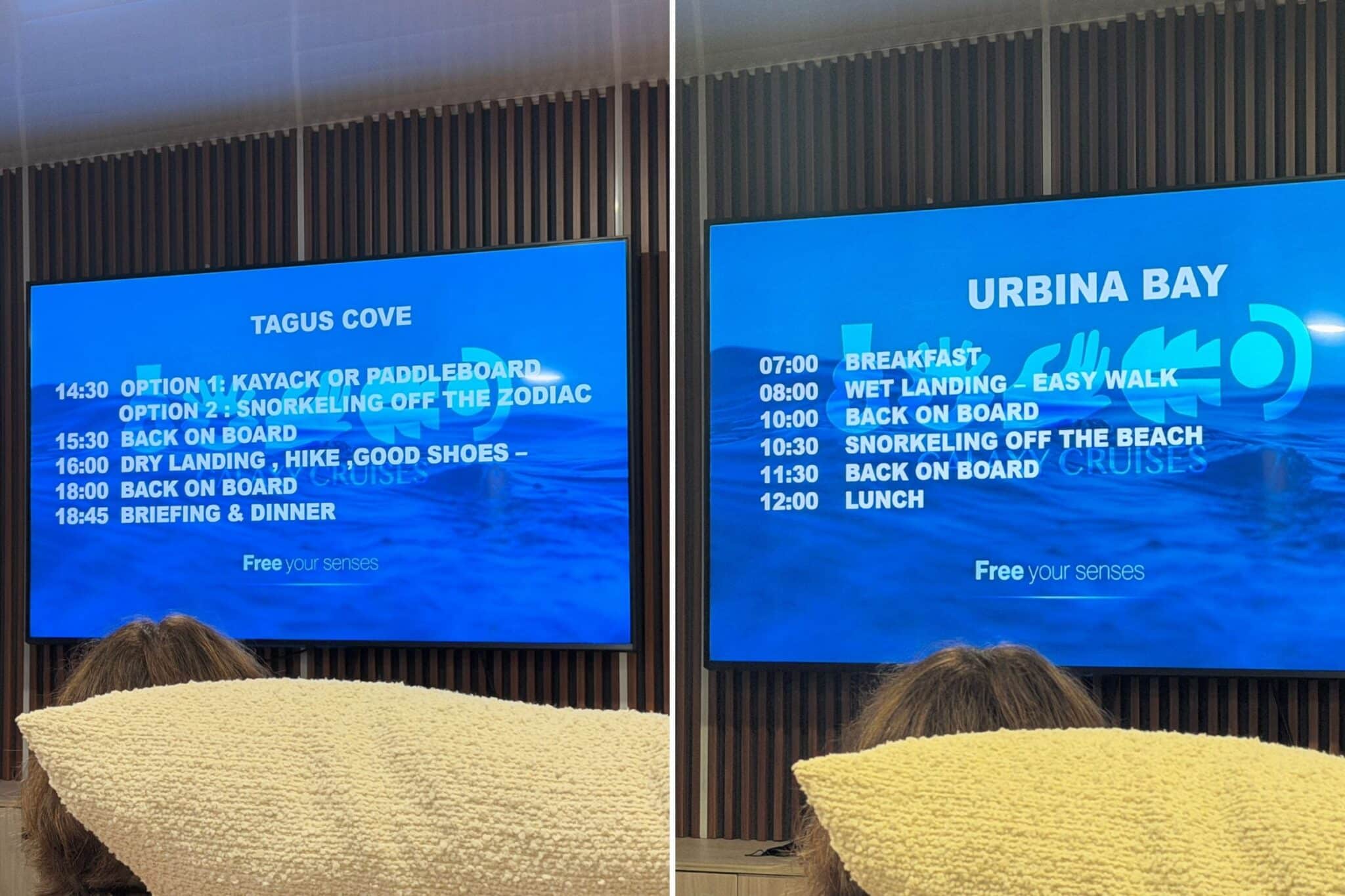
We awoke to find ourselves in Urbina Bay, where we intended to have a short hike and then snorkel from a sandy beach. But again, nature had other plans. There were huge swells of 6-8 feet, making it impossible to safely get ashore on the pangas. We watched another group try, and fail, and get very wet in the process.
So we shifted our plans and took a slow ride through the area looking for whales instead. We didn't find any, so that was a bit of a bummer. But we did find many more sea turtles and several rays.
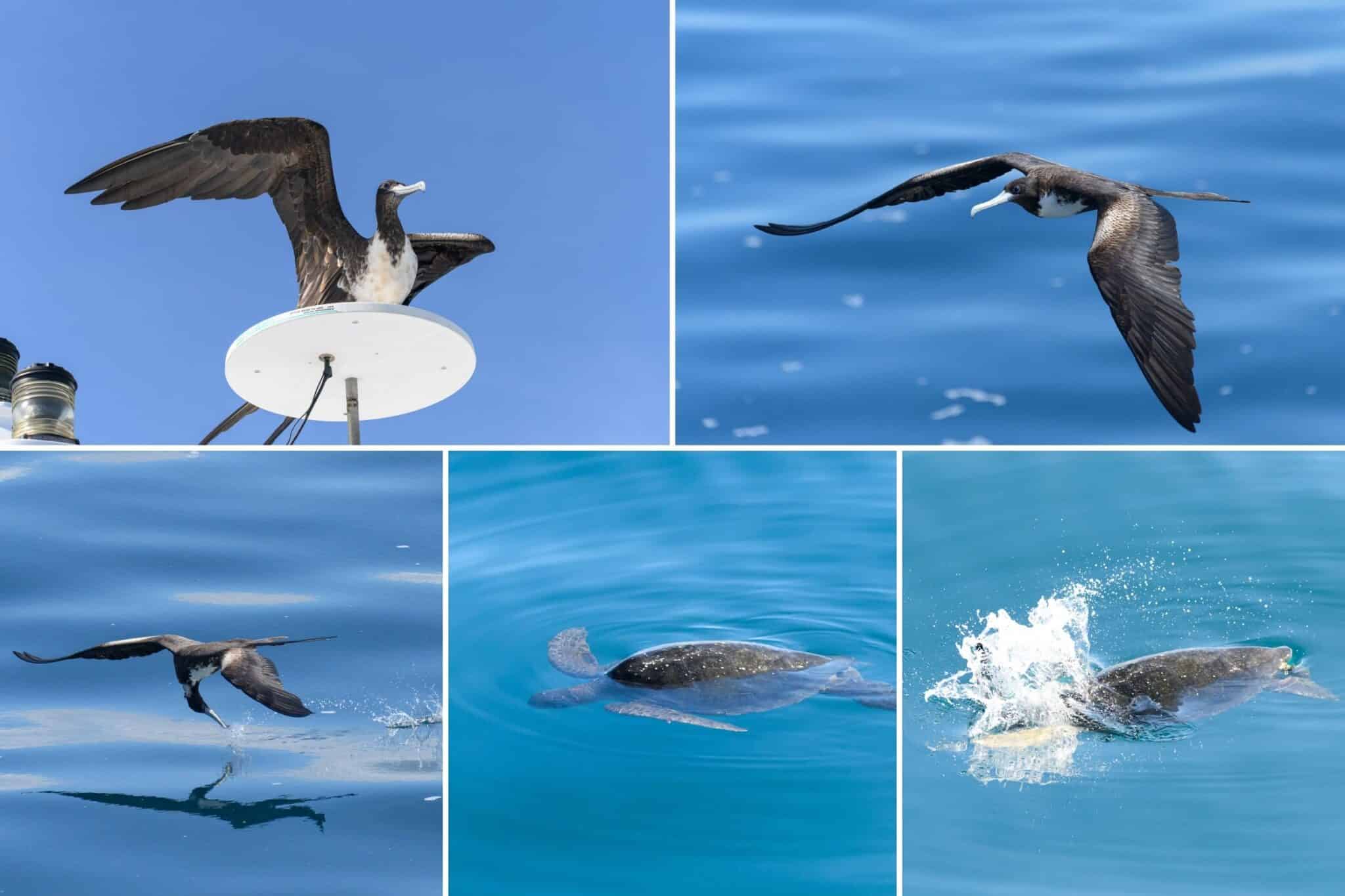
Plus, some massive frigate birds hitched a ride on the ship with us and fished along the way. The crew brought up snacks and drinks to the sundeck, and it was an enjoyable ride.
We slowly made our way to Tagus Cove, a beautiful sheltered area, where we immediately spotted penguins playing in the water!
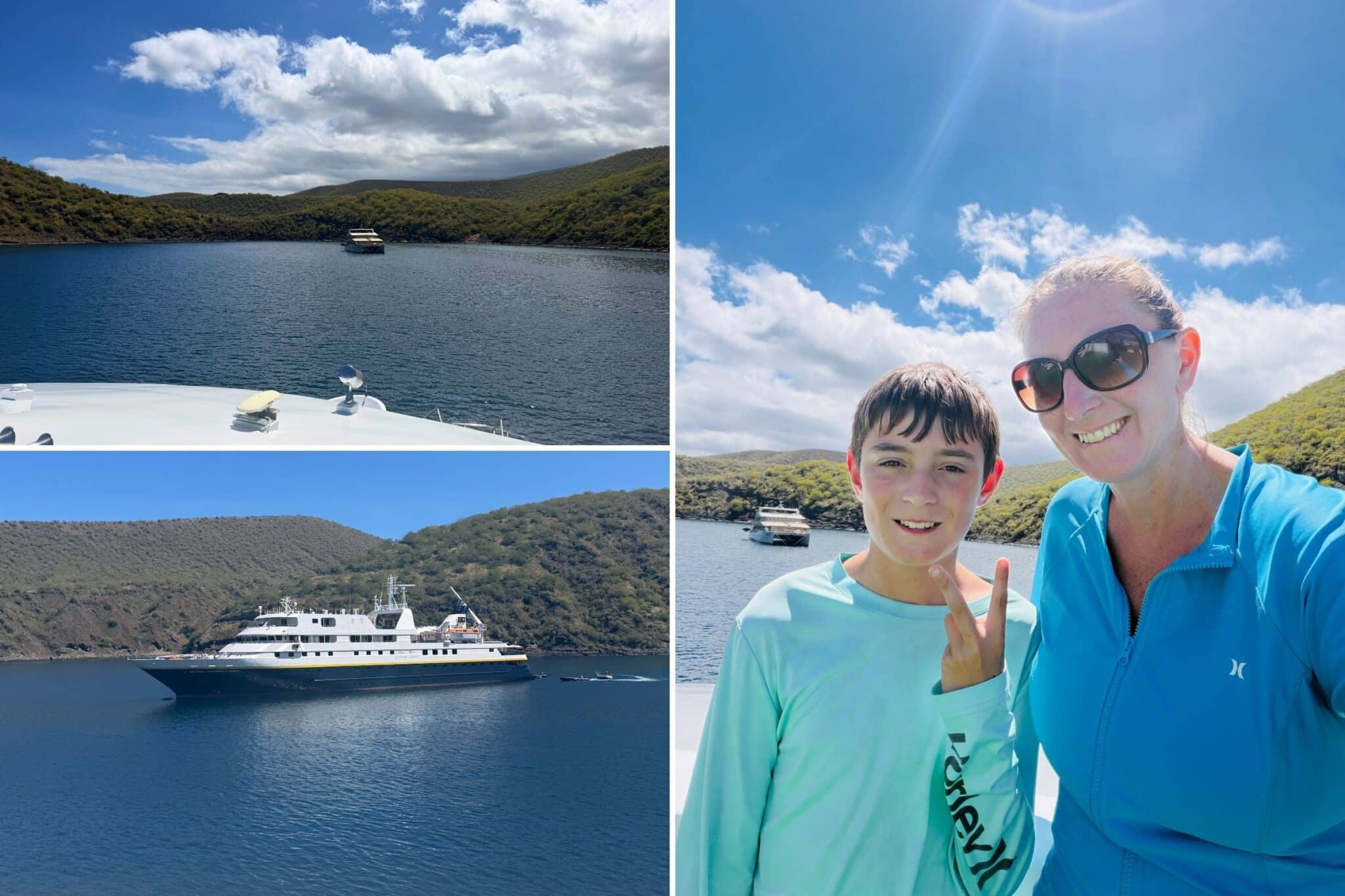
We also got a peek at the world famous National Geographic ship here. I'll be honest, I always thought I wanted to go on this one. And it does look very cool. But I'm really glad we opted for a smaller group cruise in the end!
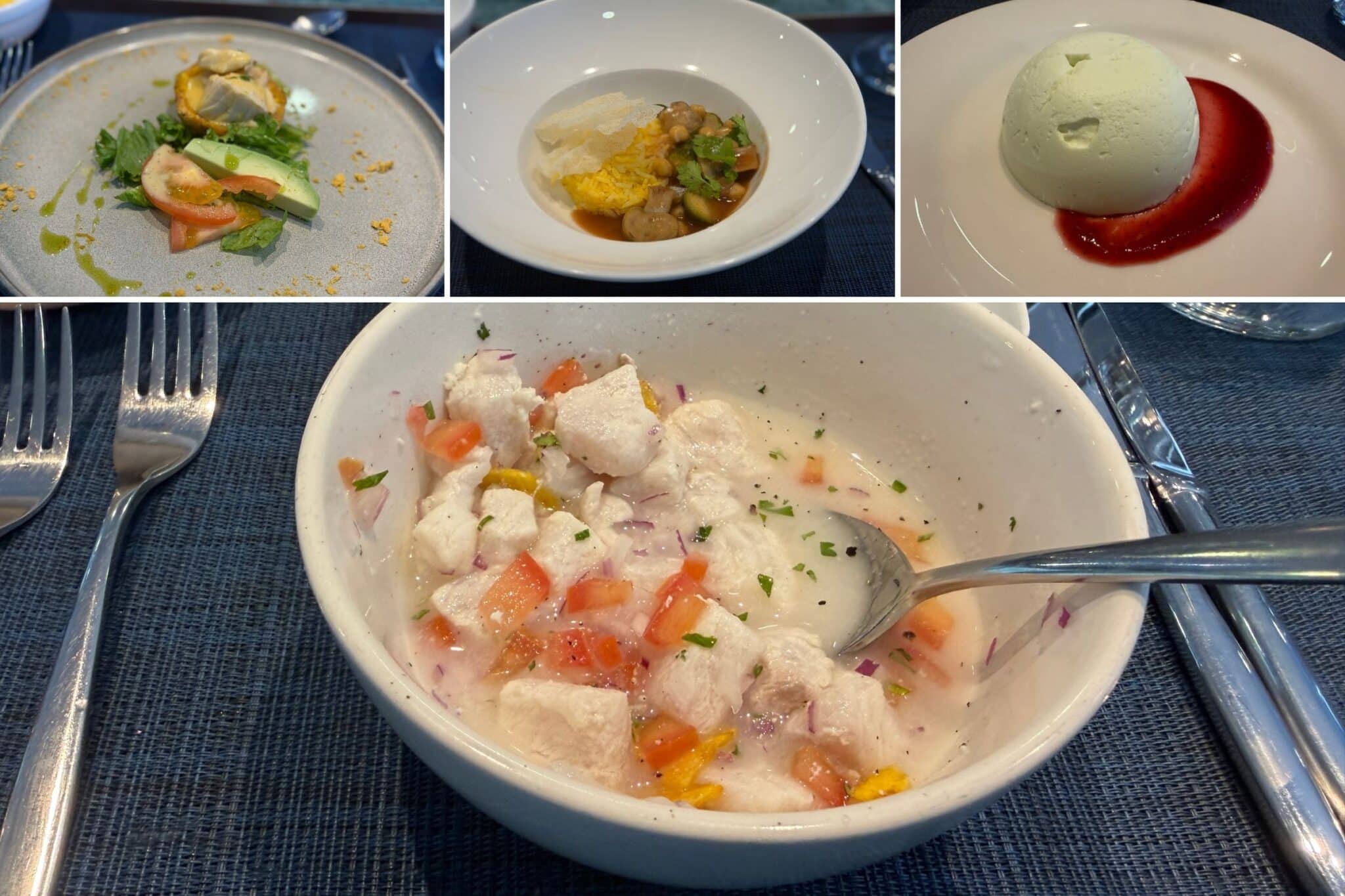
We had another great lunch before getting off the boat here. This time we started off with making our own ceviche! The ingredients were super fresh and it was absolutely delicious. Then I enjoyed a Chickpea stew, a white fish and plantains with coconut sauce, and an avocado mousse for dessert. Yes... this was all for lunch.
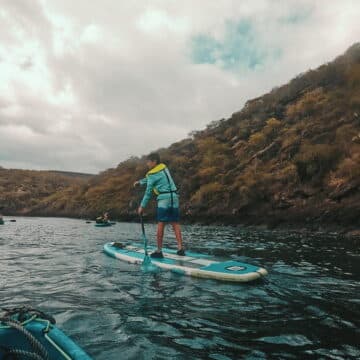
Then it was time for activities! We had a chance to do some kayaking and paddle boarding around the cove. The ship is equipped with three kayaks and two paddleboards, so we all took turns.
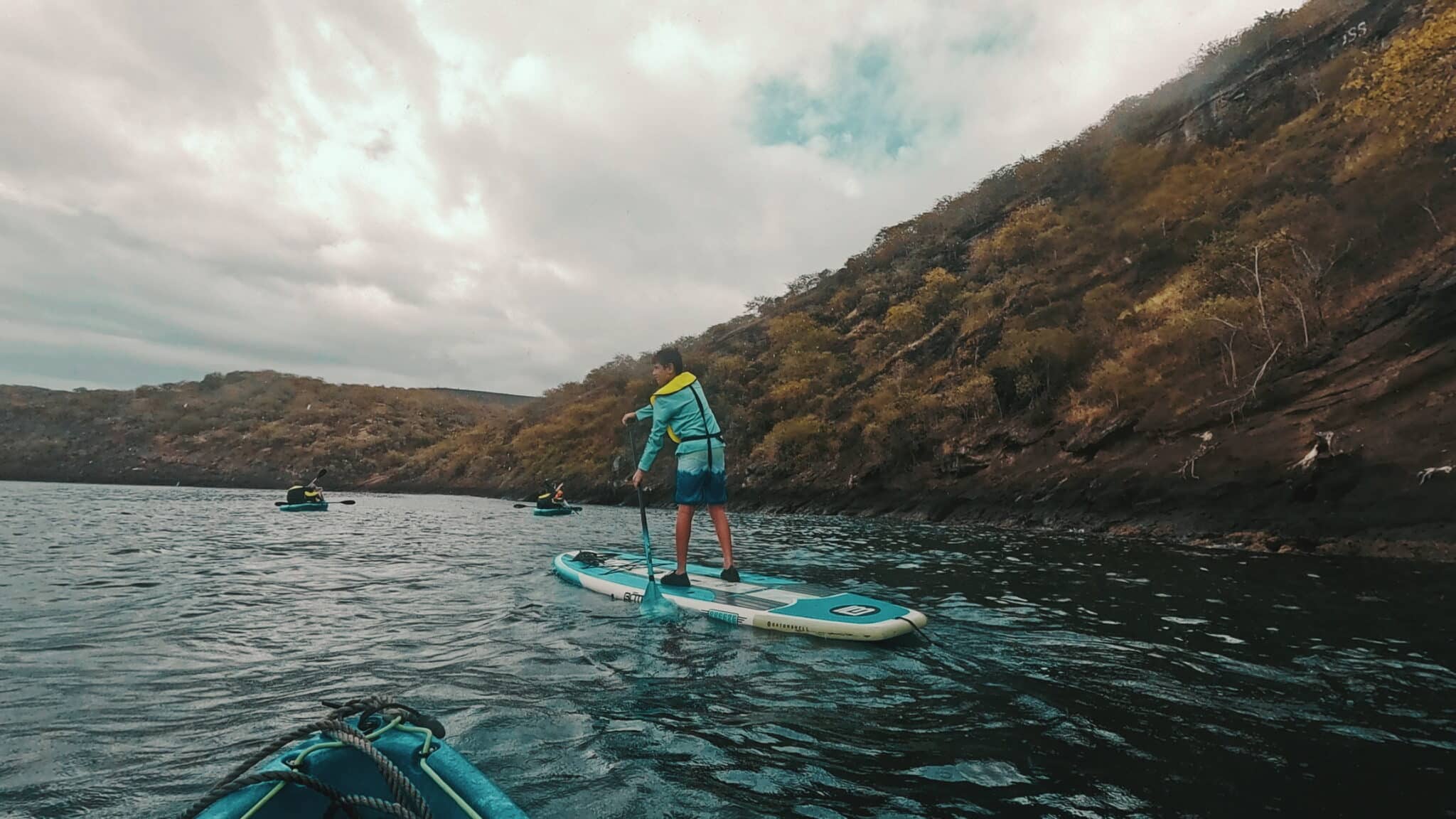
My son was the only one interested in stand up paddleboarding, so he got to try that as often as he wanted. We saw many crabs, pelicans, and some starfish. along the way. The water was nice and calm here, so it was a great spot for this activity.
Afterwards, we headed back to the ship for a quick change into snorkeling gear. We rode out to a rocky outcropping on the panga and snorkeled from it. And I have to say that this was the best snorkeling ever!
We saw flightless cormorants diving and fishing underwater. Soooo many turtles. Like you had to work hard not to bump into a turtle. Many varieties of colorful fish. Urchins. Some saw rays and even a penguin.
My son did get a jellyfish sting, despite wearing a full wetsuit. It managed to sting the one spot on his wrist that wasn't covered. But it was luckily near the end of snorkeling time. The ship hooked him up with a little antihistamine cream, and it was all better within the hour.
Tip: Jellyfish are one reason you may consider wearing a full wetsuit even if it's not too cold. I wore a long-sleeved rash guard and swim leggings, which is also a good alternative.
After snorkeling, we headed back to the ship for a short break, and then set off on a hike. Are you tired yet? We took another panga ride to the shoreline, where we had a dry landing. Disembarking the panga was easy here on flat ground, but then we had a very steep hike up to the top of the mountain!
The hike started off by walking up a long wooden staircase. While it's a lot of stairs, it's very sturdy and was not a problem for most of the group. At the top, you can get a lovely view of the ships below.
Then, we kept hiking up. And up some more. For perspective, here is a more zoomed out view of the ships from high up on the hill. A few of our travel companions opted to wait here rather than continuing further up.
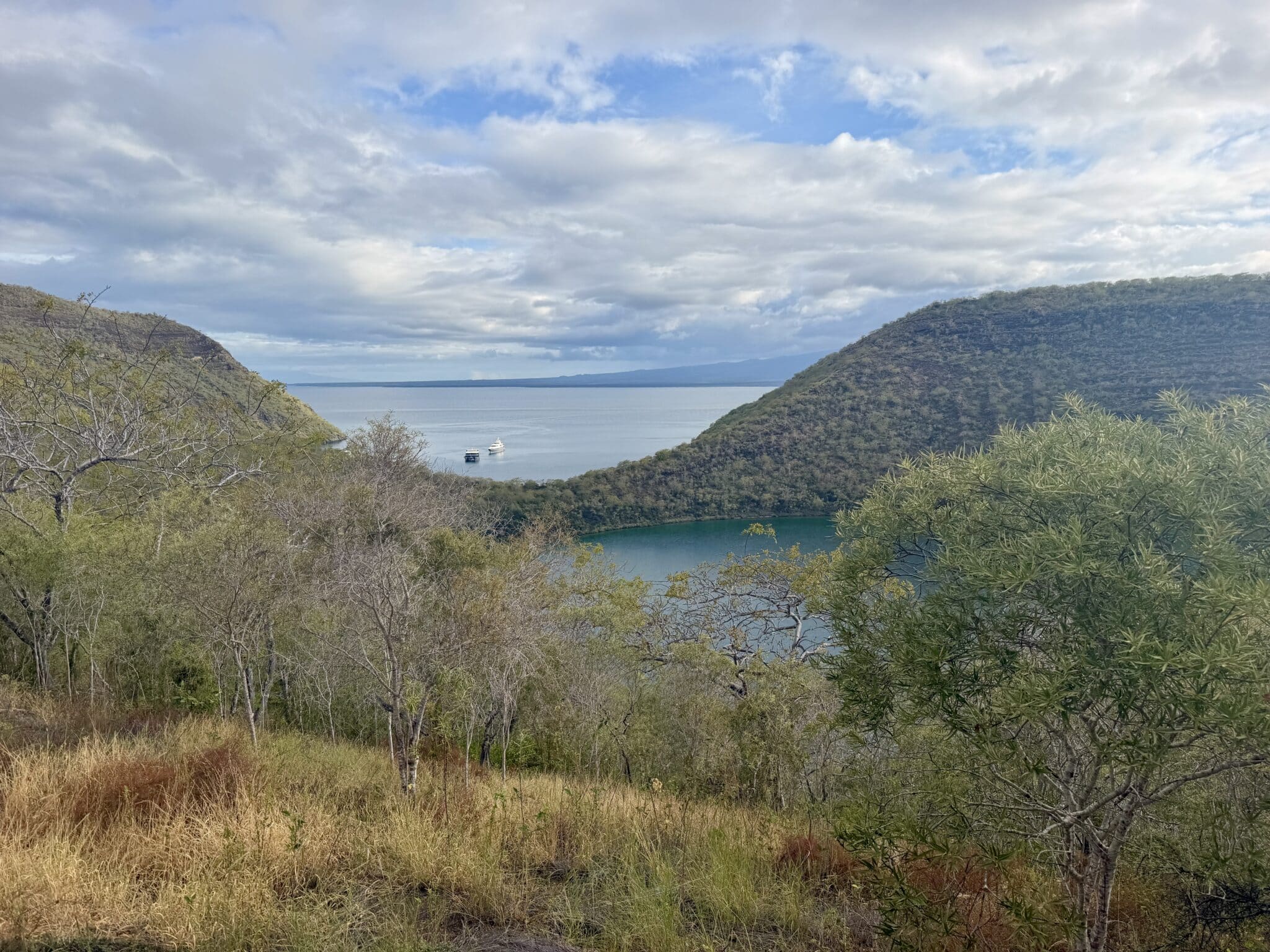
In the center is Lake Darwin, which is a saltwater lake that has more than double the salinity of the ocean!
We continued to the top of the trail, where there was a great view of the other side of the island. The hike wasn't too difficult, just steep in some areas. In total, it was about 1.7 miles round trip with just under 300 feet in elevation gain. (Trail details on AllTrails here.)
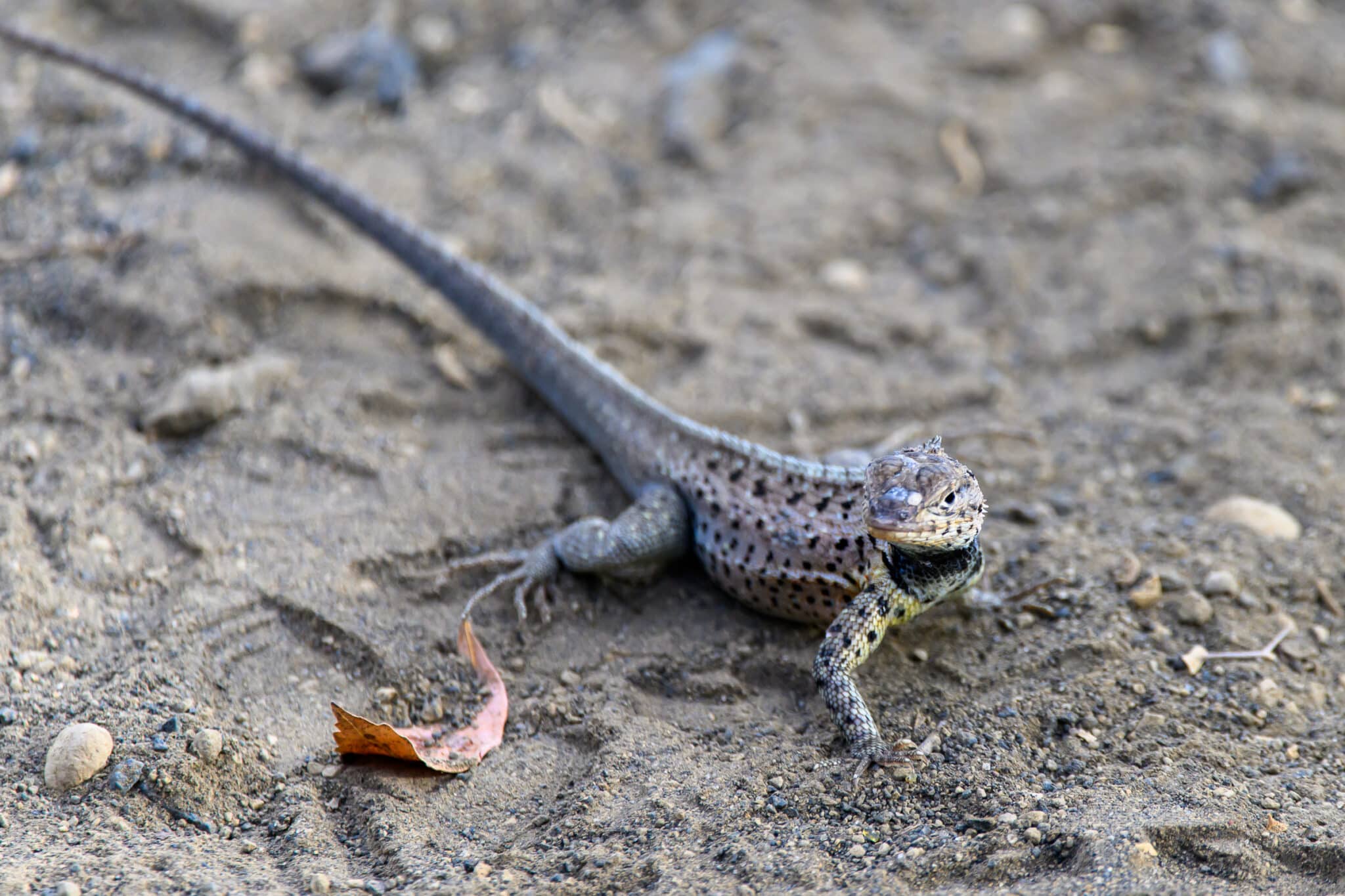
There was not much wildlife on the trail, due to the extremely dry and salty conditions. But we did see many lizards! And a lot of locusts, which I could do without. And a few more finches.
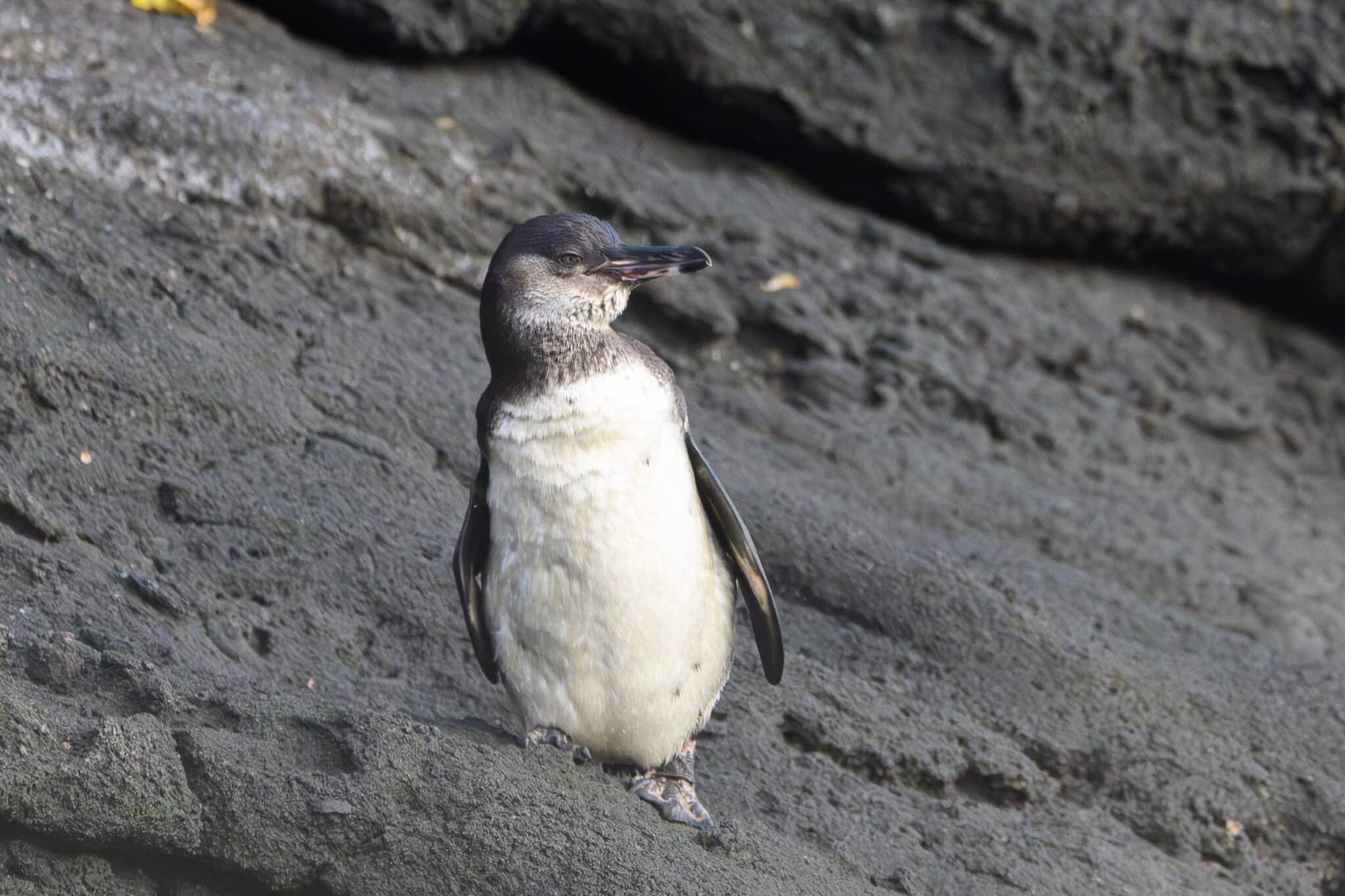
But back on the dock at the end of our hike, the wildlife decided to make an appearance, as we spotted a sea lion and several penguins playing in the water. That was our very first chance to see a penguin out of the water, so it was a fun surprise.
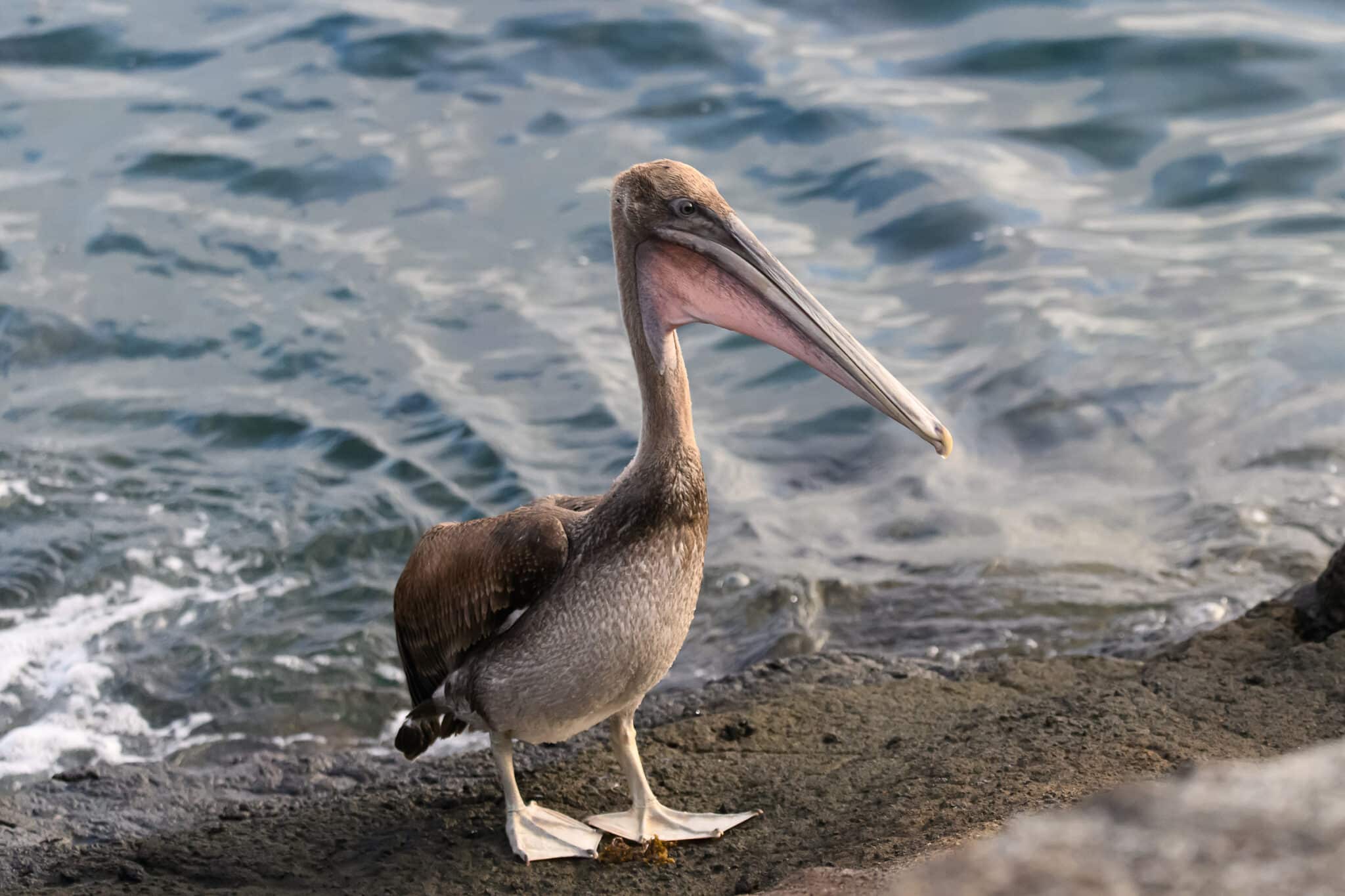
And then this little pelican came by to escort us back onto our panga. Or maybe he just wanted to know if we had any fish in our pockets.
Dinner tonight was pasta night! We started off with a yummy tomato soup, and then enjoyed a "make your own pasta bar", where you could pick and choose your favorite pasta, sauce, and toppings. And we finished up with a tiramisu mousse. Yum! This was my son's favorite meal of the trip - he ate two bowls of pasta!
Day Four - Espinosa Point and Albermarle Point
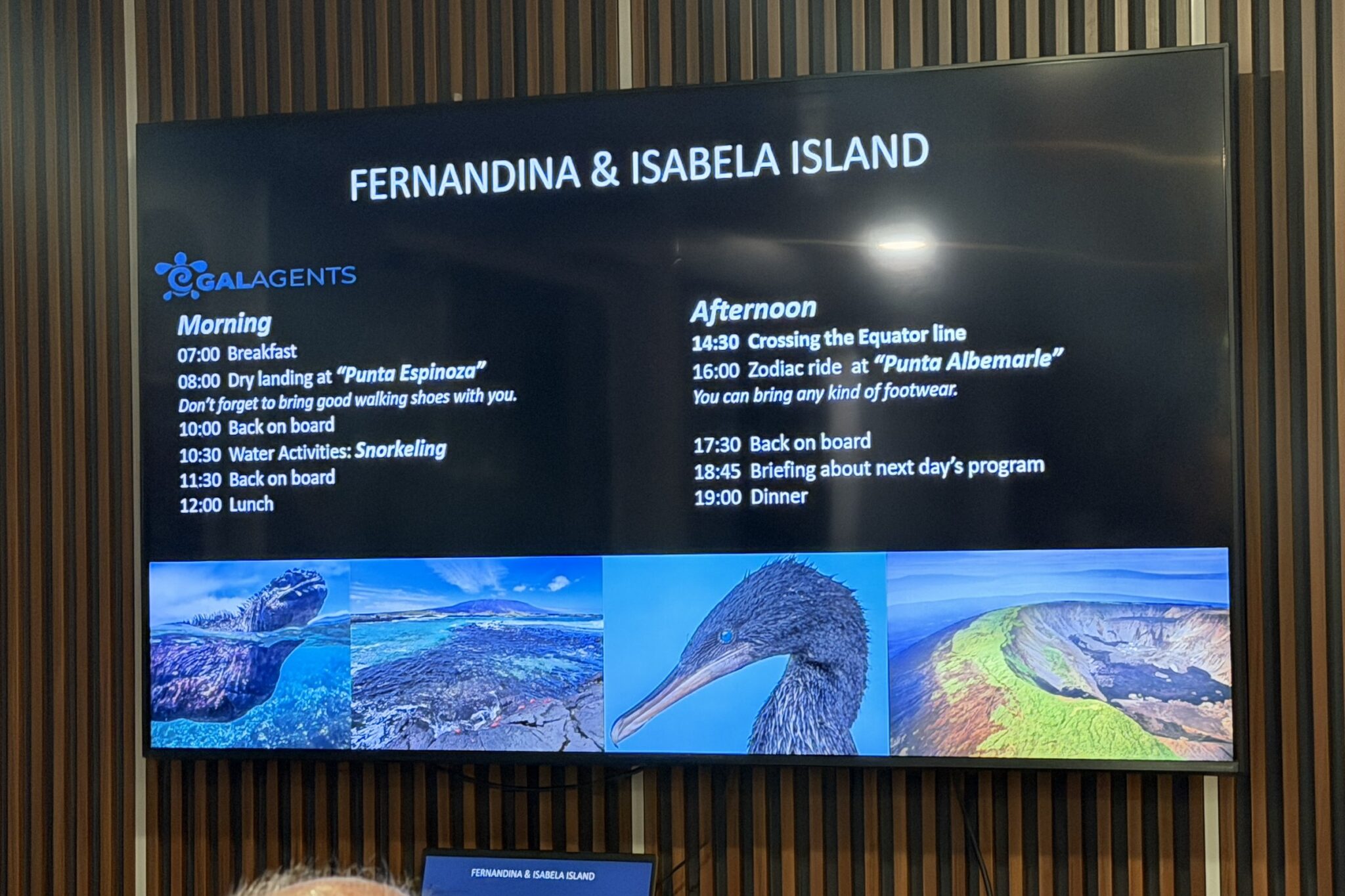
We kicked off the next morning at Espinosa Point, on the island of Fernandina. This particular spot is one of the reasons I chose our cruise itinerary, as it is highly prized for the variety and abundance of wildlife!
We started things off with another dry landing and a lovely hike. This one was a very easy walk along the beach, which was easy for everyone in the group to handle. The big highlight here is the marine iguanas.
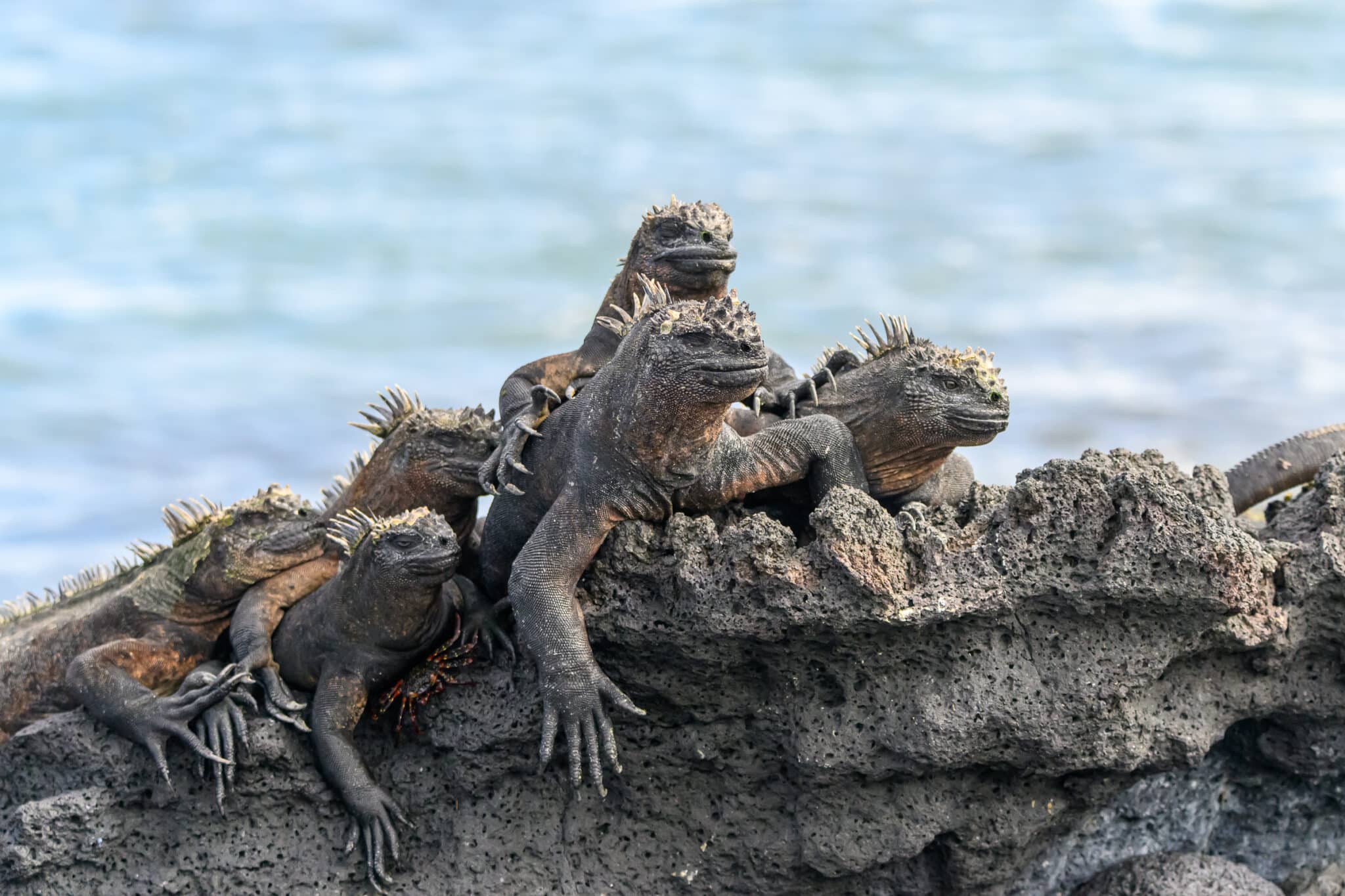
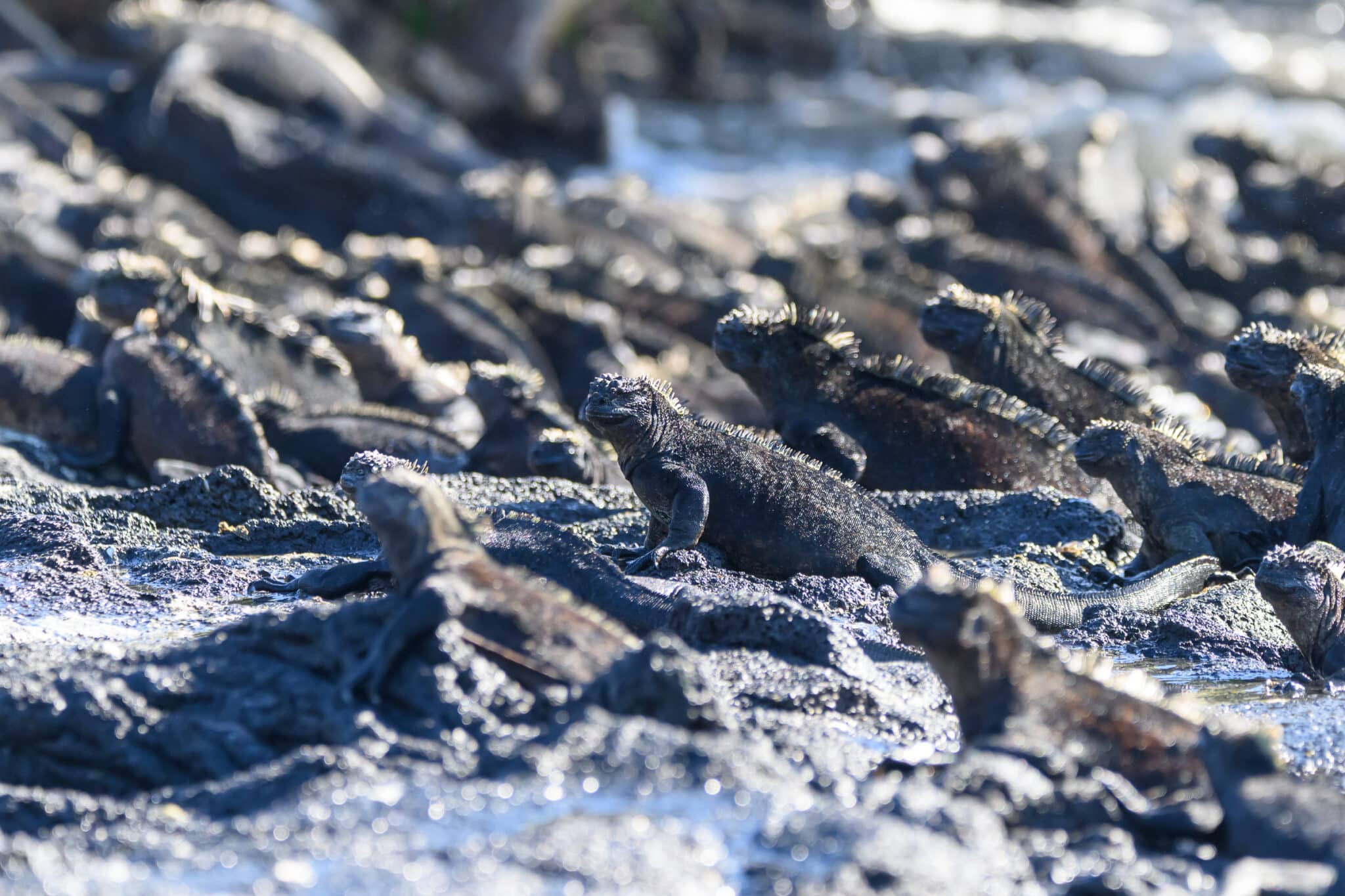
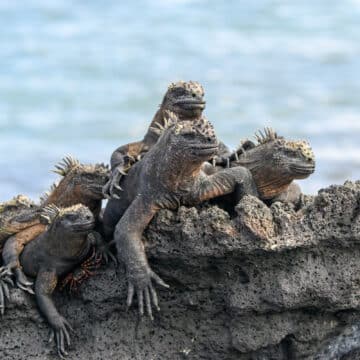
I came expecting to have to search a bit to find these guys. But then we turned a corner to find the motherlode of iguanas. There had to be a thousand marine iguanas piled one on top of the other, chilling on the rocks alongside the beach. They were completely indifferent to us as we hiked by and stopped to take pictures and gawk at them.
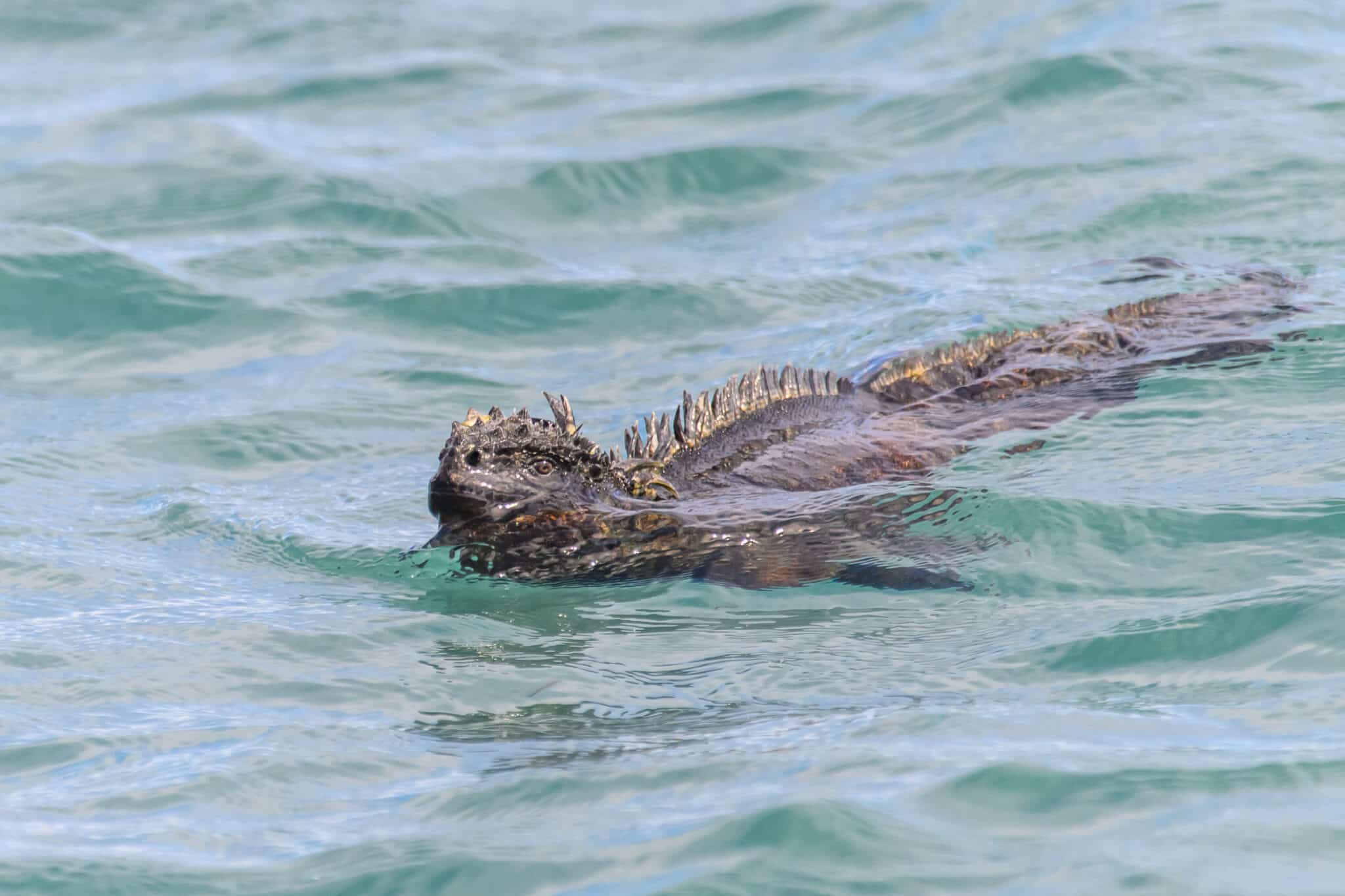
The are especially cool to see swimming in the water, where they look like little swimming dragons. They dive down to the rocks and feed on the algae, which we are also able to see while snorkeling later in the day.
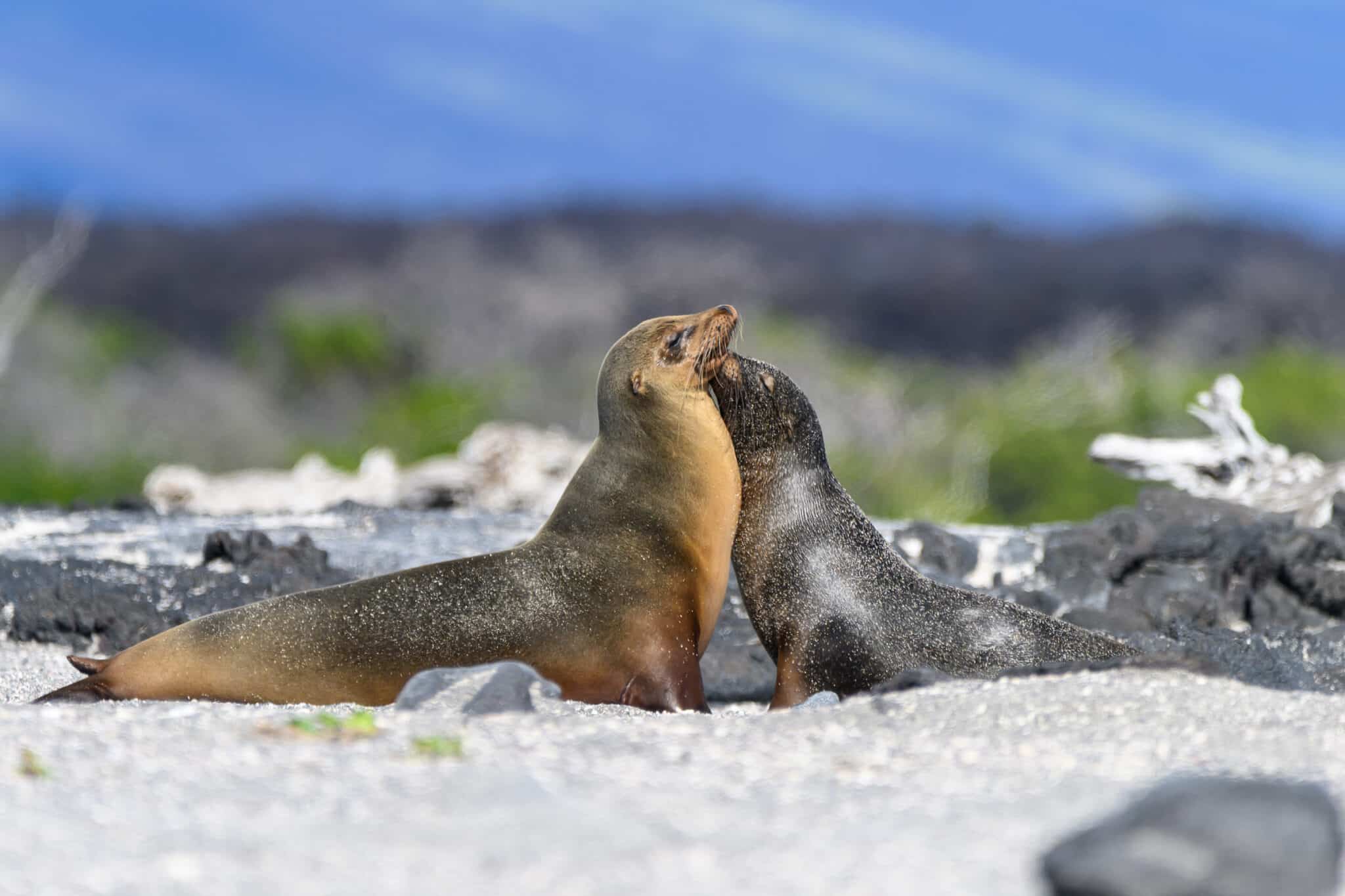
We also saw many sea lions here, both in and out of the water. My favorite was this pair of lovebirds, who were playing on the beach. I feel like they may have been posing for the camera.
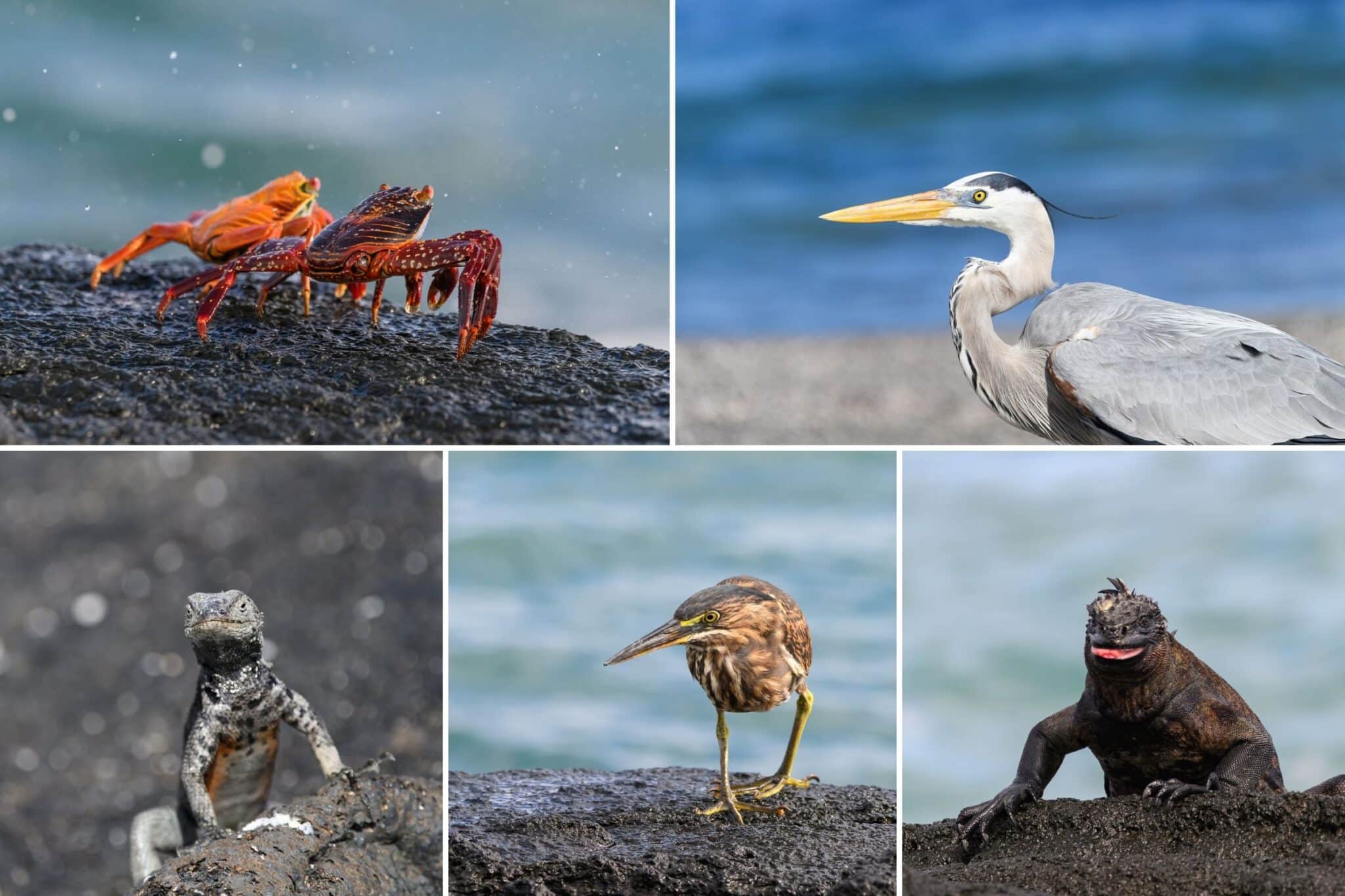
The area was also home to tons of crabs, primarily these Sally Lightfoot Crabs which were absolutely everywhere. And of course a variety of birds and lizards. The Blue Heron was especially pretty. This is also the only place that we spotted snakes.
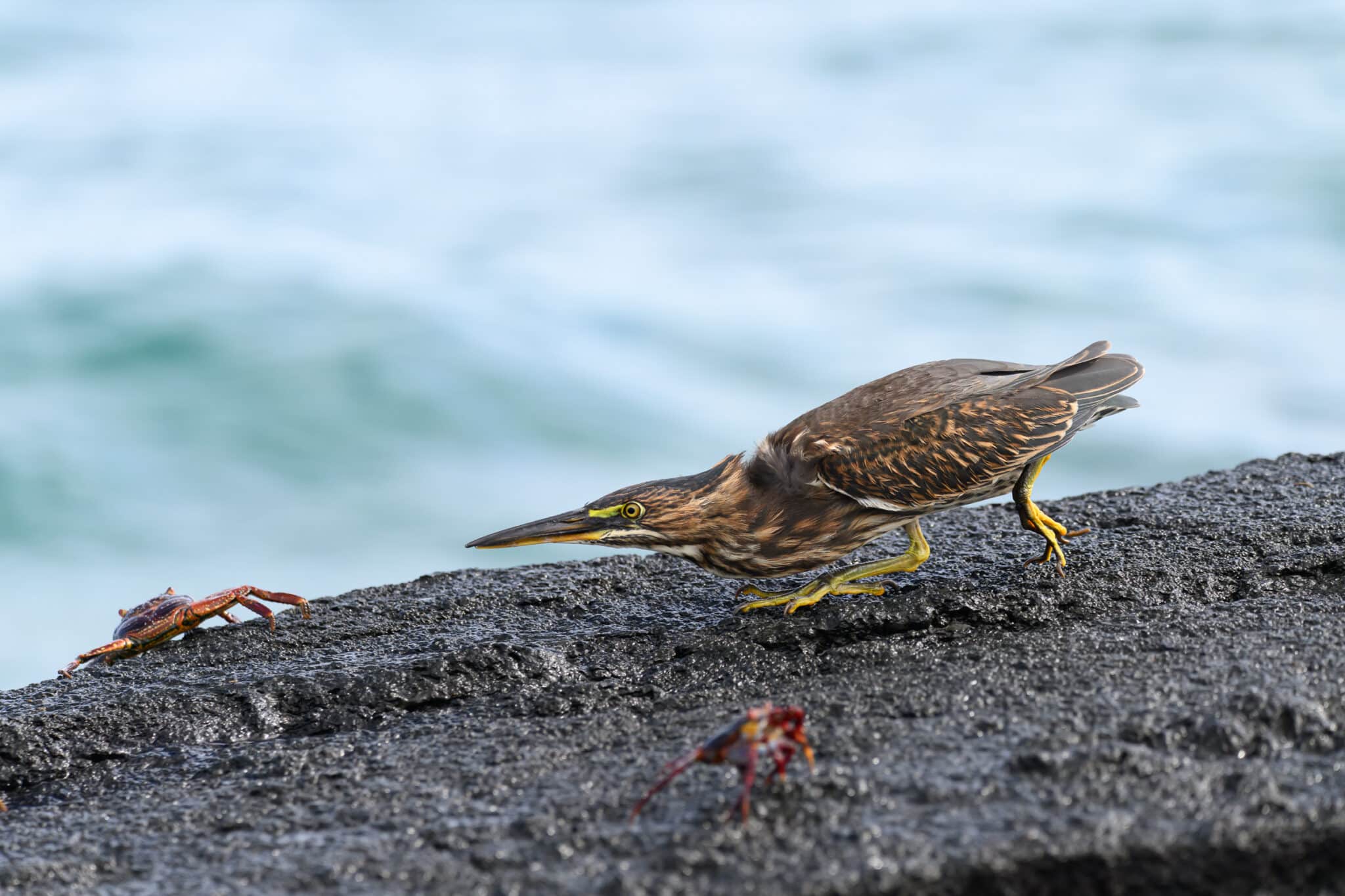
We watched a standoff between this Lava Heron and red crab for at least 15 minutes, with the bird doing his best to sneak up on the crab. Despite many tries, he never did get his snack!
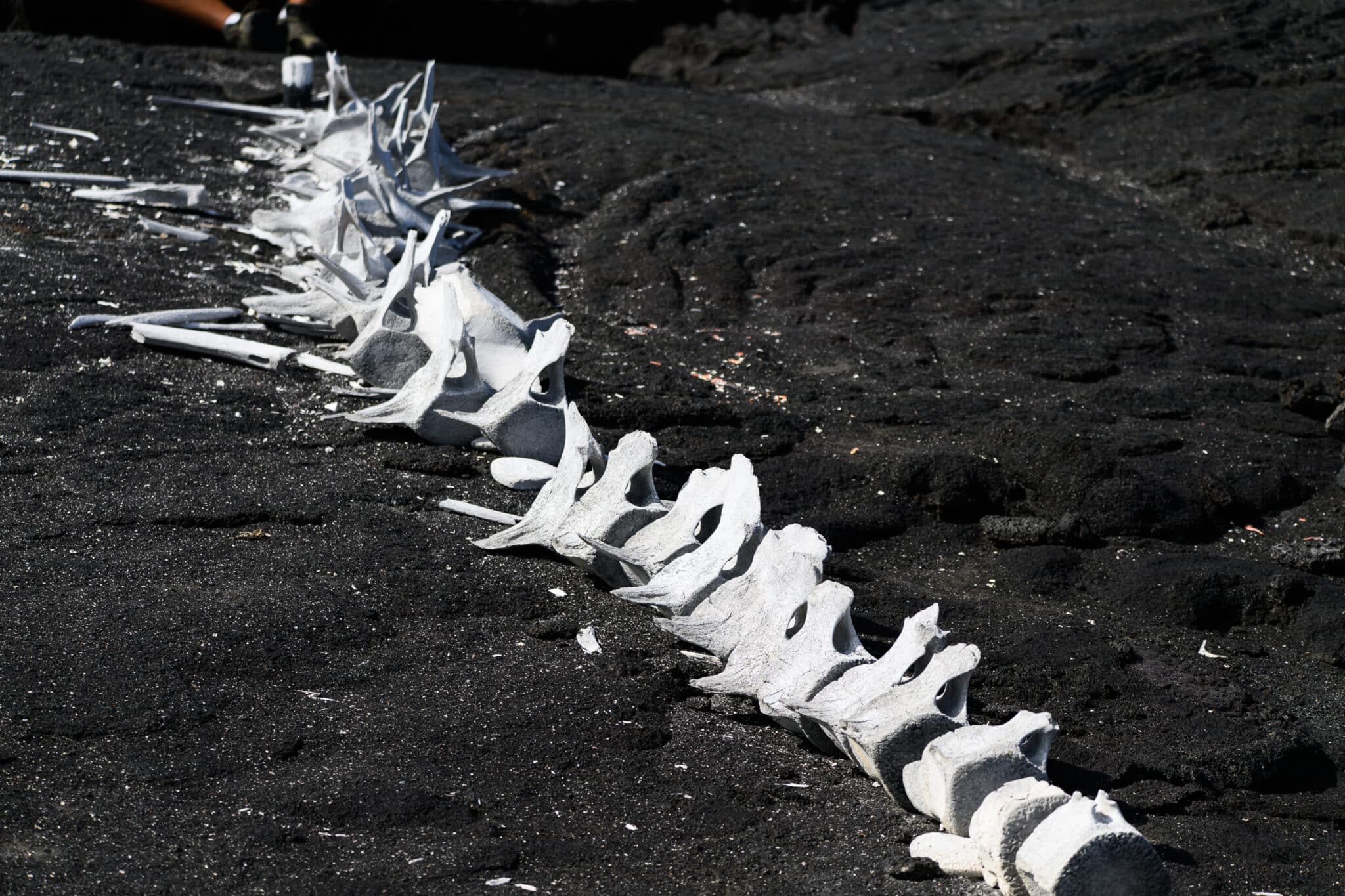
We also had a chance to see a whale skeleton, which are the remains of a whale that washed ashore many years ago. It's crazy to see this up close - gives a new understanding of just how gigantic these creatures actually are!
Then we returned to the ship for a quick outfit change, and back to the pangas for a snorkeling excursion! We were lucky enough to see two of the marine iguanas feeding underwater here. One swam right up to us! They were definitely the highlight of this snorkel trip.
There were many more turtles here also. So many that you had to avoid swimming into them again! Plus some large, colorful fish.
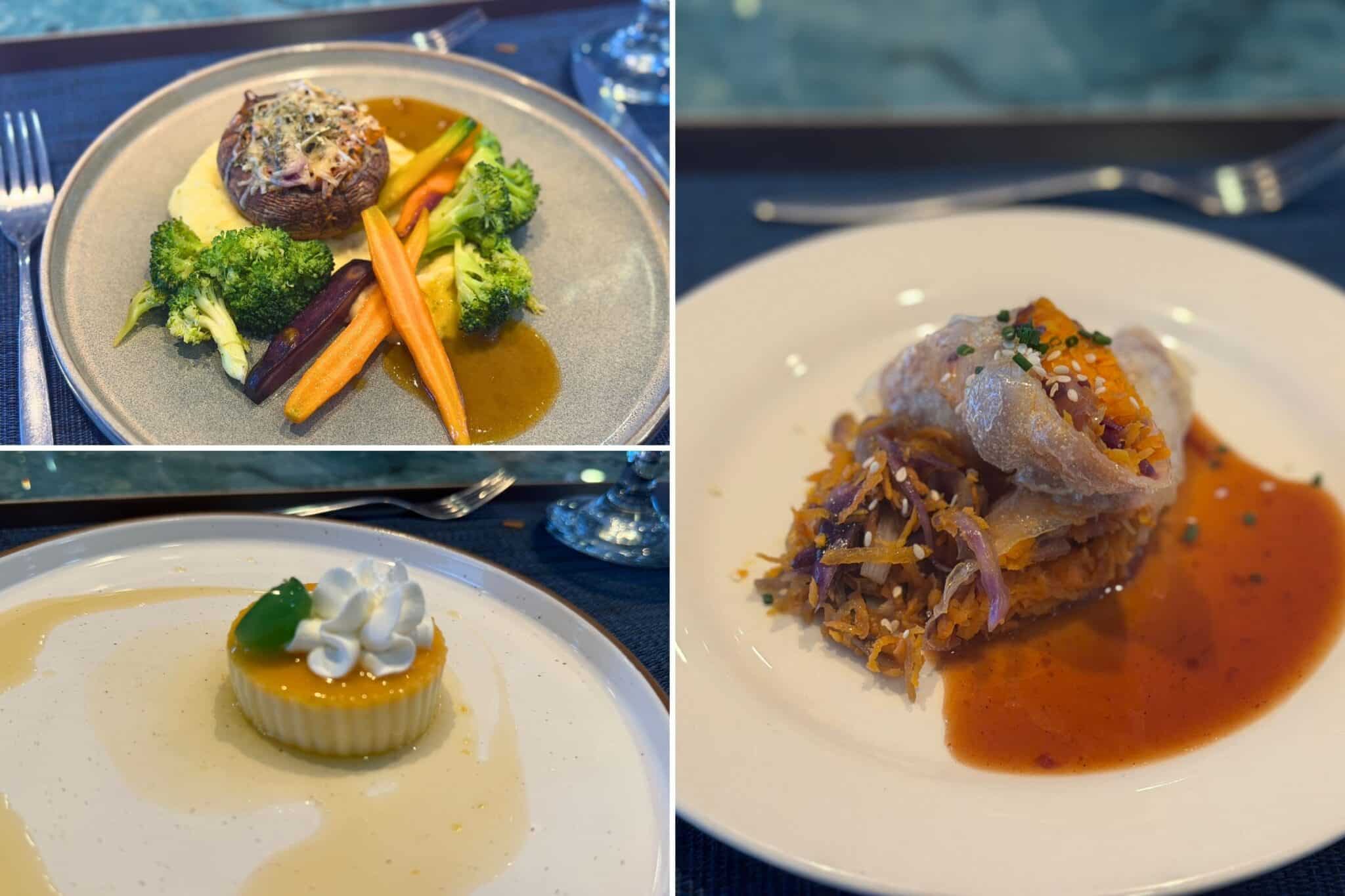
We headed back to the boat, where we were served another multi-course lunch. I had a vegetarian spring roll, stuffed portobello mushroom with mashed potatoes and veggies, and a flan for dessert. Then we had time for a short break and a much needed cup of coffee.
While en route to our next destination, the captain summoned us all to the bridge so we could watch as we crossed the equator. We all counted down as the gauges moved towards 0 degrees latitude. Very neat thing to see!
Then we headed off on another panga ride at our second location for the day - Albermarle Point. It was a rougher ride today and we needed our raincoats on this one to stay dry.
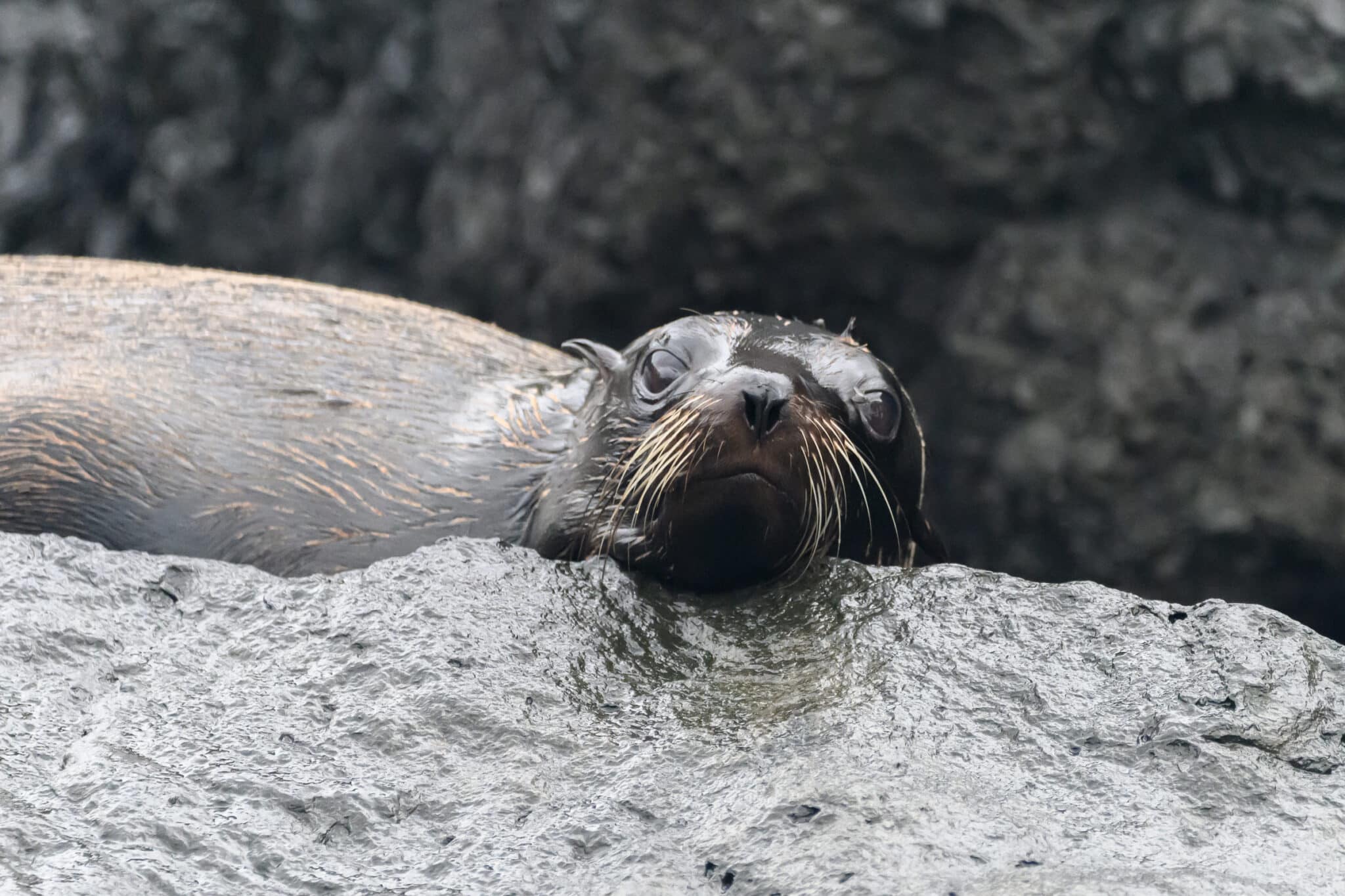
This is where we spotted our first fur seal! He was lounging up on the cliffs before we entered the mangroves. I think we may have interrupted his nap time.
You may be noticing the ear flaps on this guy and thinking "hey, seals don't have ears!". But fur seals, despite their name, are actually more closely related to seal lions than true seals. Hence, those cute little ears.
Then we entered the cove and took a slow ride around the mangroves. We had a chance to see some more blue-footed boobies, a flightless cormorant, a baby shark, several lava heron, and a few more sea lions.
And of course back on the ship we were treated to another delicious dinner. This time it was a caprese salad, grouper, and a tasty tres leches cake for dessert. I must have worked up an appetite today, because I started chowing down without taking any pics of my food. ;)
Day Five - Santiago Island
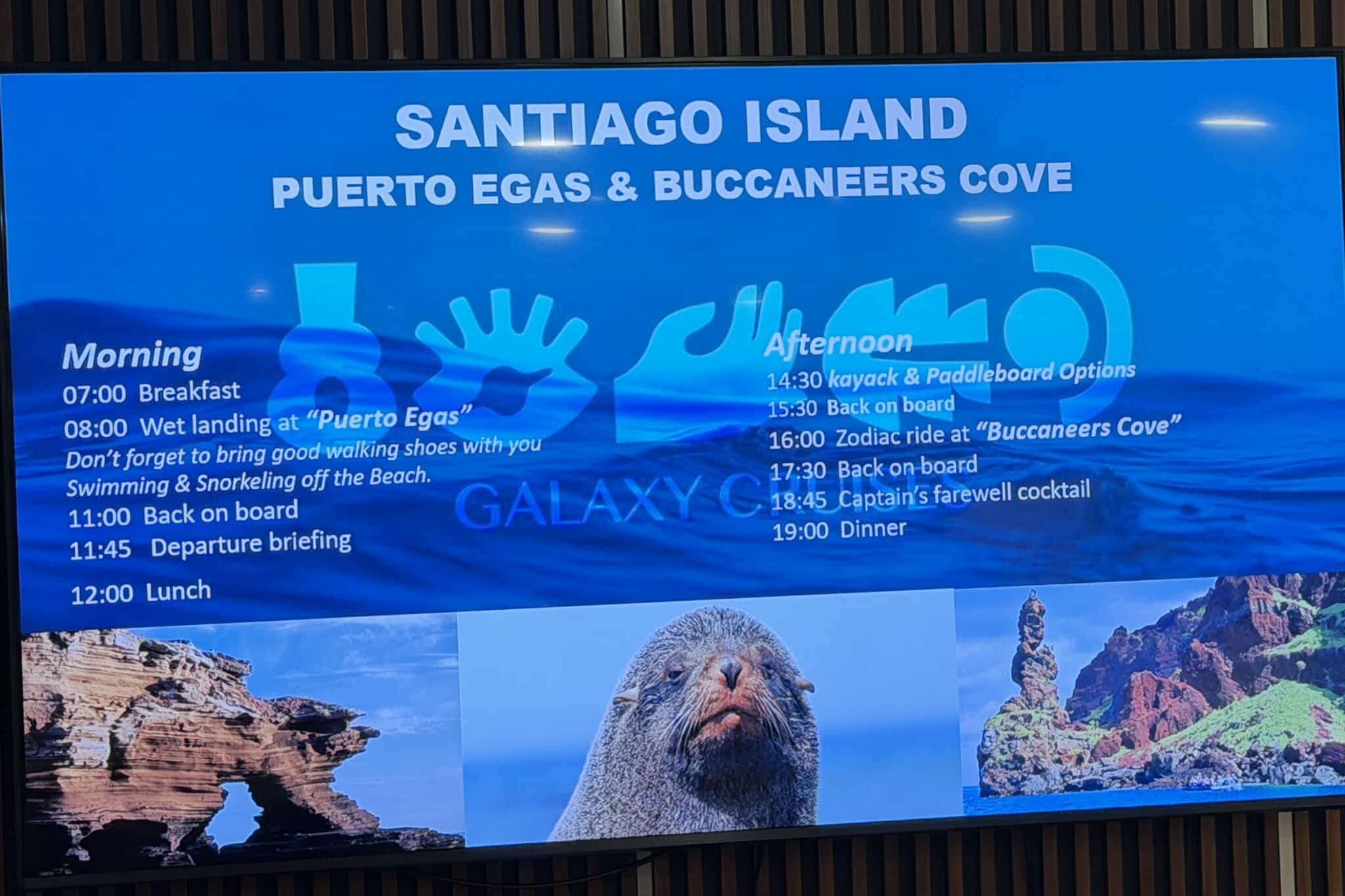
During the night, we drove full speed as we moved from the western coast of Isabela over to the central islands, where we would conclude our trip. And I do mean we moved at full speed - the ship was rocking and rolling through the night.
We woke up at Santiago Island, where we started our day at Puerto Egas. This is where we had our first (and only) wet landing of the cruise. That means that we disembarked the panga by stepping right into the water at the beach. We wore our water shoes for this!
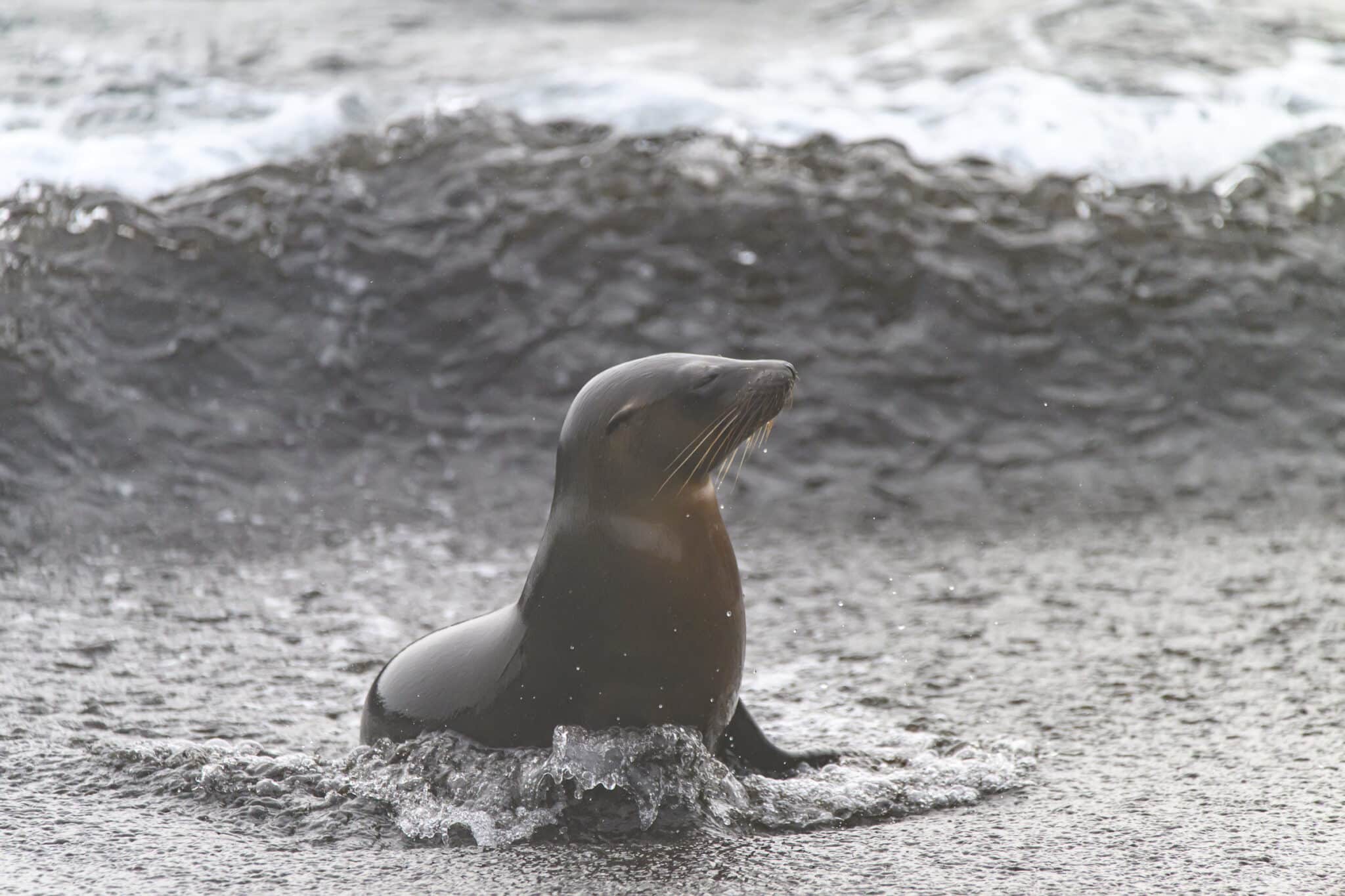
We were also instructed to bring along our snorkeling gear so that we could snorkel from the beach after hiking. We were greeted immediately upon arrival by some friendly sea lions splashing in the surf.
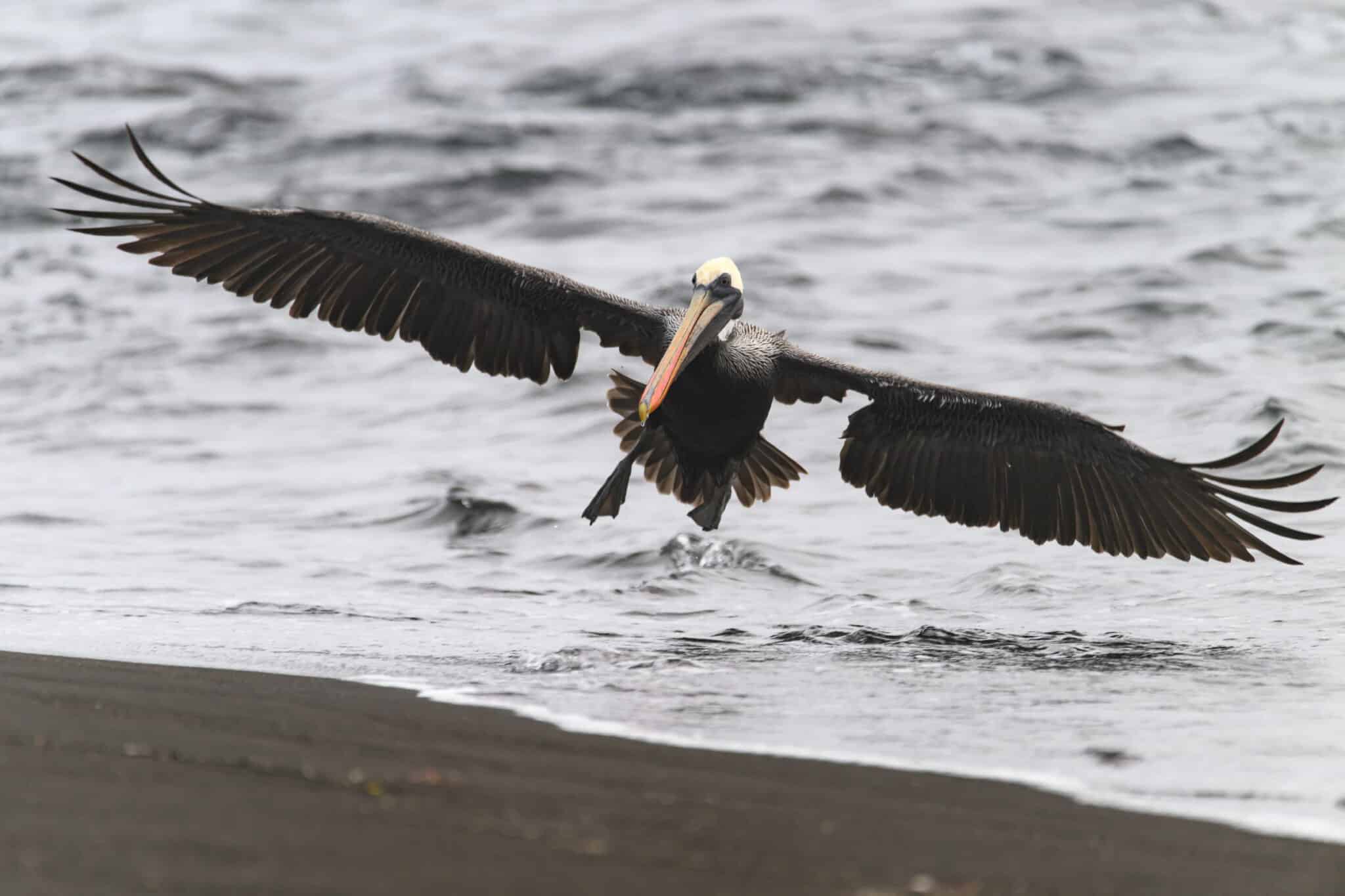
Moving along the walking path, we got to watch this pelican fishing for a bit. He was a big boy! We have pelicans at home in Florida too, but I never do get tired of watching them.
Next, we rounded the corner to find fur seals lounging on the rocks. I was worried that one we spotted in Albermarle Point would be our only sighting, but they were everywhere here on Santiago Island!
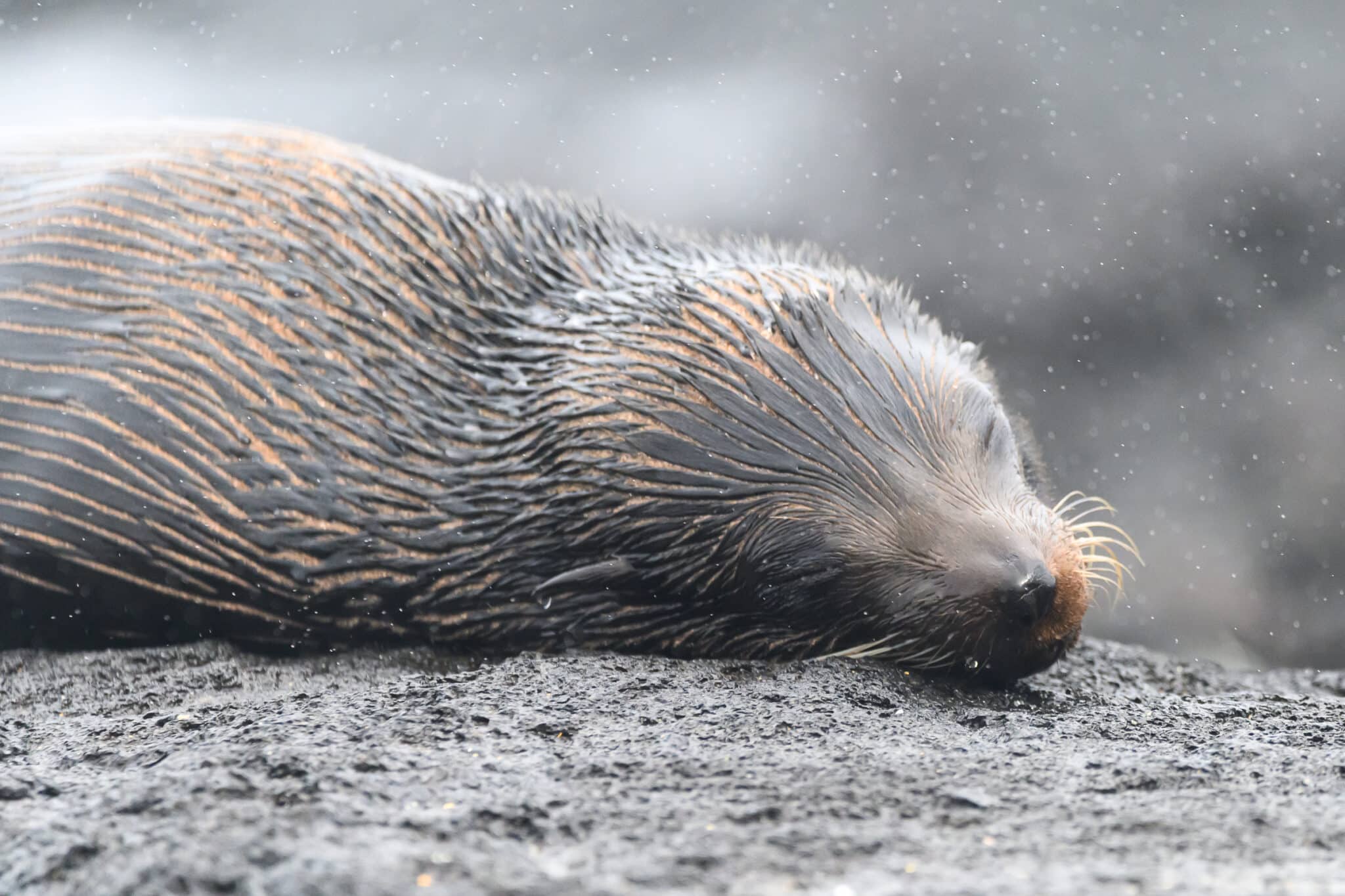
Look how cute their furry little faces are. Doesn't it make you want to snuggle up with one of them? Don't do it, obviously. You'll probably get banned from visiting. And bit. But sure is tempting. ;)
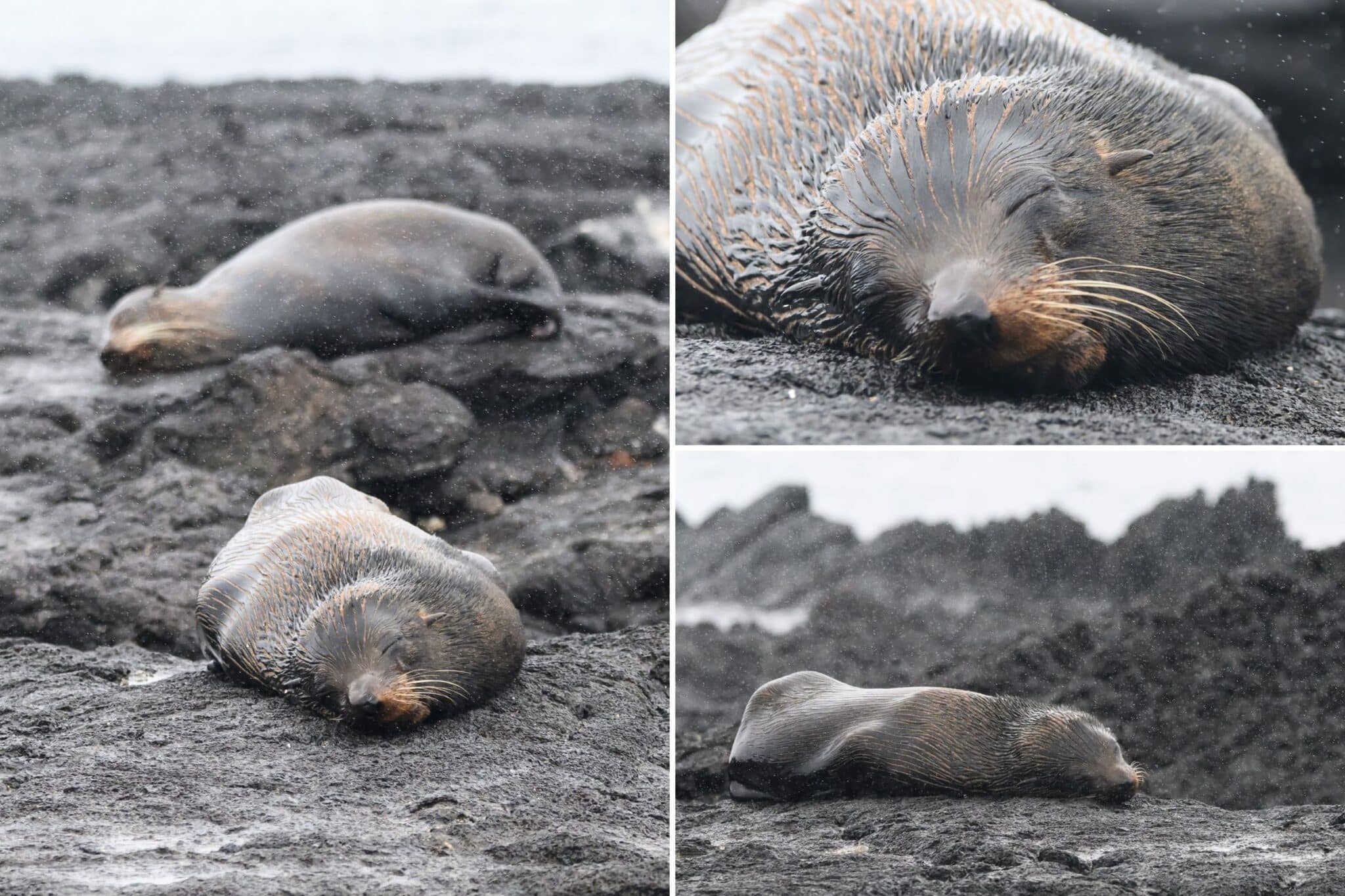
Besides the fur seals, we saw another family of blue-footed boobies, a very big iguana who opted to nap on the trail, tons more Sally Lightfoot crabs, and a whole lot of pelicans and smaller birds. This is a really pretty area and I very much enjoyed exploring it.
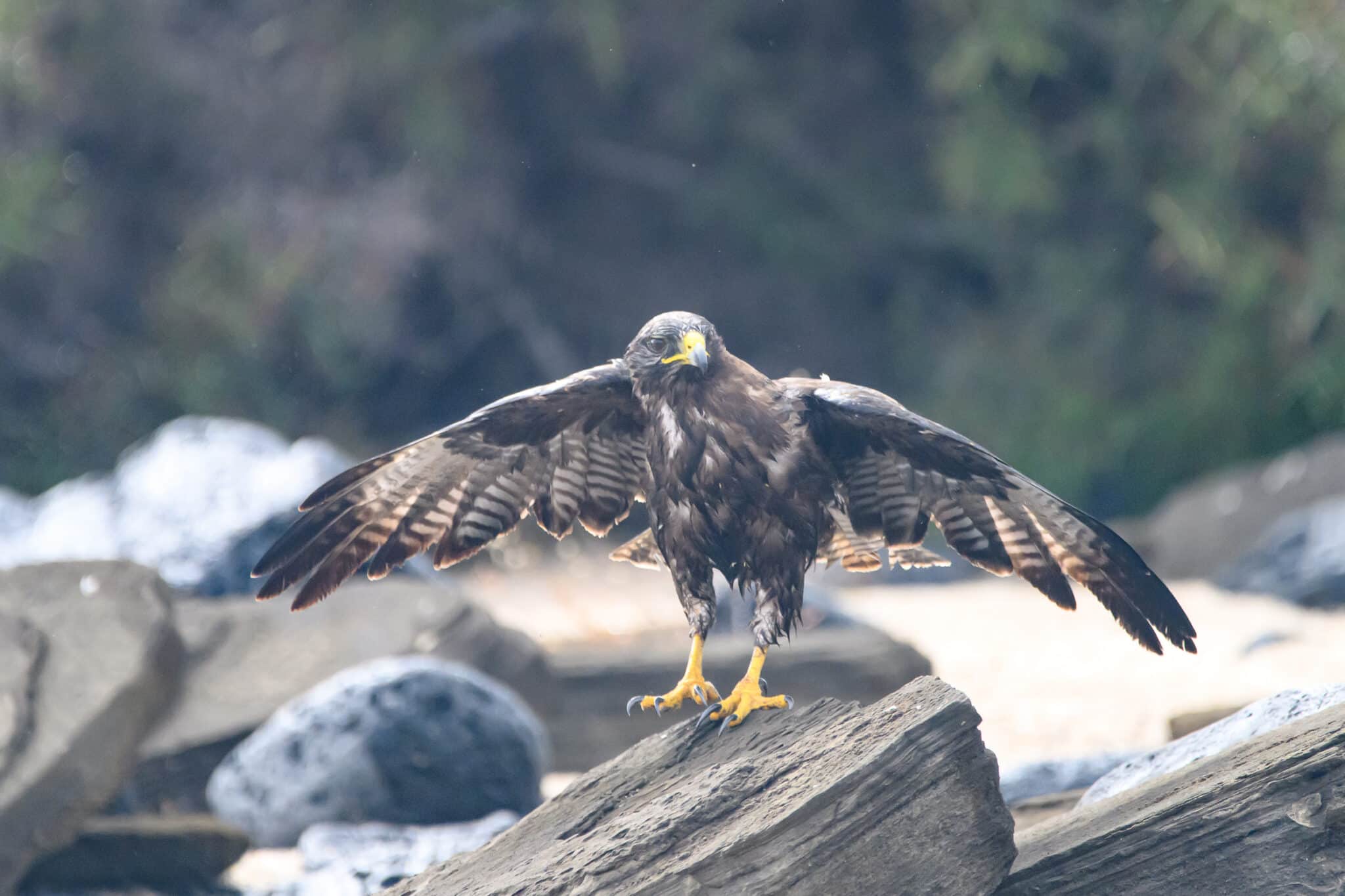
And on our final stroll back to the beach, we were treated to one more special visitor - a beautiful Galapagos Hawk! These massive birds have wingspans up to four feet wide. And while not technically endangered, they are considered to be a vulnerable species, only inhabiting 13 of the islands today compared to all 18 in past decades.
Then we returned to our starting point and went snorkeling right from the beach. This is the only location where we snorkeled from the sandy beach on our cruise - all others were directly off the panga.
We swam out out pretty far, with our guide's instruction, to depths of about 30 feet. And this is where we saw several white tipped reef sharks! They were probably about 3-4 feet in length. My son had been hoping to swim with some sharks, so this finished off his wildlife wish list.
We even saw a few sea lions swimming in the water here. And many colorful fish and sea urchins. I will warn you that the current was very strong here, and it was pretty hard to swim back in. I had a hot minute where I thought I was going to need to flag down a panga for help, and I am a strong swimmer.
So if you are not a strong swimmer, I wouldn't venture out too far unless your ship's zodiac is following closely. A few people from our group opted to just snorkel around the beach area in shallow water, and we saw some families with younger kids doing that as well.
Back on the ship, we had a quick debarkation briefing, where they reviewed the schedule and debarkation procedures for the next day. The staff made sure they had everyone's flights or continuing travel plans correct. And we watched a video that very awkwardly explained the tipping recommendations. Like that was literally the only thing in the video. Haha.
Next we sailed over to our second location at Buccaneer Cove, just on the other side of Santiago Island, where we enjoyed a final delicious lunch before gearing up for the next activity.
Activity time! Here we had one last chance for kayaking and paddleboarding. My son tried paddleboarding again but the water was very rough and the current strong, so he found himself paddling furiously and still moving backwards. Haha.
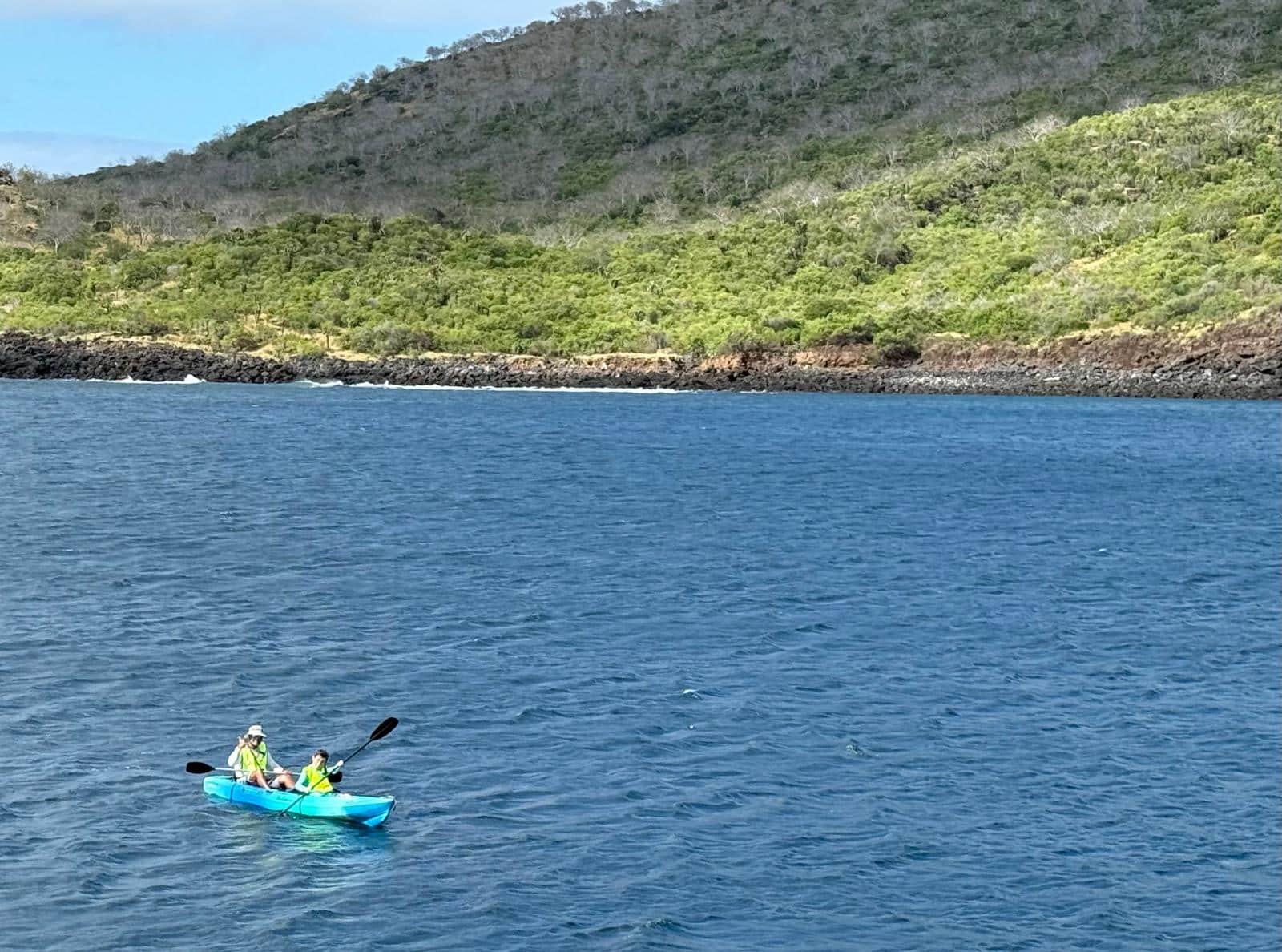
We switched him over to kayak with dad, and that was much easier. There was very pretty scenery in this area, but no new wildlife at this location. We did spot a handsome sea lion sunbathing and, of course, many birds.
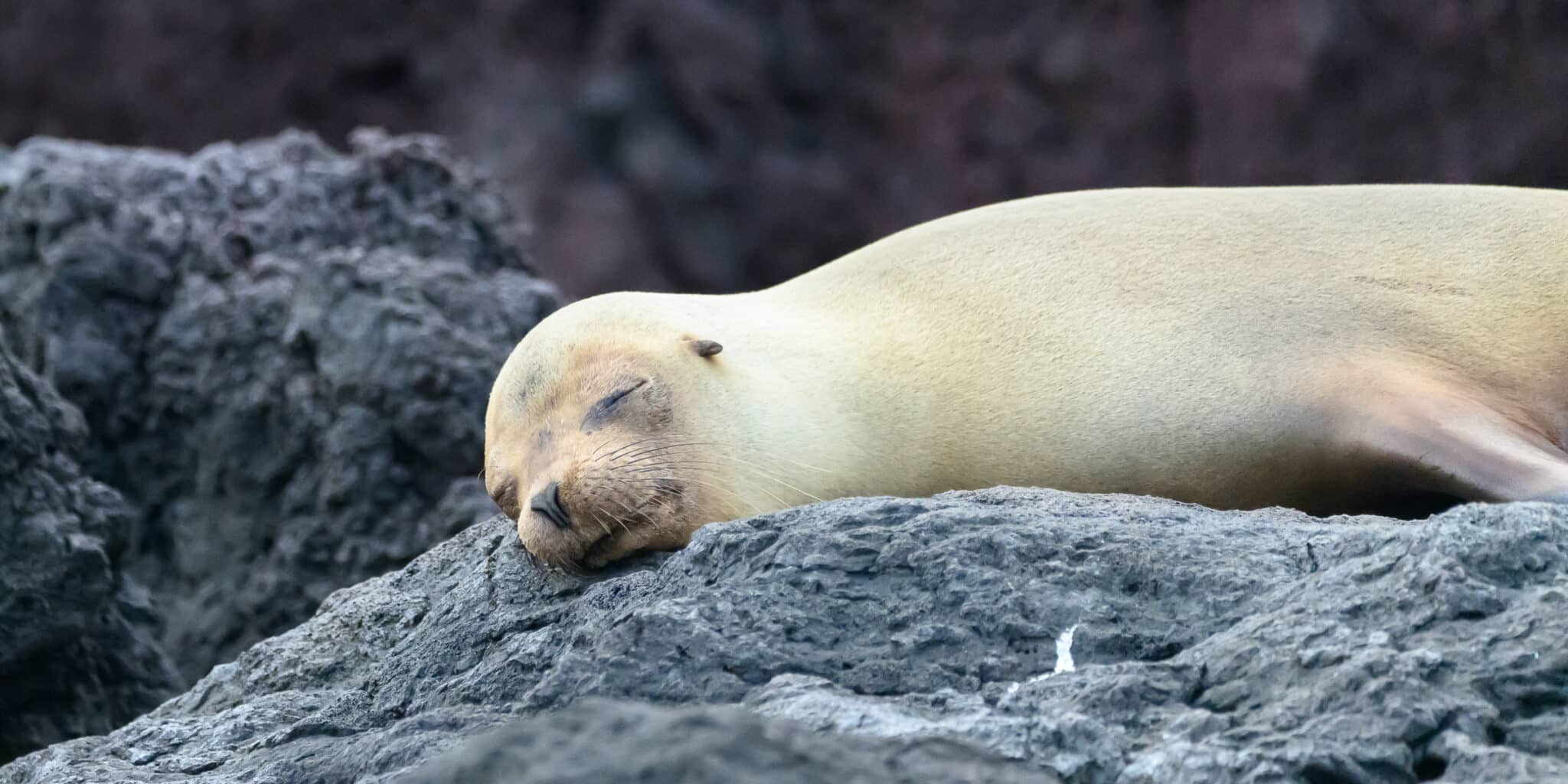
Then we headed back to the ship for our final activity- one more panga ride. We took a ride around the cove and into the next cove as well, where we had a chance to see the red sandy beach and the Bishop Rock formation.
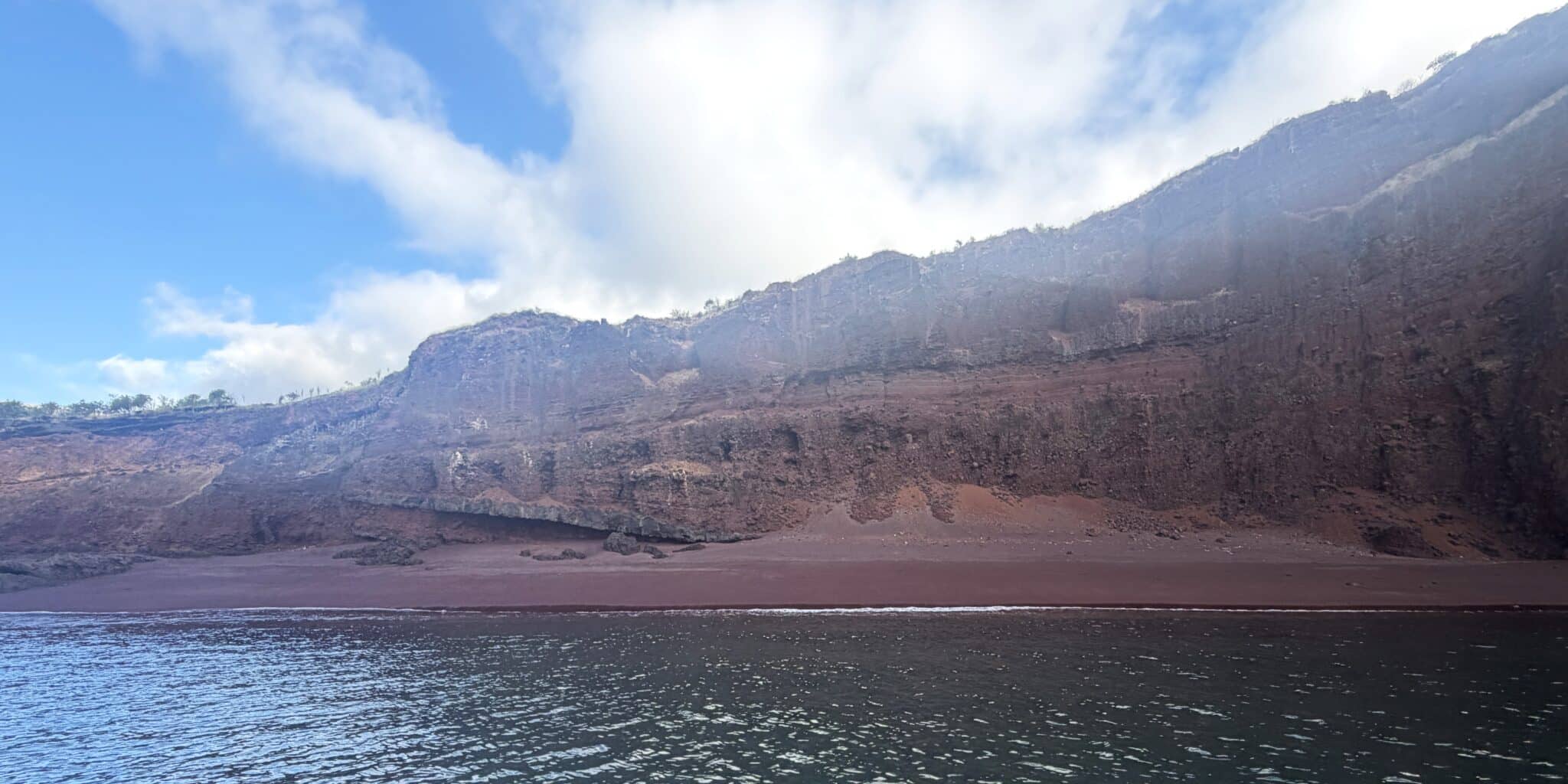
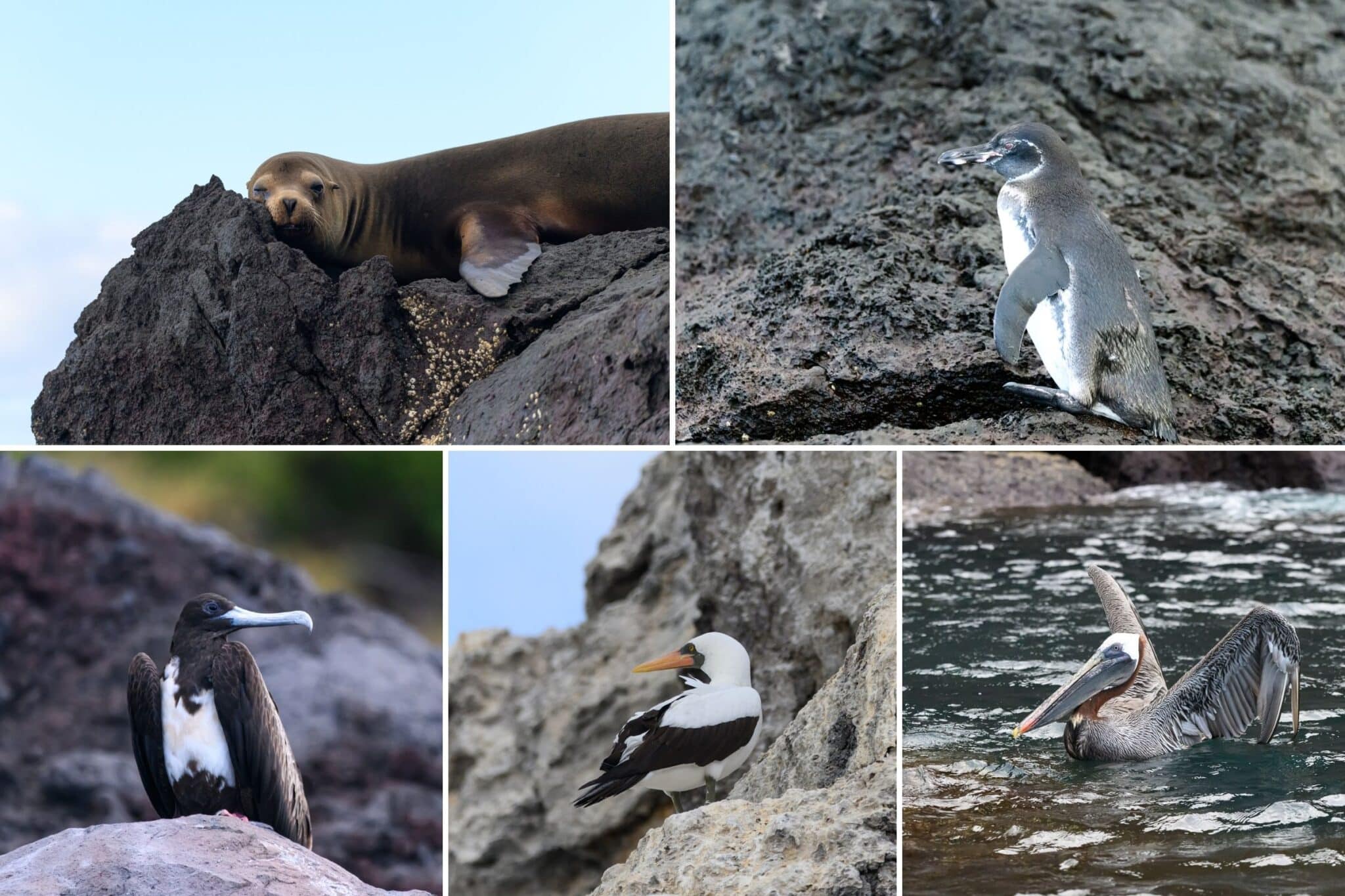
As for wildlife, we saw several sea lions napping on the rocks, many types of birds, and even a penguin! This is a very unusual location to see a penguin, as they typically stick to the western side of Isabela and Fernandina island.
We also saw the Nazca Booby here, which is closely related to our blue-footed friends, but with a less chaotic color palette. We even rode the panga into a small cave and some sea lions followed along to play in there.
In the evening, we had the Captain's Reception, where we enjoyed a cocktail and the crew came out to say goodbye and awkwardly receive their tips. ;) That was followed up by our final multi-course dinner and we enjoyed some wine on the upper deck and a final chat with our cruise-mates before turning in for our final night.
Day Six- Debarkation
In the morning, we had one last chance for an activity. Although, the word activity is probably a little generous here. We gathered at 6:30am on the sundeck as the ship circumnavigated Daphne island. Our guide explained the history of the island, which used to be a place for land excursions but is now closed off to visitors, and pointed out some additional species of birds.
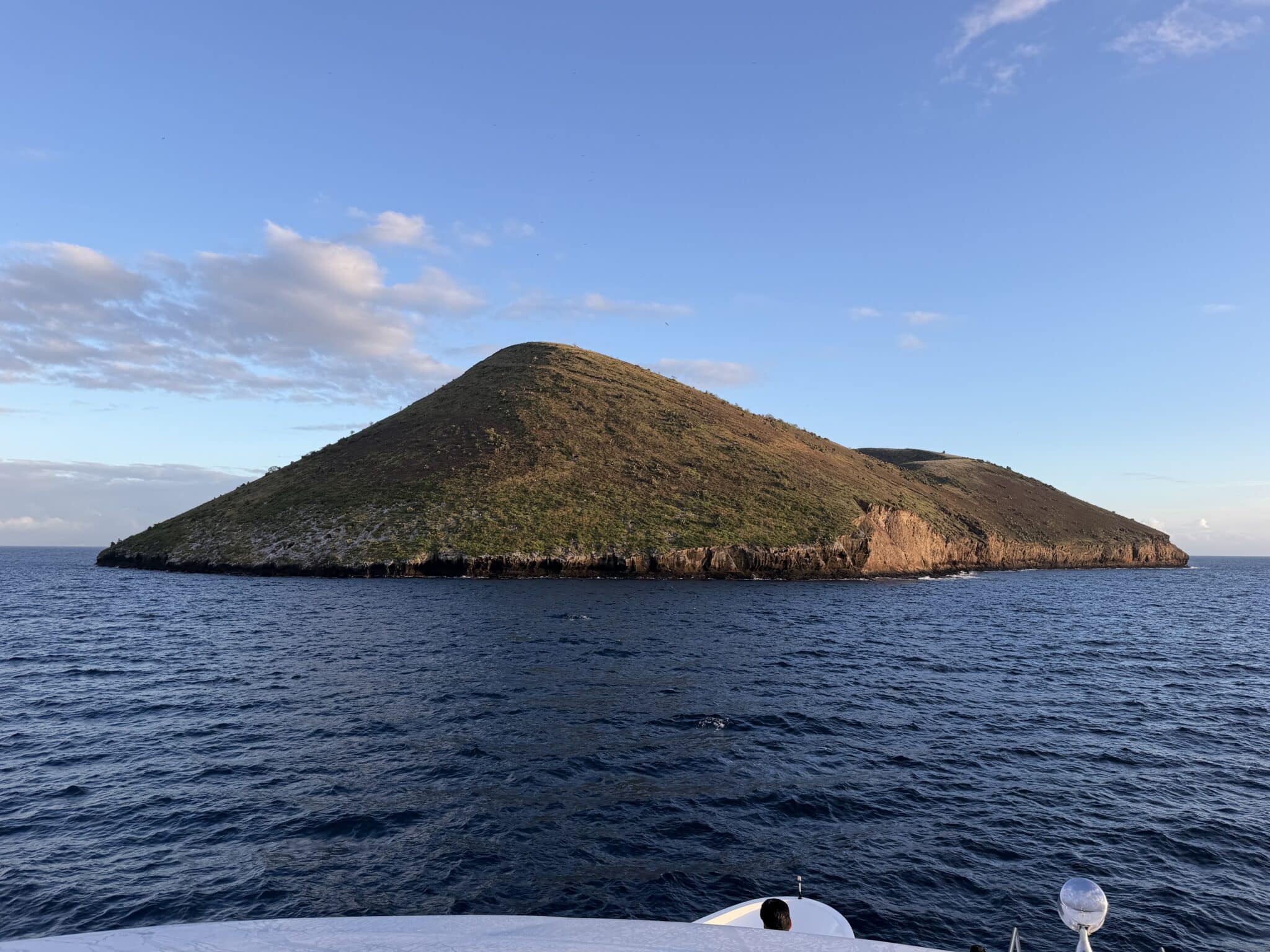
Breakfast was served at 7:15AM, bags were placed outside our cabins at 8:00AM, and at 8:30AM we took a final panga ride to the boat dock. From here, we took a two minute bus ride to the Baltra airport.
And then we had a LONG wait until our flight at 12:40pm. So I do wish that was organized a little bit differently. It's good to plan cushion time, but we could have easily made an earlier flight, without wasting so many hours at the airport. There is a cafe at the airport where you can get food while you wait. My son ate two plates of chicken wings - guess he was craving some American style food by then!
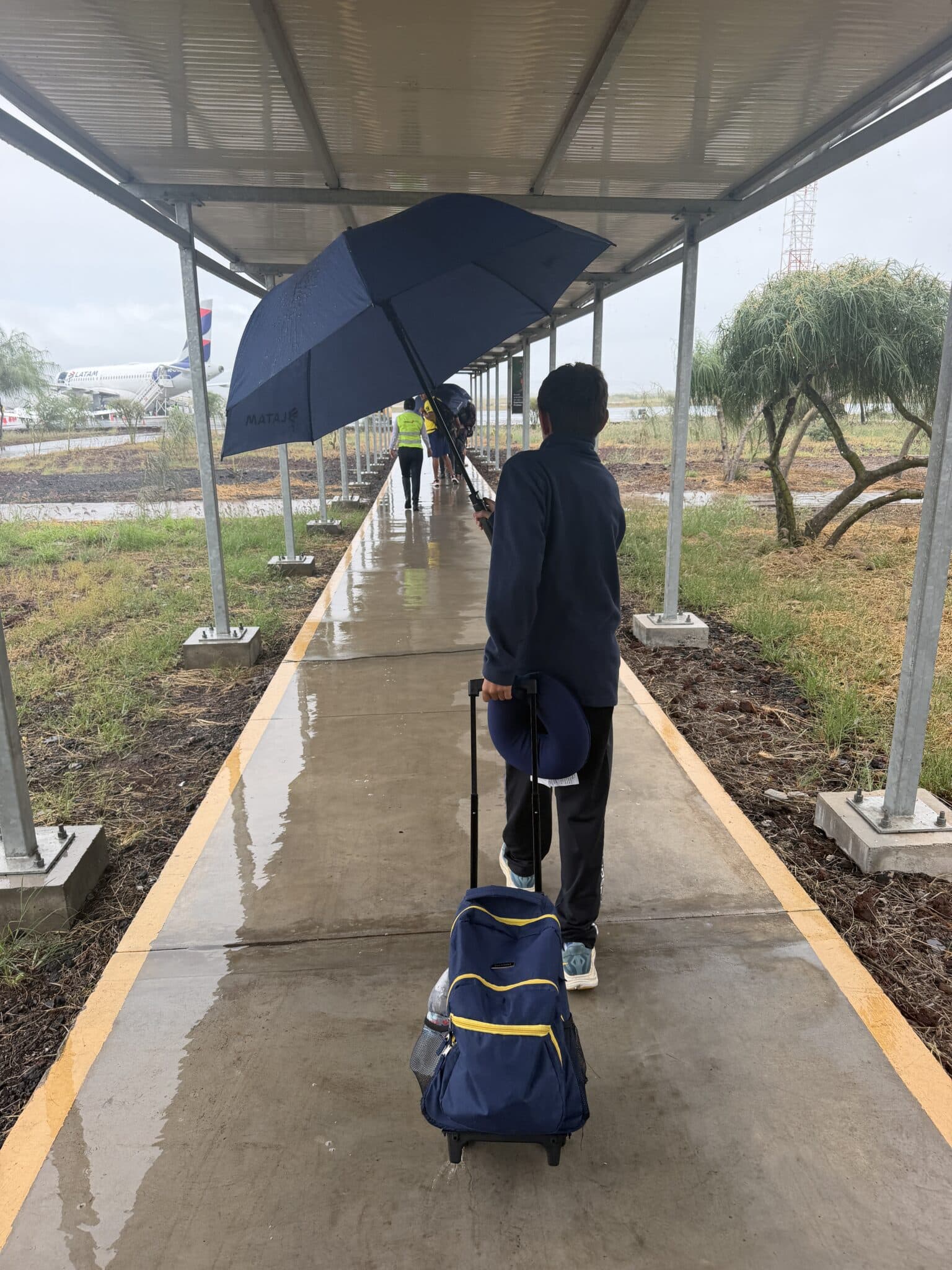
The rain started up just as our flight was boarding, so the staff handed everyone umbrellas we made our way to the tarmac.
We arrived back in Quito around 5PM, after a brief stopover in Guayaquil. Then we had many hours until our flight back to the USA at midnight. So we booked a room at the Wyndham at the airport for the remainder of the day to relax and shower. This was very convenient, and I highly recommend it if you have a long layover.
The Food
First off, let's just say that they fed us very well on the Ecogalaxy. The food really was better than my expectations and they did a great job catering to everyone's needs.
Breakfast was buffet style every morning with eggs made to order. The staff took our egg order on the first day and then had it ready each morning after that. Of course you can change your order, if you wish. ;) Additionally, there were pancakes or waffles, bacon or sausage, veggies, fruit, yogurt, and cereal every morning on the buffet. Plenty of choices for everyone!
Both lunch and dinner were multi-course affairs, with 3-5 courses served at each meal. The menu showcased different types of cuisine from around Ecuador, and featured a lot of fresh seafood and plantains. But there was some other non-Ecuadorian themes thrown in for fun, like an Italian themed pasta night.
Besides the meals, we were greeted with snacks and drinks after each activity. Things like mango juice, plantain chips, and empanadas bites. It was fun to come back from our morning excursions and see what they had cooked up for us!
The chef did an amazing job catering to all the various dietary needs of the group. There were people with specific allergies, vegetarians, no-shellfish people, no-fish people, and so on. They remembered everyone's restrictions and served up something suitable for each meal.
I am mostly vegetarian, but eat limited amounts of fish. Frankly, I am very picky about seafood. We live in Florida, so I guess I am spoiled. I found their fish dishes to be excellent - very fresh and flavorful. And there was also a vegetarian option at every meal.
As I mentioned, my son was the only child on the cruise, so I was a little worried about the food. You know how kids can be with "fancy" food. We wanted him to try new things, so didn't request anything specific. But the chef proactively made him some kid friendly options when they knew it wasn't going to be appealing to him. For example, when they served octopus at dinner- they made him a pizza instead! And on a couple nights, they served his entree with fries instead of the fancy veggie sides. So overall, he ate very well!
However, I had also brought ramen noodles and a variety of snacks as a backup plan, and we also used up all of that. He ate a packet of ramen every day in addition to the meals as an extra snack, and had plenty of things for munching in the cabin. If you have a preteen boy, you know they are basically always eating. So if you're on the fence about packing snacks for them, I think it's always a good idea.
The Drinks
Our bartender, Steven kept everyone well taken care of. He was the most popular crew member on the boat. ;) There is a full bar with wine, beer and liquor available.
It is most economical to buy wine by the bottle. They just put your cabin number on it, and keep it at the bar for you. My son loves Shirley Temples on vacation, and I am pretty sure he drank two bottles of grenadine on this trip. Steven said it's the most grenadine he's ever used on a cruise. Haha .
You can settle your bar tab on the last evening, and can use either cash or credit card. (I had trouble confirming this before we went, so yes, you can use a credit card for this!)
Coffee and tea are free and always available. There is a fancy coffee machine that makes all kinds of lattes, cappuccinos, and espressos. And there is always a hot water dispenser available for tea. (We also used the hot water to make the ramen noodles!)
Filtered water is also always available from a dispenser. Be sure to drink only this water, as the tap water on the ship is not considered suitable for drinking. They did say it was fine to brush your teeth with it, which we did with no issues.
The Cabins
Our cabin was quite nice and pretty spacious for a small ship. Frankly, I have had smaller rooms on full sized cruise ships. There was a King size bed and also a sofa bed that was made up into a single for my son, making it a triple cabin. There are not too many ships available that offer triple cabins, so that's a big thing to look for if you are a family of three.
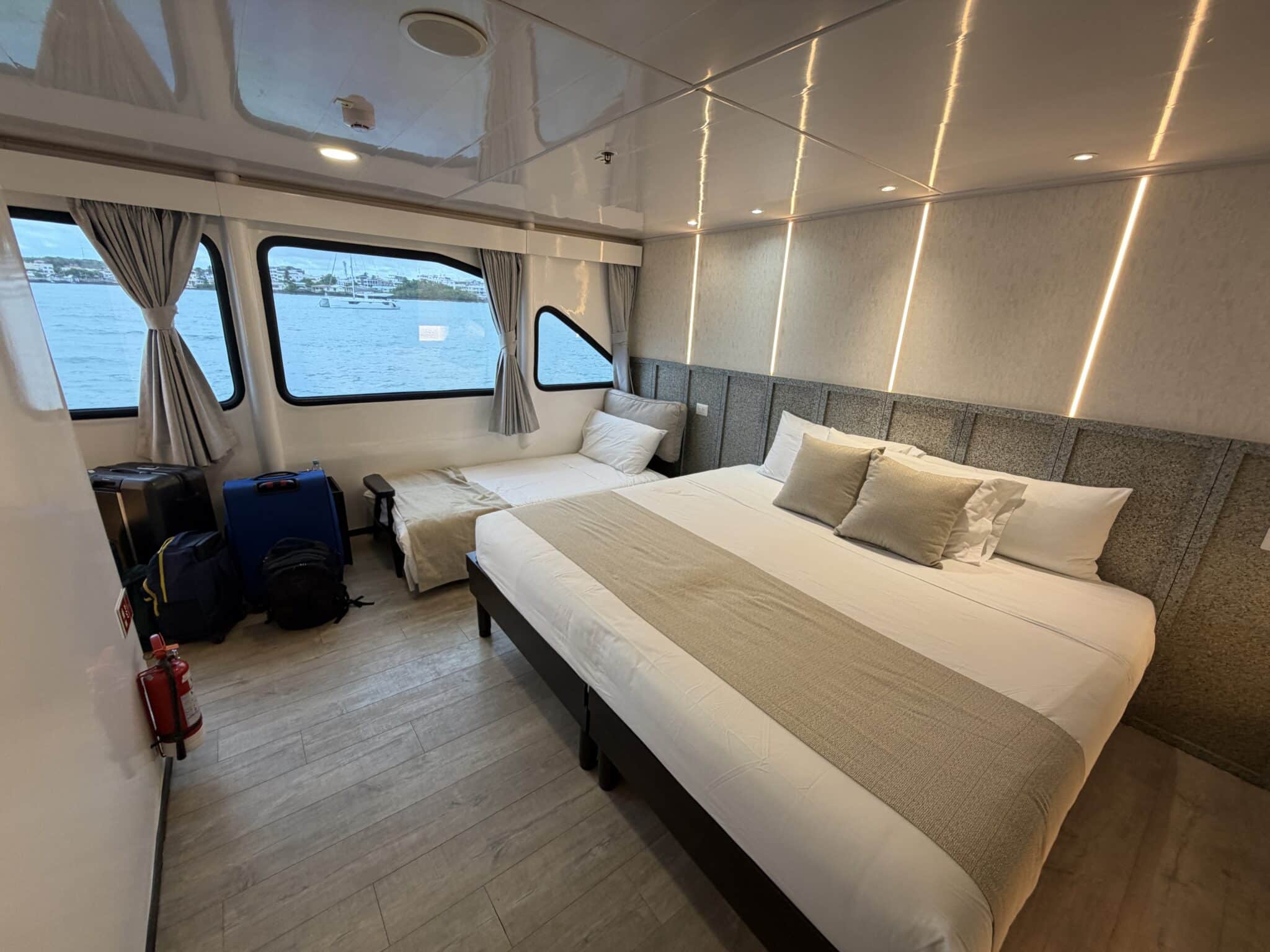
I've included many pictures of the room here. If you are doing a normal double cabin (not a triple), it will be exactly the same but with a futon-style sofa in place of the single bed.
There is also a large built-in closet with plenty of drawers and shelves for storage. We had no problem stashing all our clothing there and had room to spare. The cabinet doors are secured closed with strong magnets so they won't fly open when you're sailing in rough waters. Clever!
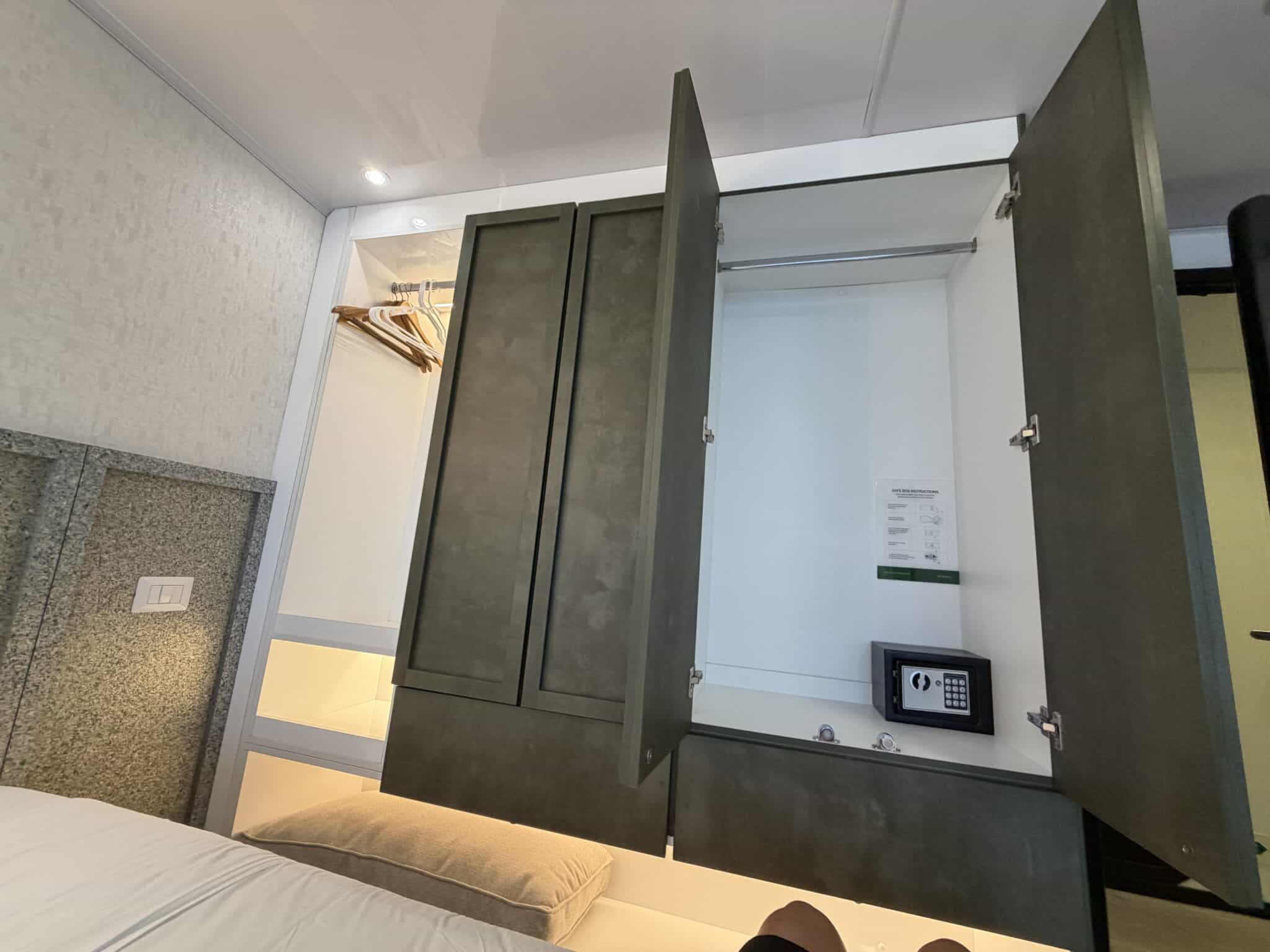
You will also find a small safe in the closet for stashing any valuables, like cash and passports. You should note that the cabin doors do not lock from the outside, so you can't lock up when you are out. We didn't find this concerning as it's unlikely your fellow passengers are going to be thieves. And even if they were, it's tough to sneak around when the whole ship only has eight rooms. Lol. But the cabin door does have a deadbolt that you can lock from the inside at night.
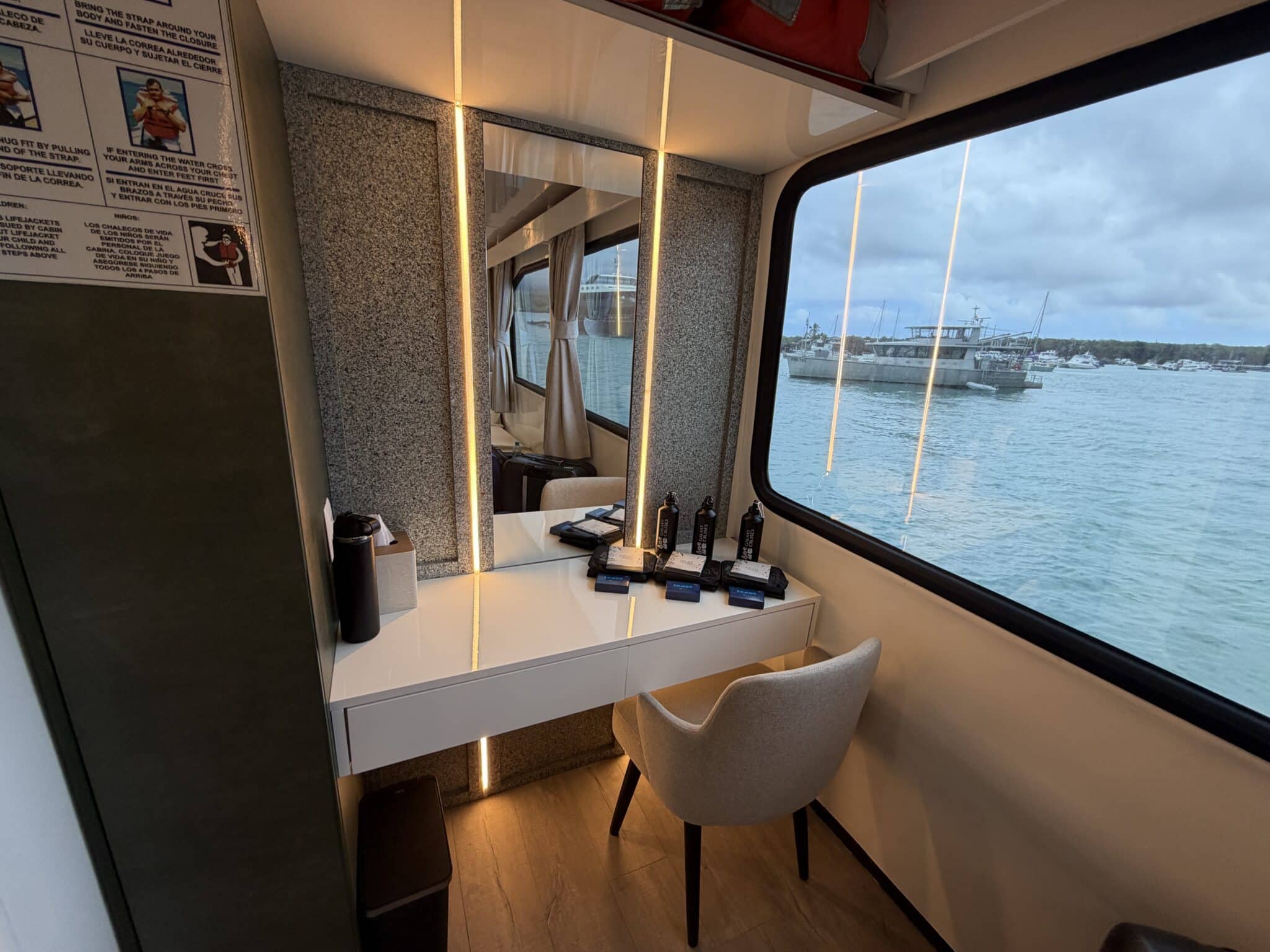
There is also a small desk with mirror, which can be used for working or getting ready. This would be a good spot to sit and write if you had some downtime, but they kept us very busy so I'm writing this from home afterwards.
The bathroom has a walk-in shower, which had very good water pressure and hot water for a boat. There is a single sink, and some nice big drawers for storage.
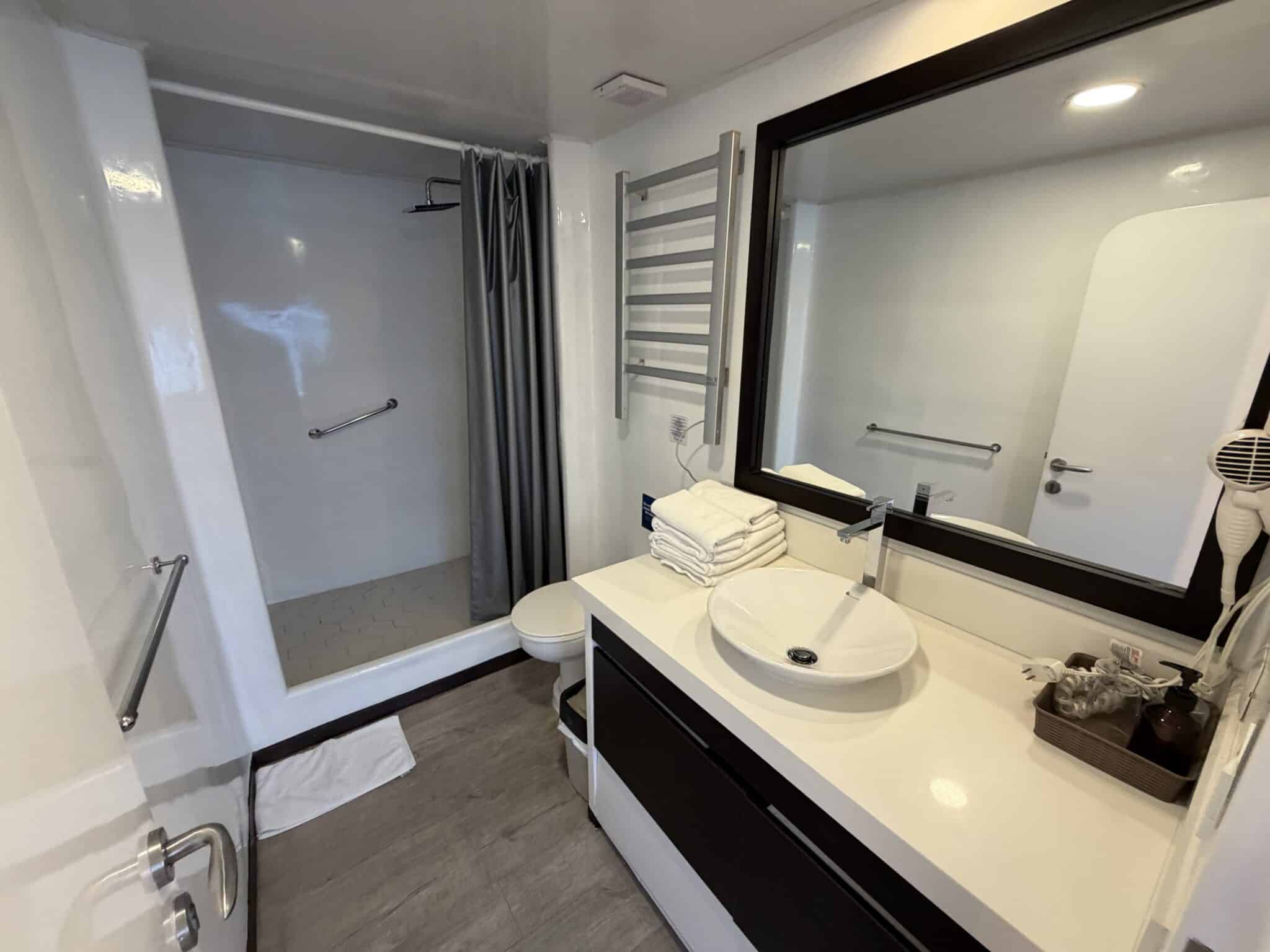
But there are a few quirks you should note. You can not flush anything, including toilet paper, down the toilet. You need to put it into the lidded trash cans in the bathroom, which are emptied several times a day.
The other is the towel situation. Towels are highly encouraged to be reused, which I did struggle with considering we were doing sweaty activities and taking multiple showers a day. The system is to leave your towels on the floor when you want them replaced, but it didn't always get replaced when I did that. But we made it work. First world problems, for sure.
There is a heated drying rack, which was great for helping bathing suits and towels dry faster. But I would still recommend having at least two swimsuits to alternate.
There is a wall hair dryer, which was fine. You don't need to bring your own. And don't bother with any other hair appliances, you will be in the water every day, and no one gets too fancied up for dinner.
There are plenty of outlets in the cabin, but they are oddly placed behind the bed pillows, where you would expect a headboard to be. So bring long cords or you will be sleeping with your electronics.
In the rooms, they provided a water bottle and drawstring dry bag for each person. These were very handy to have and you get to keep them as souvenirs! We've actually been using the drybags for all kinds of things back at home since.
Snorkeling Gear & Wetsuits
The ship had full length wetsuits available in a variety of sizes, but we brought one from home for our son to be sure he had a proper fit. If you wear a standard adult size, you should assume they have you covered. If you need a children's size or an unusual adult size, I would ask about it in advance.
They also had good quality snorkeling gear - masks, snorkels, and fins were available for everyone. We brought our own sets from home, because it is very nice to have gear that you know fits comfortably and won't leak. But fins are hard to pack, so I would prioritize the snorkel and mask, and use their fins if I ever went again.
We cruised in early June, and didn't find the water to be very cold. Neither my husband or I wore a wetsuit at all. I did wear a long-sleeved rash guard and swim leggings which gave just a bit of warmth and some protection from jellyfish. He wore a rash guard and swim trunks.
My son did wear his wetsuit for all of the snorkeling trips, and said he liked the extra buoyancy it provided in the water, in addition to being nice and warm.
Footwear - Onboard, Dry Landings & Wet Landings
Alright, here is some important info for packing purposes. You are going o need footwear for three different occasions here.
First, any shoes that you wear off the boat onto the islands will need to stay on a rack on the outside deck of the boat - no outdoor shoes inside the ship. This helps keep the ship clean, but also gives the crew a chance to clean the shoes between activities. They are very careful about not cross-contaminating between the various islands.
Dry Landing Shoes - A dry landing means you will step off the panga and onto dry land. Don't expect a dock, it may be rocks. But it will be dry. You can wear something like hiking shoes or regular sneakers for this. We brought trail runners. A couple hikes had very rocky or slippery terrain, and I was glad to have shoes with some grip.
Wet Landing Shoes - A wet landing means you will step off the panga directly into the water, like shallow water at the beach. It may be sandy or rocky. So these shoes need to be able to get wet. We used water shoes with a nice grippy bottom for this.
Some people opted for Keens, which are like closed toed sandals, and wore them for both wet and dry landings. I don't care for these because rocks and sand get inside and make them uncomfortable for me. But if they are your jam - you can go with it. They are very popular.
Boat Shoes - On the boat itself, you can certainly just go barefoot or wear socks. Many people did. Or you can bring a pair of clean shoes to wear around the ship. I wore a pair of clean flip flops.
More Packing Tips
A few more things we packed that I was definitely glad to have were:
- Swimsuits. Obviously. Bring two each, so one can dry while the other is worn.
- Rash guards. We each brought 2-3 rash guards and wore them every day. They are even good for hiking, to prevent sunburn.
- Swim Leggings. I found this more comfortable than a wetsuit but kept me safe from jellyfish and sunburns. You can also wear them under a wetsuit to make it easier to get on and off, and keep you extra warm.
Things I brought and didn't need:
- Dressy clothes for dinner. Not needed at all. Shorts and a t-shirt are perfectly fine for dinner every night.
- Binoculars. Too heavy and annoying to carry, and we found them unnecessary.
- Water bottles. We brought our own, but could have just used the ones provided on the ship.
Service & Gratuities
Overall, the service on the ship was really good. It's a very small crew - I believe just eight crew members. So these guys do literally everything - from cleaning the cabins to serving the dinner. They worked very hard! And they were also very friendly and accommodating.
So what about tipping them? First of all - yes, you need to tip them. Even if tipping is not a common occurrence in your country. It is expected here, and you should just budget for this as part of your cruise cost. It's a significant portion of their wages. And once you see how hard they've worked, you will want to do it anyway.
How much should you tip? The cruise operator suggests $15 per guest per day for the naturalist guide and $25 per guest per day for the crew (which they share). Our travel agent had recommended $15-20 per guest per day for the guide and $25-30 per day for the crew. We tipped on the higher end of what our agent recommended, as they deserved it.
You will be reminded about the gratuities via a video at the debarkation briefing. Then you will find two envelopes in your cabin, where you can place the tips for the guide and crew separately. You can hand these over at the captain's reception on the final night. Yes, that is a very awkward process. Yes, they could have designed it less awkwardly. Just do it anyway.
Would we do it again?
Yes! That's a big yes from me. This was actually one of our top vacations ever, and absolutely exceeded my expectations . We saw so much wonderful wildlife and the liveaboard cruise ship was such a fun and unique experience.
Of course, it was also a big and expensive trip. So who knows if I'll be blessed to visit again or if this will be a once in a lifetime experience. But if I get the chance to visit the Galapagos again, I would not hesitate to book Ecogalaxy again or try out another ship from Galaxy Cruises.
And no, I am not affiliated with the cruise line in any way. I also didn't mention to any crew that I am a travel blogger. This is simply my 100% honest experience.
Leave a Reply