
In this guide to Kaziranga National Park, you'll find everything you need to easily plan the perfect trip - from when to go and how to get there, to booking safaris, the best hotels to stay in, and wildlife highlights.
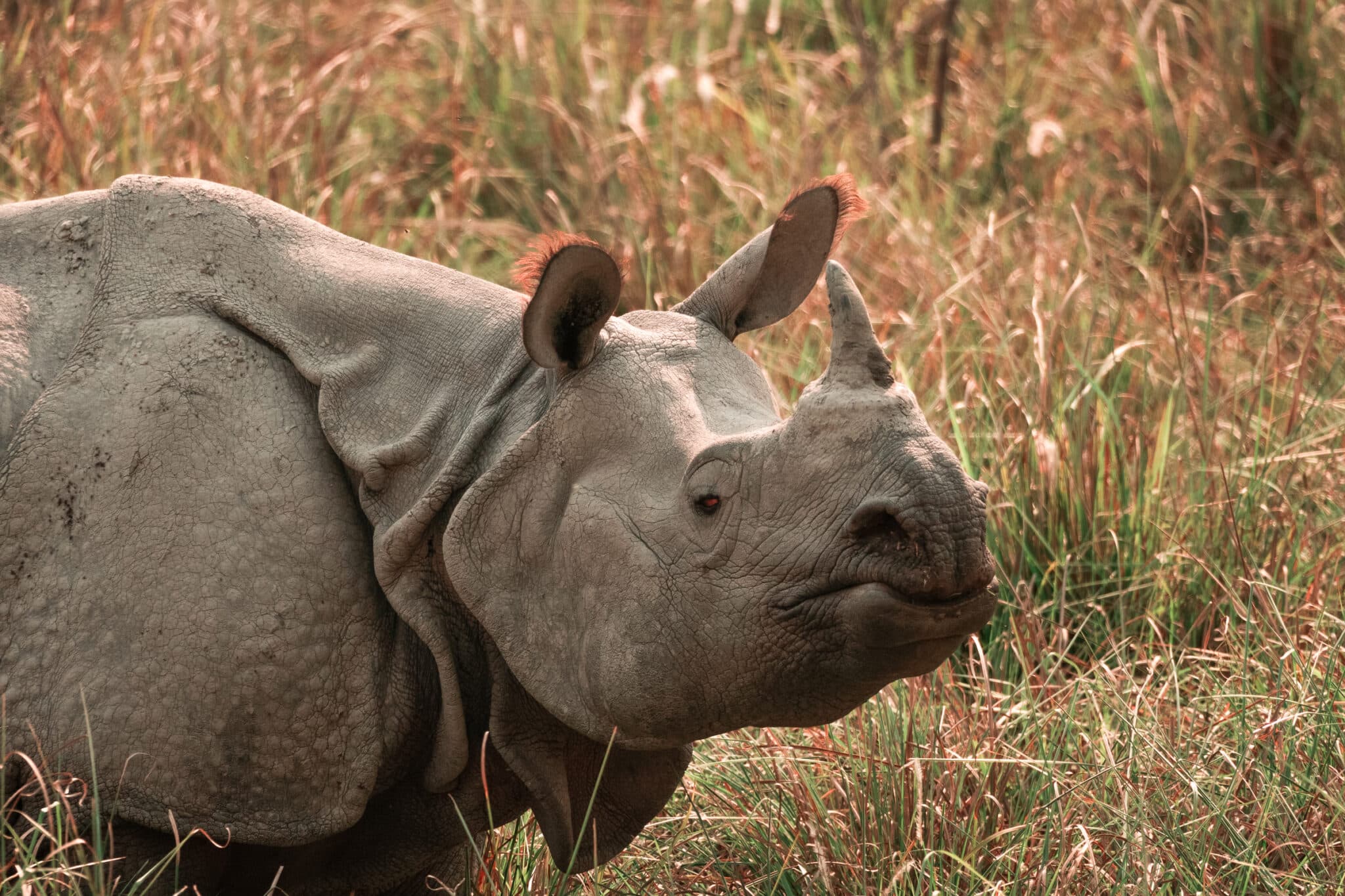
If you've ever dreamed of spotting a one-horned rhinoceros grazing in tall grass, or catching sight of wild elephants moving through the mist at dawn, then Kaziranga National Park should be at the very top of your India travel list. Tucked away in the northeastern state of Assam, this UNESCO World Heritage Site is one of the country's greatest wildlife destinations, a place where the wild still feels truly wild.
But planning a trip here isn't quite as straightforward as hopping in a car and showing up at the gate. The park has seasonal closures, four different ranges with their own quirks, and strict rules governing tourism. Add to that the maze of travel logistics in rural Assam, and you'll quickly realize a little insider advice goes a long way.
That's where this guide comes in. Based on our own experience visiting Kaziranga (guided by our Indian family members!), I've put together everything you need to know: how to get there, when to go, where to stay, and how to make the most of your safaris.
Why visit Kaziranga National Park?
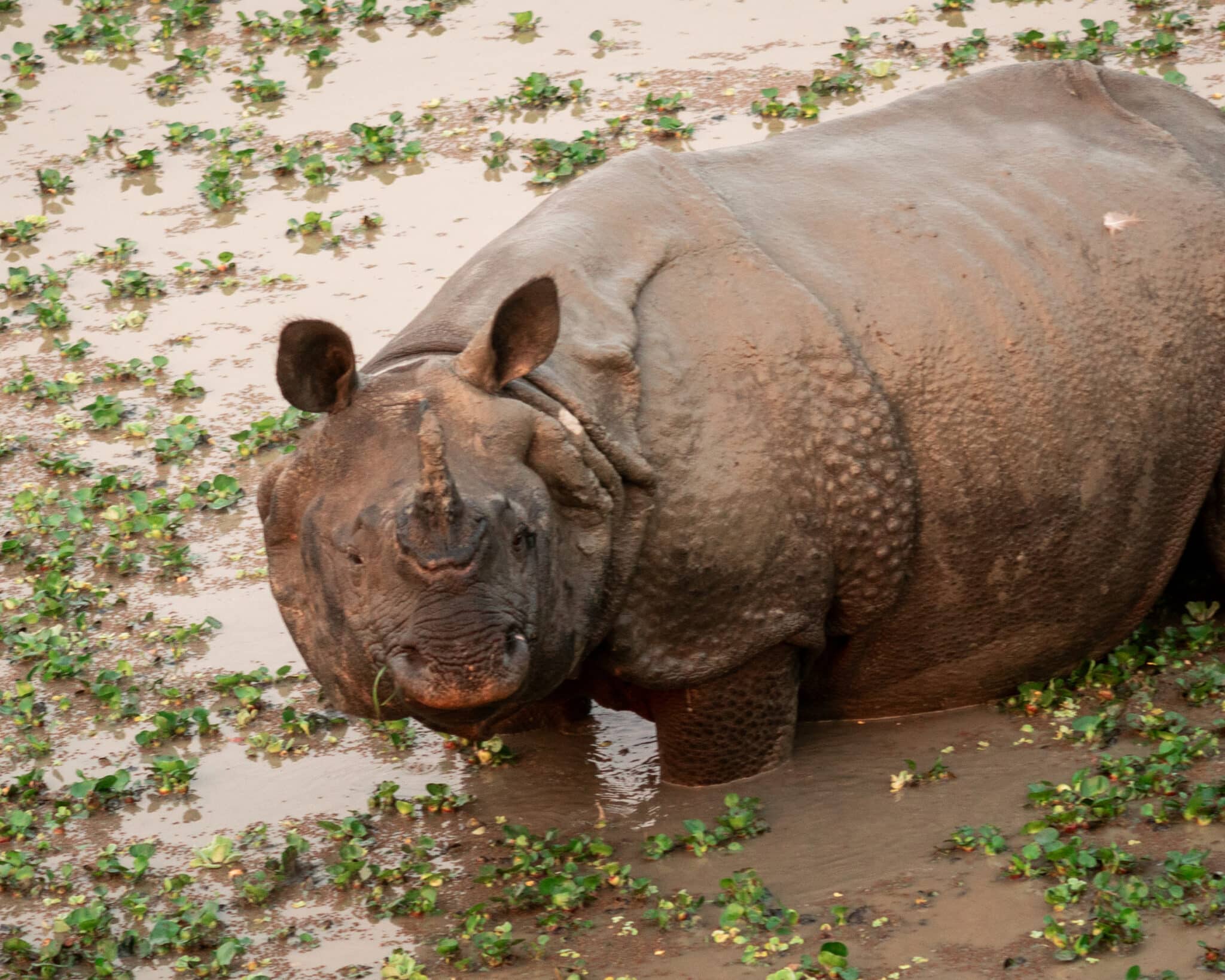
Kaziranga is the single best place in the world to view the endangered Indian One Horned Rhino. There are estimated to be just 4,000 of these rhinos remaining in the world, and 70% of them are found at Kaziranga! And this is the reason most people visit the area. Of course, there is an abundance of other wildlife as well, and some gorgeous scenery.
And for our family, we found it was a fantastic escape from the chaos of the tier one cities like Delhi! Plus, we are hoping to plan an African safari in the near future, and this trip served as a great practice run for us.
How to Get There
Getting to Kaziranga National Park is part of the adventure - and like many things in India, it takes a little effort. You'll most likely be flying in, and there are two main airport options to consider, each with its pros and cons.
Option 1: Jorhat Airport (Assam)
This is the closer of the two airports, at roughly a 2.5 to 3-hour drive from Kaziranga. However, it's a smaller regional airport with limited flight options. Unless you're already in the northeast or planning a very specific itinerary, you'll probably need a connection through a larger Indian city to get here. While its proximity is tempting, the logistical hurdles make it a less popular choice.
Option 2: Guwahati Airport (Guwahati)
Located in the region's largest city, Guwahati Airport is a much more accessible hub. It's modern, well-connected, and offers frequent flights from major cities like Delhi, Mumbai, Kolkata, and Bangalore. The drive from Guwahati to Kaziranga takes about 5 to 5.5 hours, but in most cases, this will be the better choice due to the available flight options.
Getting from the Airport to Kaziranga
No matter which airport you choose, you'll need to arrange ground transportation to the park. While renting a car is technically possible, I wouldn't recommend it unless you're extremely comfortable driving in India. It's a unique skill set, to say the least. Even my husband, who grew up in Delhi, hands over the keys when we visit. The roads, traffic patterns, and general driving etiquette are a whole different world. And it's not for the feint of heart. (If you're considering it, check out this video clip first.)
Thankfully, hiring a private driver is both easy and affordable in India. I highly recommend having your hotel arrange a car service on your behalf. This not only ensures you're getting a reliable driver who knows the route but also sidesteps any potential communication issues, as many drivers in this region won't speak English.
Best Time to Visit
Kaziranga National Park is a seasonal destination. The park is officially open to tourists from October through mid-May, though the exact dates can shift slightly each year based on weather conditions. During the monsoon season. typically mid-May to early October, Kaziranga closes completely. Heavy rains flood large parts of the park, making it both inaccessible and unsafe.
I recommend planning your trip between November and April. This window avoids any last-minute surprises with opening or closing dates, and also provides for the most pleasant weather and wildlife viewing conditions.
Here's a quick look at what temperatures you can expect during the prime months:
- November - Low: 65°F / 18°C | High: 79°F / 26°C
- December - Low: 59°F / 15°C | High: 74°F / 23°C
- January - Low: 56°F / 13°C | High: 72°F / 22°C
- February - Low: 60°F / 16°C | High: 76°F / 24°C
- March - Low: 65°F / 18°C | High: 81°F / 27°C
- April - Low: 69°F / 20°C | High: 82°F / 28°C
As you can see, the cooler winter months (November through February) are especially comfortable - ideal for early morning safaris. March and April start to warm up, but wildlife is still active, and the landscapes remain lush before the rains set in. If you're looking to balance great weather, visibility, and park access, December through March is often the sweet spot.
The Four Ranges of Kaziranga
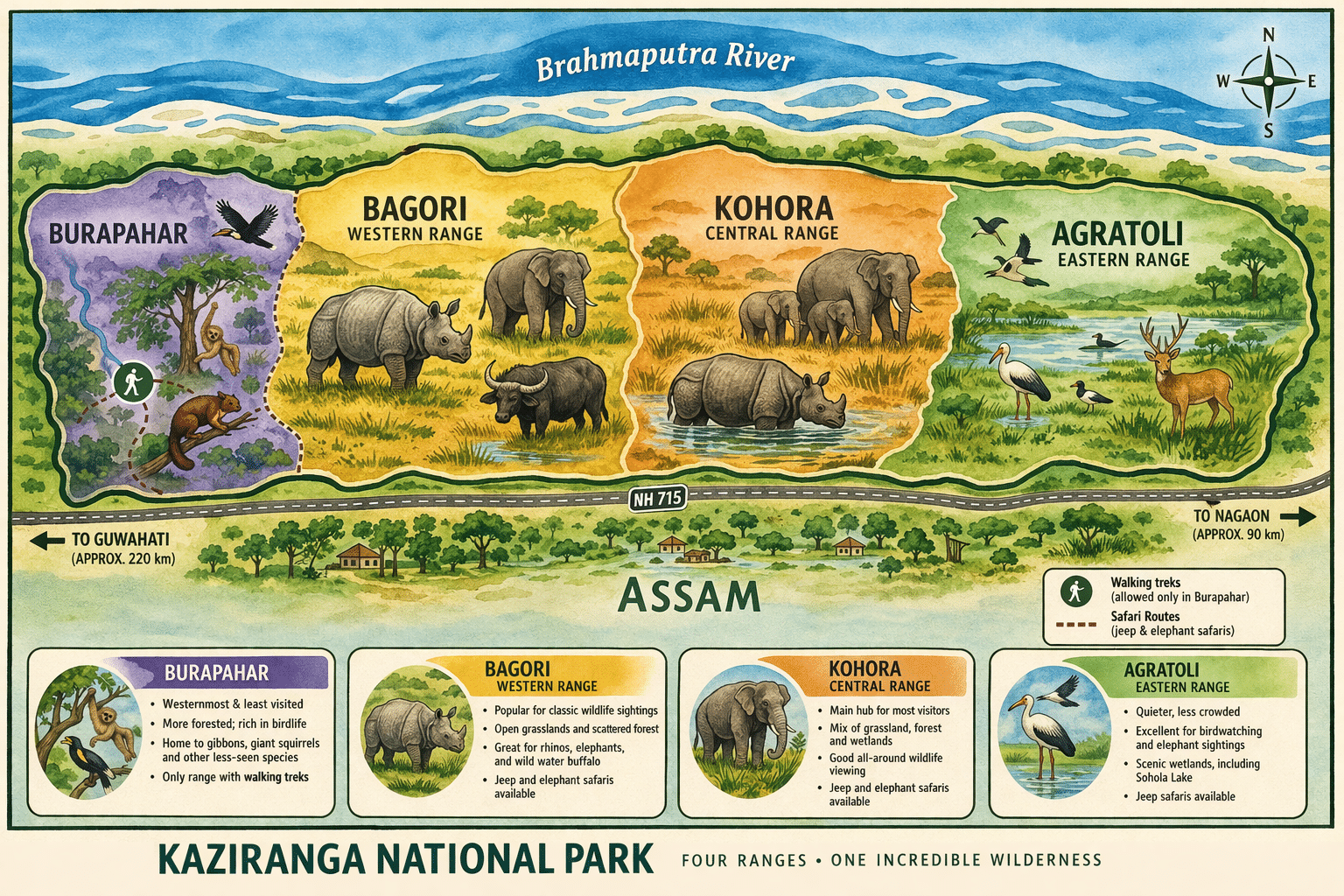
Kaziranga National Park is divided into four distinct safari ranges, each offering a slightly different experience in terms of wildlife, scenery, and amenities. Depending on your interests and how much time you have - you may want to focus on one or two, or explore them all for a well-rounded adventure. Here's a breakdown of what to expect in each range:
Bagori - Western Range
Bagori is the busiest and most popular range, particularly with Indian tourists. It's the closest to the main road and to the larger towns in Assam, which makes it a natural first stop for many local families visiting the park.
We had the most wildlife sightings in the Bagori range on our own trip! You're almost guaranteed to see rhinos, as they tend to be more concentrated here and on more open terrain where they are clearly visible. And there are frequent sightings of wild elephants and water buffalo as well. While tigers are rare, they are sometimes spotted here. Both jeep safaris and elephant-back safaris operate in this range.
Do keep in mind that this station is specifically geared more toward local visitors, so the experience can feel a bit more hectic compared to other ranges. If you're looking for a calmer vibe, you may want to consider starting in Kohora.
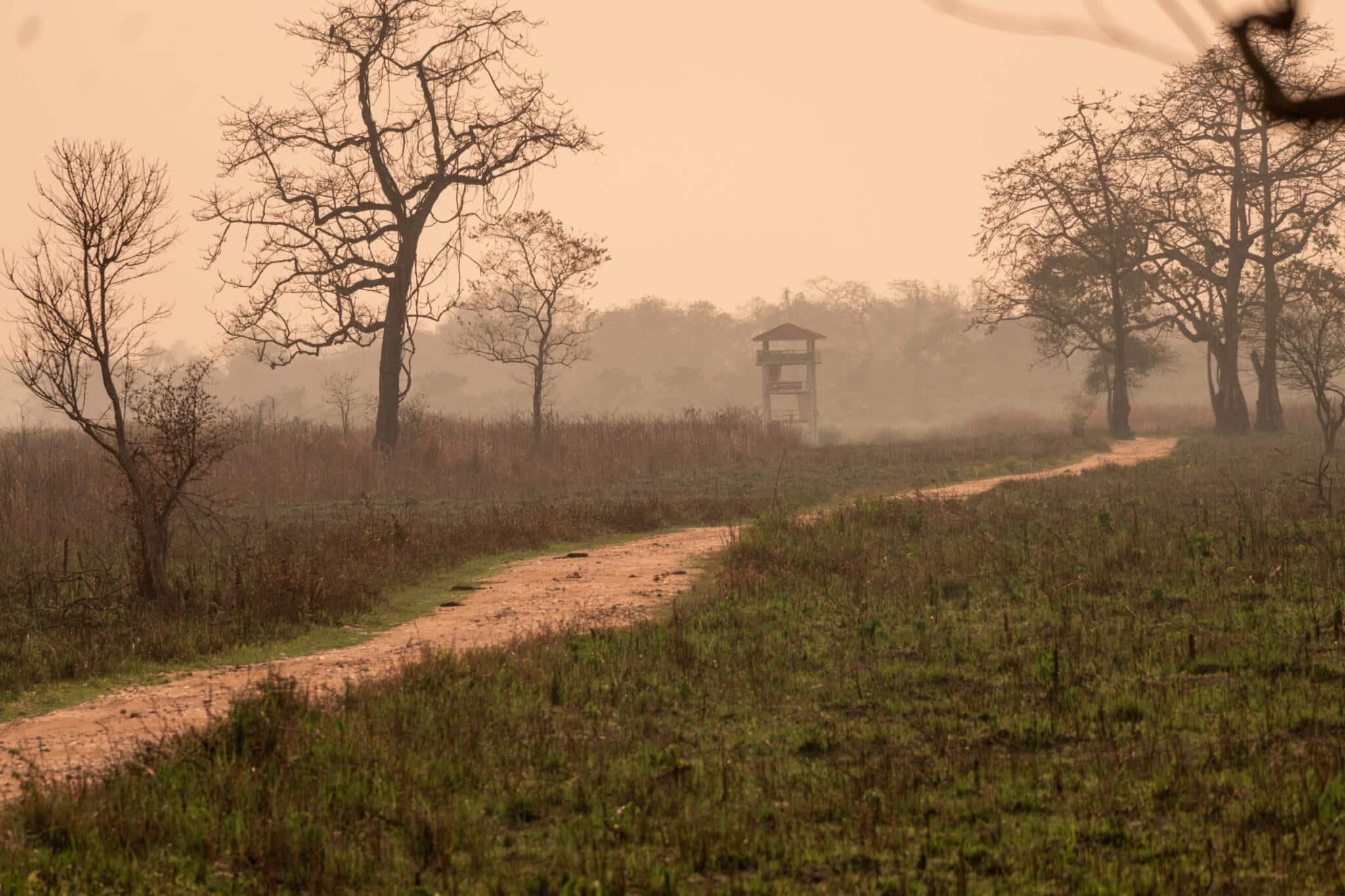
Kohora - Central Range
Kohora sits right next to Bagori and shares a similar landscape and wildlife profile - plenty of rhinos, elephants, and water buffalo, with a slim but real chance of seeing a tiger. The terrain is very divers with wetlands, grasslands, and woodlands.
Kohora is the main hub for foreign tourists, and the services here reflect that. Safaris are a bit more organized, the staff are more accustomed to working with international guests, and you're more likely to find an English-speaking guide. If you're reading this guide, chances are, Kohora is your best starting point.
This range also offers both jeep and elephant safaris, and it's generally the better choice for arranging an elephant safari, which should be booked in advance.
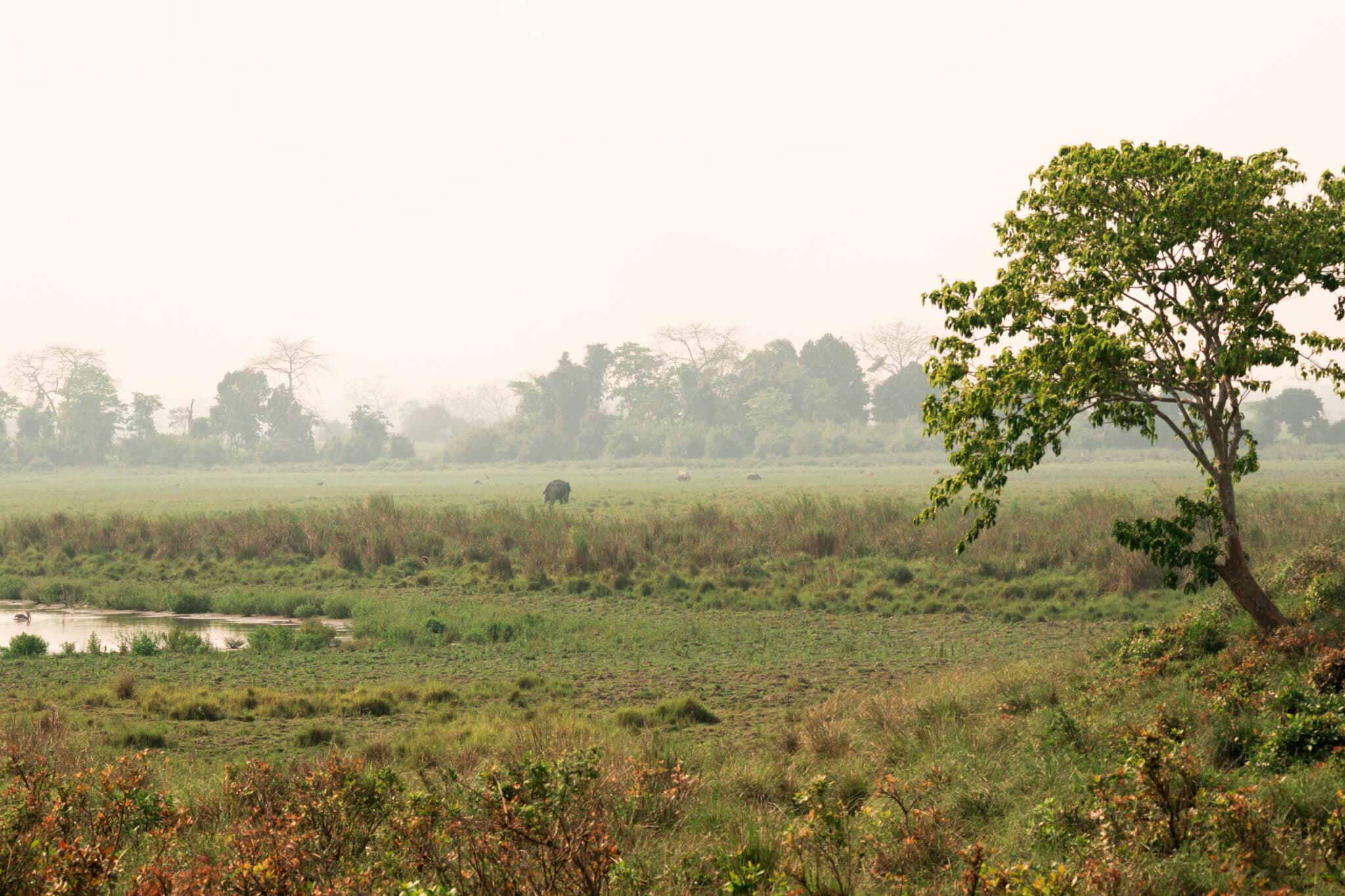
Agratoli - Eastern Range
Agratoli is further from the park's central accommodations, which makes it less visited - and that's precisely its charm. It's quiet, peaceful, and feels a bit off-the-beaten-path. Only jeep safaris are offered in this range.
While rhino sightings are less common here, it's a great place for elephants, and birdwatching is fantastic, especially around Sohola Lake, where you might also spot otters. If you're looking for a more relaxed and intimate experience with fewer jeeps around, Agratoli might be worth the extra drive.
Burapahar - Westernmost Range
This is the least visited of the four ranges, primarily because it's the furthest from most accommodations. But for nature lovers and birders, it's something of a hidden gem.
Burapahar offers excellent birdwatching, and it's one of the few places in Kaziranga where you might see gibbons, clouded leopards, or even giant squirrels. Uniquely, walking treks are allowed here - something that's prohibited in the other zones. If you're interested in a more immersive jungle experience, this is the place for it.
So, Which Range Should You Visit?
If you only have a couple of days, I recommend focusing on Kohora and Bagori. They're close to most accommodations, offer the best chances for big wildlife sightings (rhinos, elephants, maybe even a tiger!), and between them, give you a nice variety of landscapes and experiences.
You should plan on at least 2-3 safari drives to make your trip worthwhile. You can easily take both a morning and afternoon safari in the same day, with a break in the middle for lunch.
If you're planning to show up and arrange a safari on the spot, Kohora is the better place to start. It's more structured and foreigner-friendly, and you'll have an easier time booking a safari there - especially an elephant safari (more on that below).
If your hotel is arranging your safari, they'll likely pick you up directly and can take you to any range you choose. In that case, you could even add a third range to your itinerary, like Agratoli for the serenity or Burapahar for something truly different.
For more tips on planning your safari drives, be sure to check out my Kaziranga Wildife Photo Safari guide.
Where to Stay
There are plenty of accommodation options around Kaziranga, but not all are created equal. There is quite a wide variety in terms of quality.
If you're a tourist accustomed to more Western style accommodations (think air conditioning, modern plumbing, English speaking staff, etc.), you'll want to be careful to choose a place that is used to catering towards foreign tourists. Otherwise, you may find yourself in an uncomfortable situation. Hotels in India can certainly run the gamut from exorbitant luxury to... well.. very much not.
If you're looking for comfort, good service, and easy safari access, here are three solid choices. We stayed at Borgos - The Wild Haven, and it's the one we recommend most highly! (You can read the full hotel review here.)
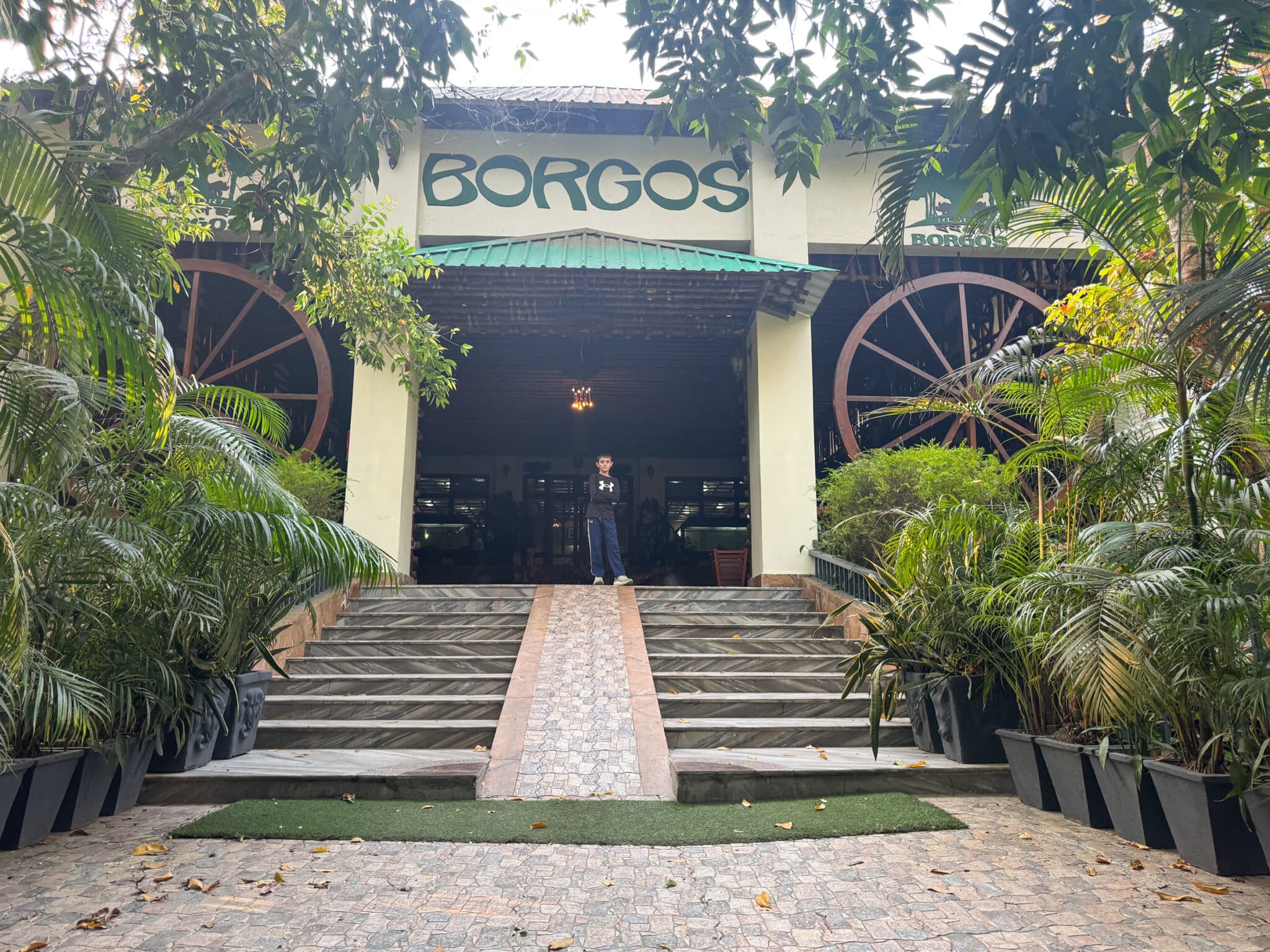
Borgos - The Wild Haven
If you're after a resort experience that doesn't sacrifice comfort for location, Hotel Borgos is your best bet. The grounds are lush and well-kept, the rooms are spacious and modern, and the staff can easily coordinate safaris and transport. And it's about as close to the Kohora range entrance as you get, making it incredibly convenient for early morning drives into the park. In fact, it's so close that we were able to walk there for our elephant safari. There's a spa, pool, and two fantastic restaurants, so it has everything you'd want after your wildlife safari.
We stayed at Borgos during our visit, and it really delivered. The service was wonderful, the ambiance was relaxing, and they were very well prepared for international guests. It's not the most budget-friendly option, but for the level of comfort and ease it provides, it's absolutely worth the splurge.
Iora - The Retreat
For another option, you might want to check out Iora, which is the main competitor of Borgos. It's another higher end property featuring a pool, spa, multiple restaurants (including one focused on Assamese cuisine), and open green spaces. The style of the property feels more modern, while Borgos has a more traditional, jungle-y feel.
Iora is a bit further from the park entrances than Borgos - not walking distance for sure. But it's still only a 10-15 minute drive, so it's still a great home base for safaris.
Airavat Hotel
For something a bit less expensive, Airavat is a solid mid-range option located near the main road, making it another convenient home base for safaris. It's clean, comfortable, and well-reviewed for its hospitality. One important note: it's a pure-vegetarian hotel, which is either a bonus or a limitation depending on your preferences.
This isn't a luxury property, and it doesn't have the expansive grounds or resort feel of a place like Borgos. But if you just want a clean, efficient stay, in a good location, it offers a very good value.
Jeep Safaris
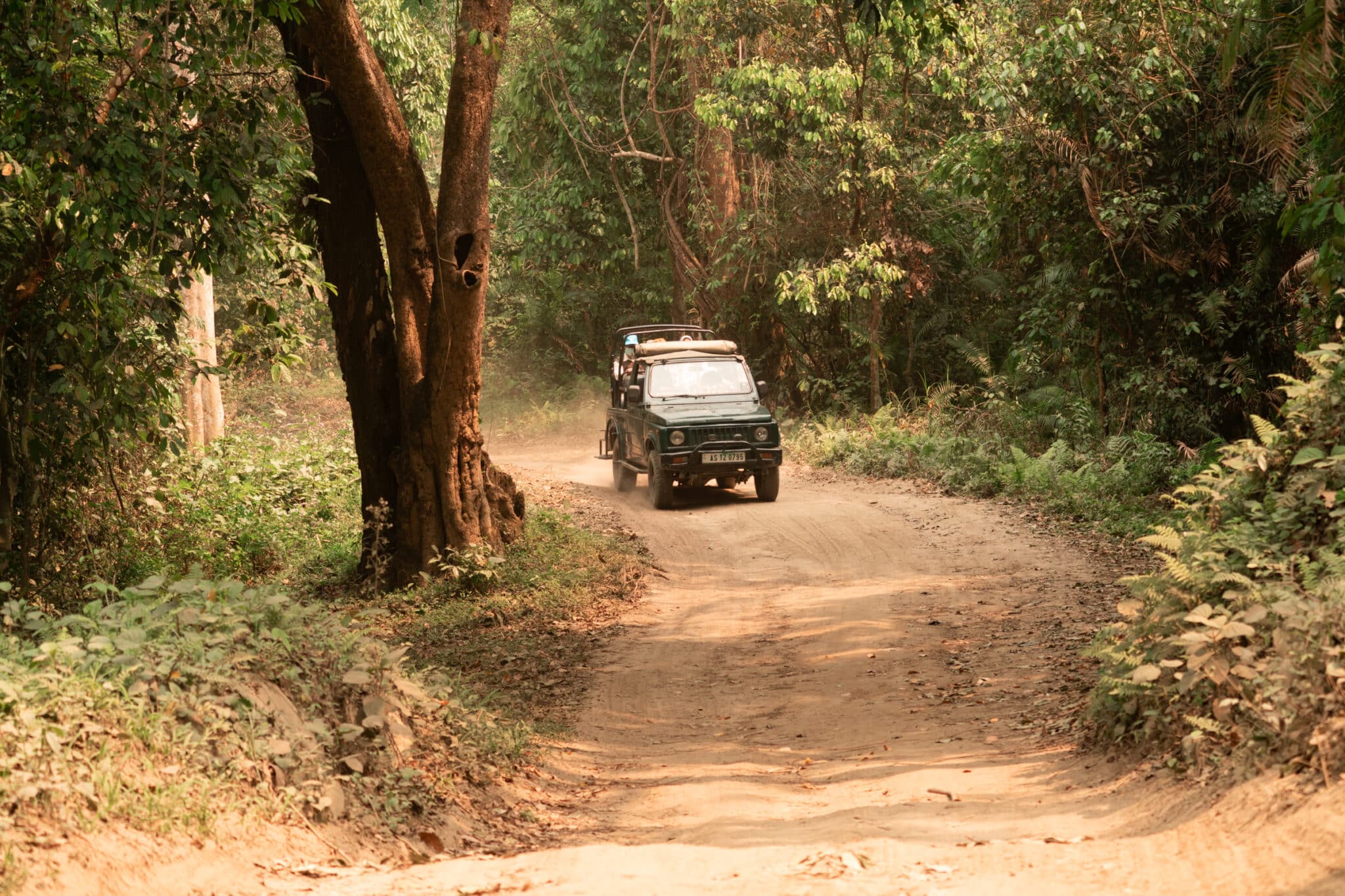
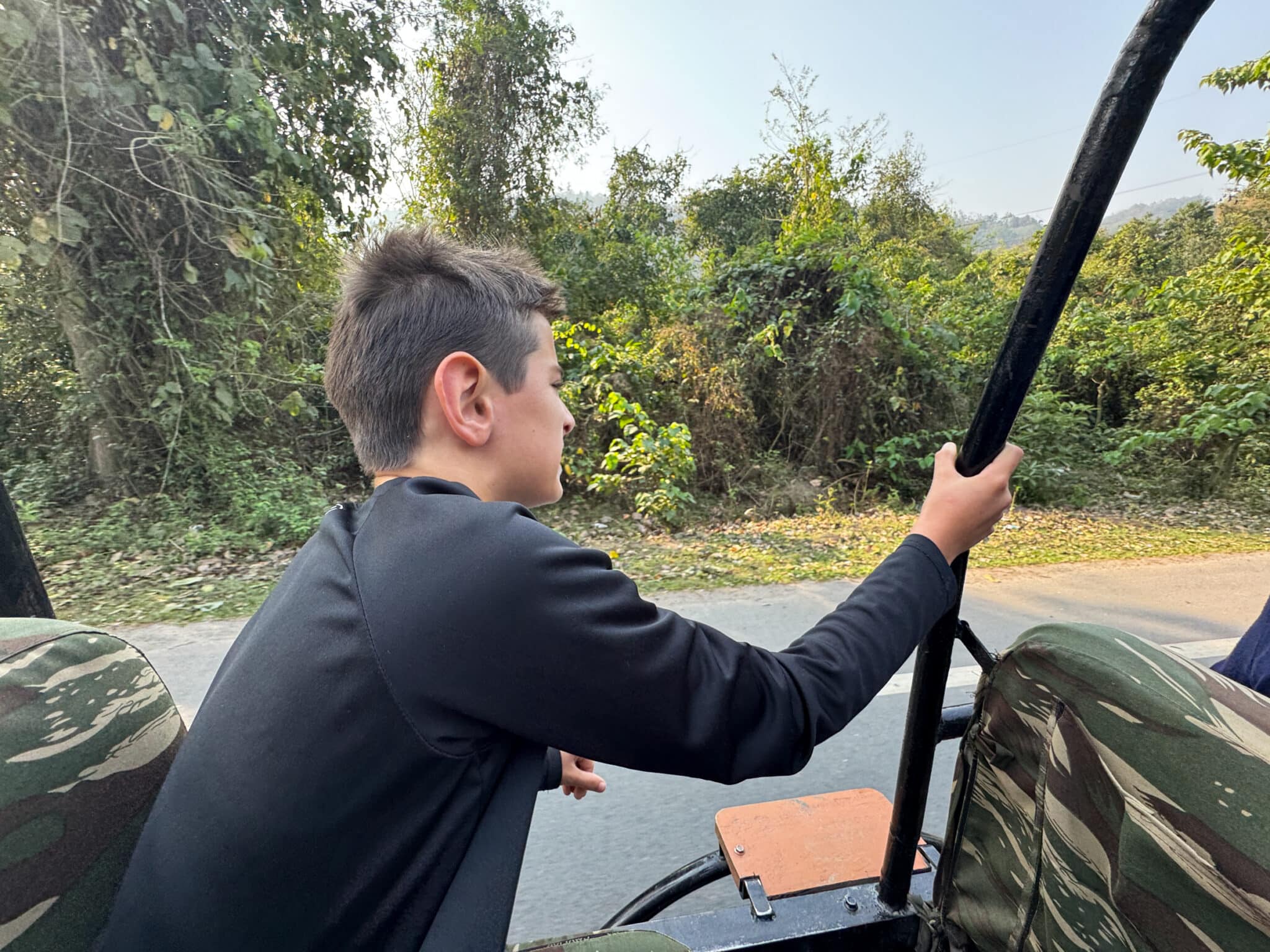
The primary way to explore Kaziranga is by jeep safari. The Kohora and Bagori ranges each offer two entrance time slots per day - one is a morning safari (starting between 7:30-8:30AM) and the other is an afternoon safari (starting between 1:30 - 2:30PM). Each safari drives lasts approximately 2 ½ hours. The entrance and exit times for the Jeeps are tightly controlled in order to manage the number of vehicles in the park at any one time.
I highly recommend going with a private jeep. It's more comfortable, especially if you're traveling with family or a small group, and gives you more control over the pace and experience. Most jeeps comfortably seat 4-6 people.
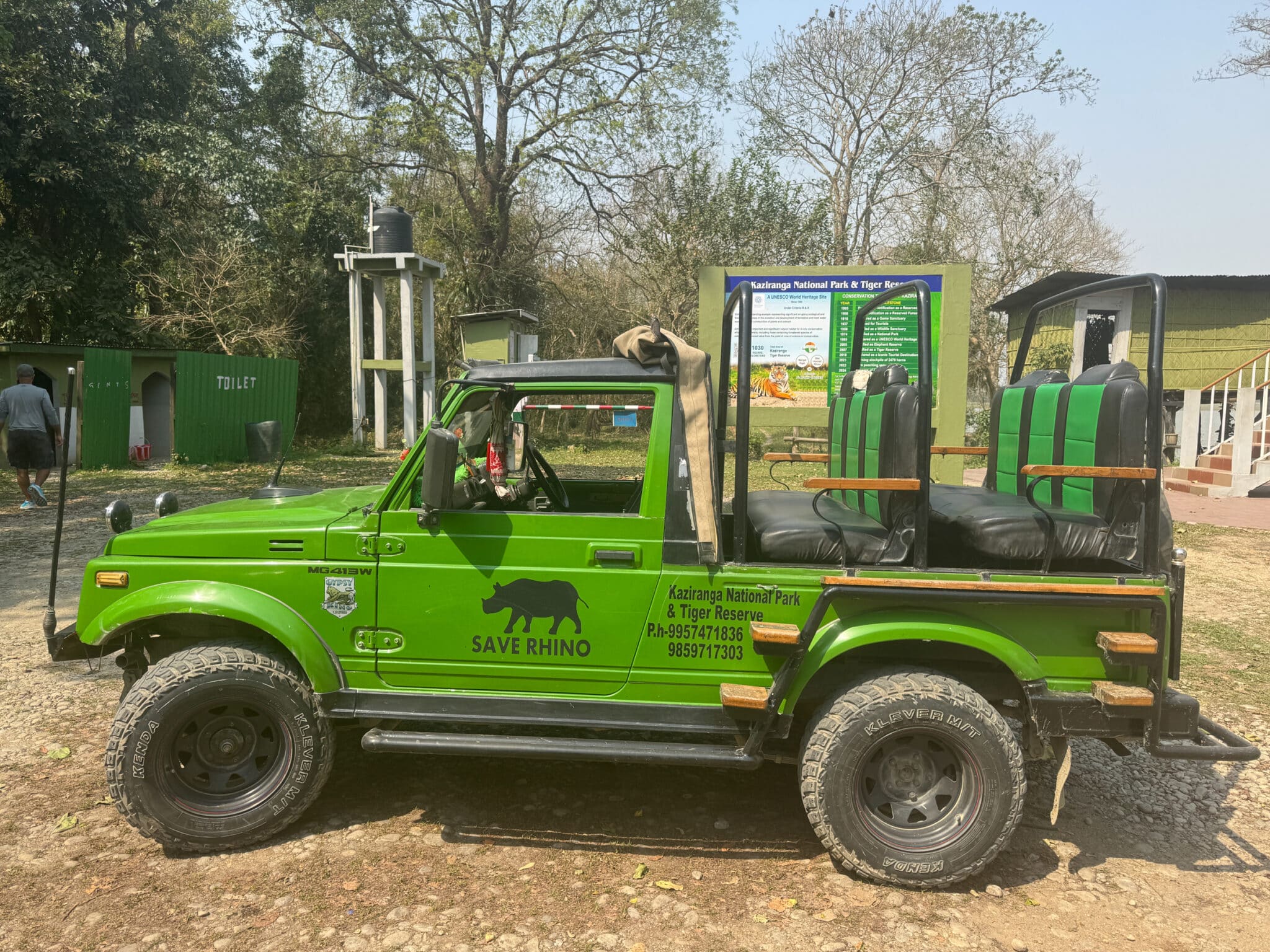
Technically, you can show up and try to book a safari on the spot, but I wouldn't recommend it. Park access is limited, and only a certain number of vehicles are allowed into each range per time slot. You don't want to miss out because you waited too long.
So how should you book it? Let your hotel handle it. I know - you've probably already Googled and found a dozen sketchy-looking websites promising guaranteed tickets. I'll save you the headache: half of those are scams, and the other half might forget to show up entirely. Plus, if you don't speak Hindi, you're going to have a tough time explaining what you need if things go sideways.
This is one of those rare times when I fully endorse the hotel concierge route. They'll ensure you get a licensed driver who knows the park, shows up on time, and actually brings you back. Most hotels can also roll the safari fee into your room bill, which saves you from dealing with cash payments or awkward negotiations with your guide. Trust me - this is the way to go.
Another thing to keep in mind is the language barrier. We did three jeep safaris and our guides all spoke little to no English. My husband and in-laws all speak Hindi, so they were able to translate anything I didn't understand. But I would have missed out on a lot of great information if I didn't have Indian family with me! So you may want to see if your hotel can arrange for an English speaking guide as well.
For more safari planning tips, including photography advice and details of the wildlife on each range, be sure to check out my Kaziranga Wildlife Safari Planning Guide.
Elephant Safaris
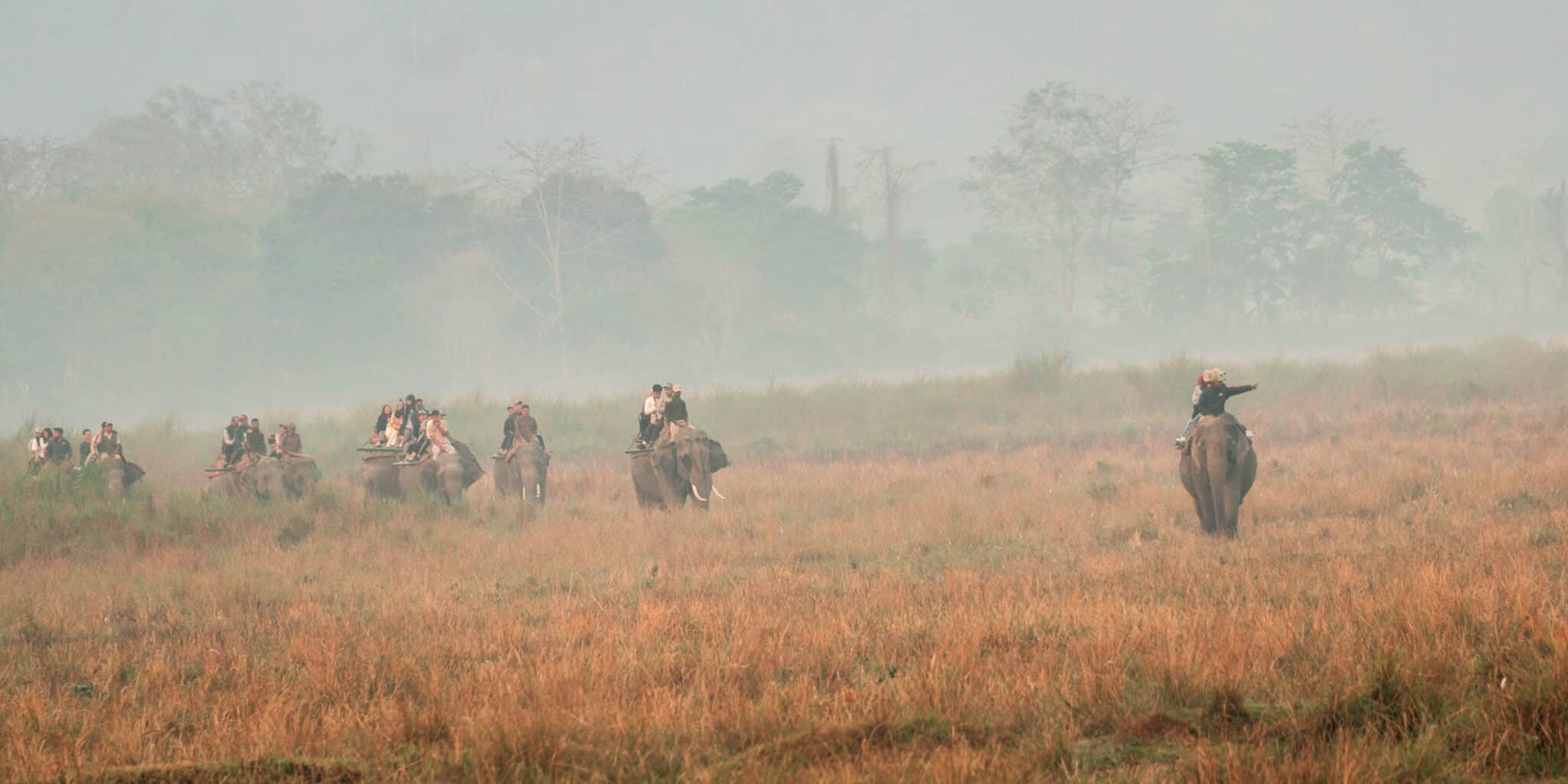
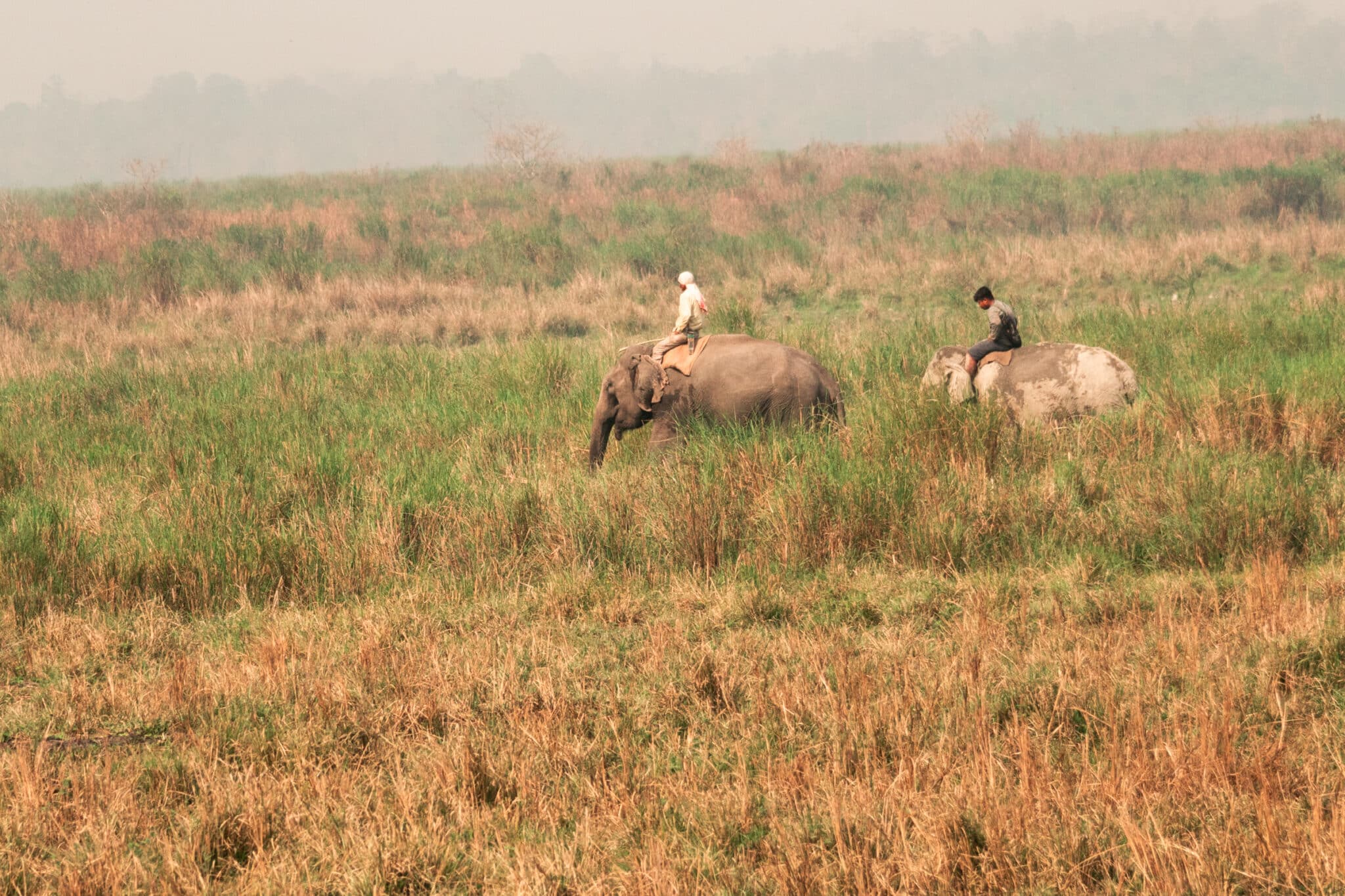
Elephant safaris are offered in both the Kohora and Bagori ranges. These safaris are one hour elephant rides that let you venture out into the tall grasses, getting up closer to the rhinos and other wildlife. There are usually just two time slots each morning, around 5:30 AM and 6:30 AM, and only a small number of elephants are used for tourists each day. So if you're hoping to do this, you'll need to plan ahead.
The Kohora range only offers elephant safaris for foreigners (and apparently some VIPs). I asked why but got a rather noncommittal answer. I think you can deduce that they have a more "westernized" experience at this particular range, which is intended for tourists. At Kohora, you'll find less crowds, no sharing of elephants with strangers, and some English-speaking staff, etc.
Each elephant carries 2-3 people, plus the guide. We did the elephant safari from Kohora, and it did not appear that anyone was paired up with strangers. Our family of three (two adults and one child) had our own elephant.
I suggest that you don't carry anything with you if possible, as it's a challenge to hold on to anything. I brought only my camera, which was of course on a strap. But do be sure to bring a cell phone, secured in zipped pocket, and ask someone on a neighboring elephant to take your picture.
So is an elephant safari worth it? Well, calling this a "safari" might be a bit generous. It's really more of an elephant ride through a grassland clearing, with a high chance of viewing rhinos at close range. We were able to see some rhinos up close, as well as a wild boar and several swamp deer. But we didn't see anything that we couldn't see from a jeep also. That said, the experience of riding an elephant through the misty morning landscape is pretty magical in its own right.
Now, I would be remiss if I didn't share some thoughts on the ethics of elephant safaris. I always have mixed feelings about activities that involve interacting with (and especially riding) animals.
Riding elephants is a pretty hot topic. And it has less to do with the actual riding part and more to do with the way the animals are trained and treated in captivity. Anytime you mix animals and profits together, there is high potential for abuse. I will say that the elephants seemed happy enough to be doing their jobs - and their work is limited to just two morning rides each day, and often even less than that.
The park itself is actually a big proponent of the elephant safaris because they cut down on jeep traffic, which makes them more environmentally friendly and less disruptive to the wildlife. The revenue supports conservation efforts. And the domesticated elephants are also used in park operations, such as on ant-poaching patrols and to deliver supplies to ranger stations in remote areas of the park. I was also told that the elephants used for park work are primarily captive-born, so domesticated from birth.
So it's a mixed bag. And I walked away with mixed feelings about it. You will have to decide for yourself how the pros and cons stack up.
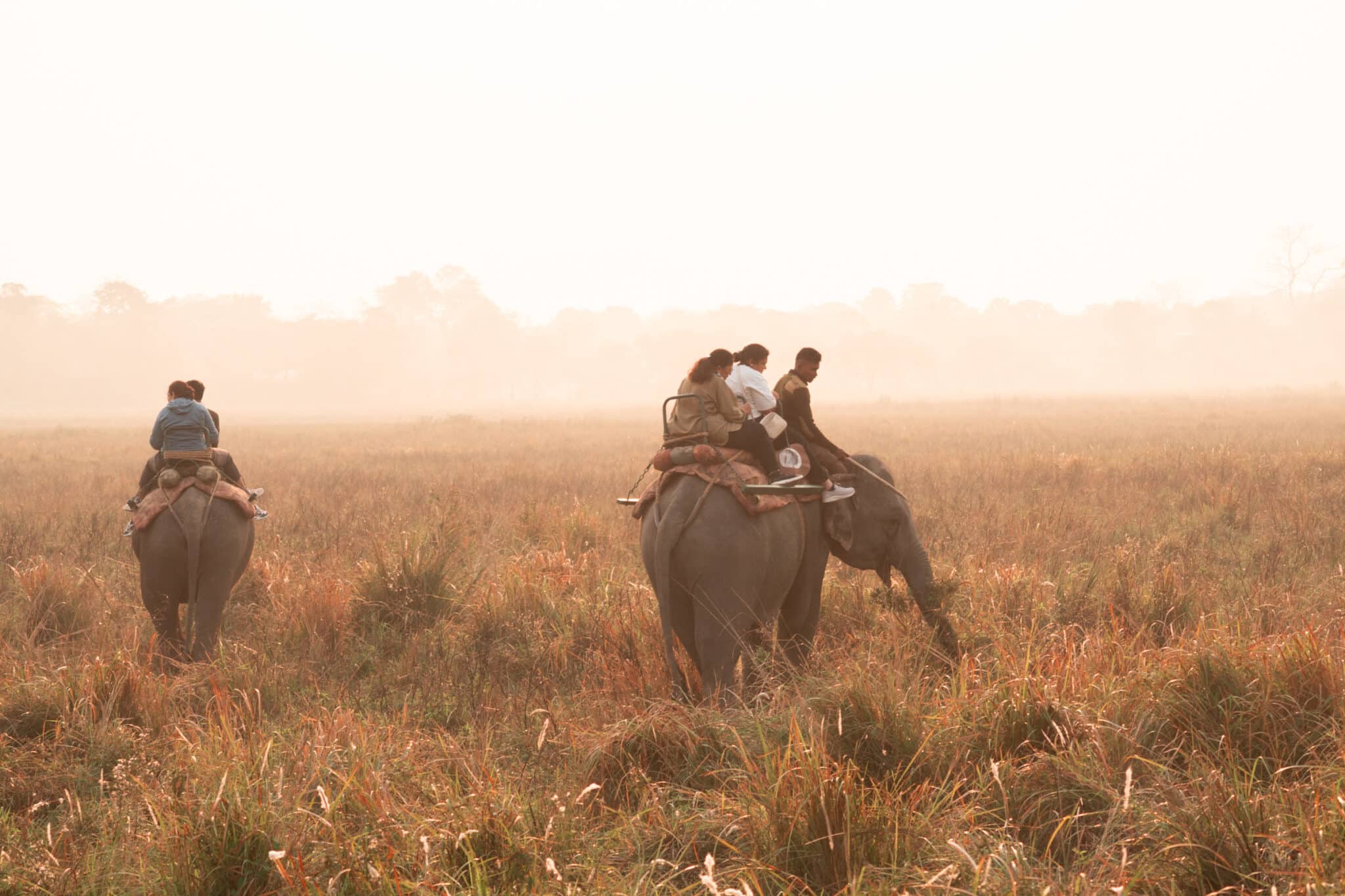
If you decide to do an elephant safari, I recommend booking in the Kohora range, which is better organized and more accustomed to foreign tourists. In fact, your hotel will probably insist on it.
And once again- ask your hotel to arrange this for you. Unlike jeep safaris, which are a bit more flexible, elephant rides require early reservation. If this is a must-do for you, let your hotel know as soon as you book your room, not the night before your planned ride.
Safari Costs and Camera Fees
Note that I didn't include any pricing here yet, and that is because it seems to be a bit… um… in flux. Common issue in India. As with most things in India, there are different prices for Indian Nationals versus Foreigners. There are also going to be different prices for private drivers thru your hotel versus drivers you grab at the gate. And of course, there are different costs for shared vs private vehicles. And then there's the matter of your hotel marking things up a bit for the convenience.
So… with all that in mind, here's an idea of what to expect. As of writing this, a private Jeep safari for foreign tourists booked through your hotel should cost around $80-90 USD. Each safari drive will be approximately 2 ½ hours. I recommend doing 2-3 drives to make the trip worth your while, as you won't see all types of wildlife on all excursions.
Similarly, the elephant safaris will cost around $20-25 USD per person for tourists in the Kohora range (which is where I recommend doing this activity). This will not include transportation to the meeting point, which you can have your hotel arrange.
A note on camera fees! In addition to the safari fees, there are additional fees charged for bringing cameras into the park. As a photographer, this is always something I am aware of. Your iPhone doesn't count as a camera, so don't worry about that. But you will get charged a fee for DSLR (or similar) cameras.
The posted fee on the website during our trip was 500 rupees, but we were only charged 200 rupees each time. So it's a bit of a mystery what you will really be charged. While this is annoying and feels a bit nickel-and-dimey, it's also only about $5 USD and the money supposedly goes towards park conservation efforts. So just bring some extra rupees and go with it.
What to Wear on Safaris
What you wear on safari in Kaziranga can make a big difference in how comfortable you are - especially since temperatures swing quite a bit throughout the day. Depending on the month of your visit, you can expect morning lows between the mid-50s to mid-60s°F (13-18°C) and afternoon highs in the low-70s to low-80s°F (22-28°C).
That early morning chill hits harder than you'd think, especially when you're in an open jeep driving through the park before sunrise. But by the time you finish your safari, the sun is usually out in full force. So the key to dressing smart for Kaziranga is simple: layers, layers, layers.
When we visited in March, I found it most comfortable to wear lightweight pants or leggings, a t-shirt, and a fleece jacket. That kept me warm in the morning, and I could easily shed the outer layer once things started to heat up. A light scarf or buff is also a nice addition - not just for warmth, but to help keep the dust out of your face during jeep rides.
Closed-toe shoes are a must (sneakers are fine), and a hat and sunglasses will come in handy once the sun's up. Stick to neutral or earthy tones - nothing too bright - as it helps you blend into the surroundings and disturbs the wildlife less.
What Else to Bring
In addition to dressing smartly in layers, there are a few key items you'll want to bring along to make your Kaziranga experience more comfortable:
Reusable Water Bottle: This one is non-negotiable. Single-use plastics are strictly banned inside the park, and they do check your bags at the entrance. If you want water during your safari (and you will), you need to bring a reusable bottle with you. Don't bring disposable plastic in any form - it will be confiscated. I like this insulated kind, because they stay nice and cold all day.
Light Scarf or Buff: The roads inside the park can be very dusty, especially in the drier months. That dust gets everywhere, and I mean everywhere. A light scarf, buff, or wrap is great for covering your nose and mouth. All the guides wore buffs, and by day two, I wished I had brought one too.
Sunglasses: Besides shielding your eyes from the sun, sunglasses are also pretty effective at keeping dust out. You'll be glad you have them.
Sunscreen: You might not think about it during the cool morning drives, but the sun gets intense by mid-morning. You'll be exposed the entire time, in an open jeep.
Camera Gear: Kaziranga is a photographer's paradise, and you'll likely see several pro photographers out on safari. I shot most of my images on a Sony a6300 with a 70-350mm zoom (which gives you an effective 525mm on the long end). It worked great for rhinos and elephants, but it wasn't quite enough for the elusive tiger. The pro next to me had a beautiful 800mm prime, and even that wasn't long enough when we lucked across a tiger. For more specific photo tips and gear recommendations, check out my Kaziranga wildlife safari guide.
Daypack or Small Backpack: You'll want something to stash your extra layers, camera gear, water, scarf, and other essentials. Keep it compact and lightweight, since the jeeps don't have a ton of space.
Don't Bring Food or Drinks! No, really - don't. Because of the park's strict environmental protection policy, no food or any type of disposable plastics are allowed inside. That includes things like bottled and canned beverages or snack packaging. My mother-in-law even had to toss her Tic Tacs, because the container is plastic. You can absolutely bring snacks for your hotel room, just leave them behind on safari.
The Wildlife You'll See
Kaziranga is best known for its dense population of Indian one-horned rhinoceroses, but the park is home to a stunning variety of wildlife. Whether you're a seasoned birder or just hoping to catch a glimpse of a tiger, this UNESCO World Heritage Site is an amazing introduction to the world of safaris.
Indian Rhinoceros
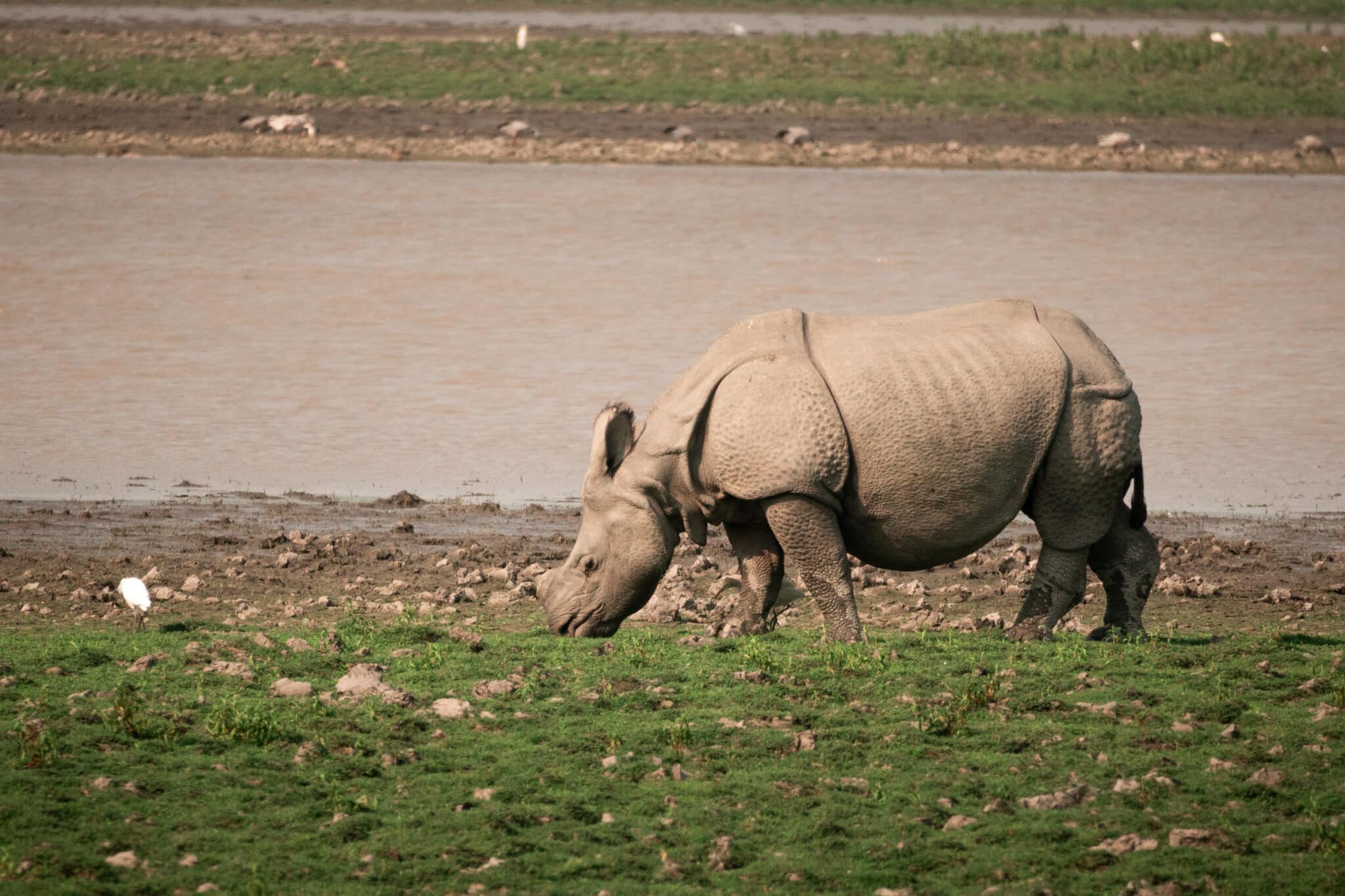
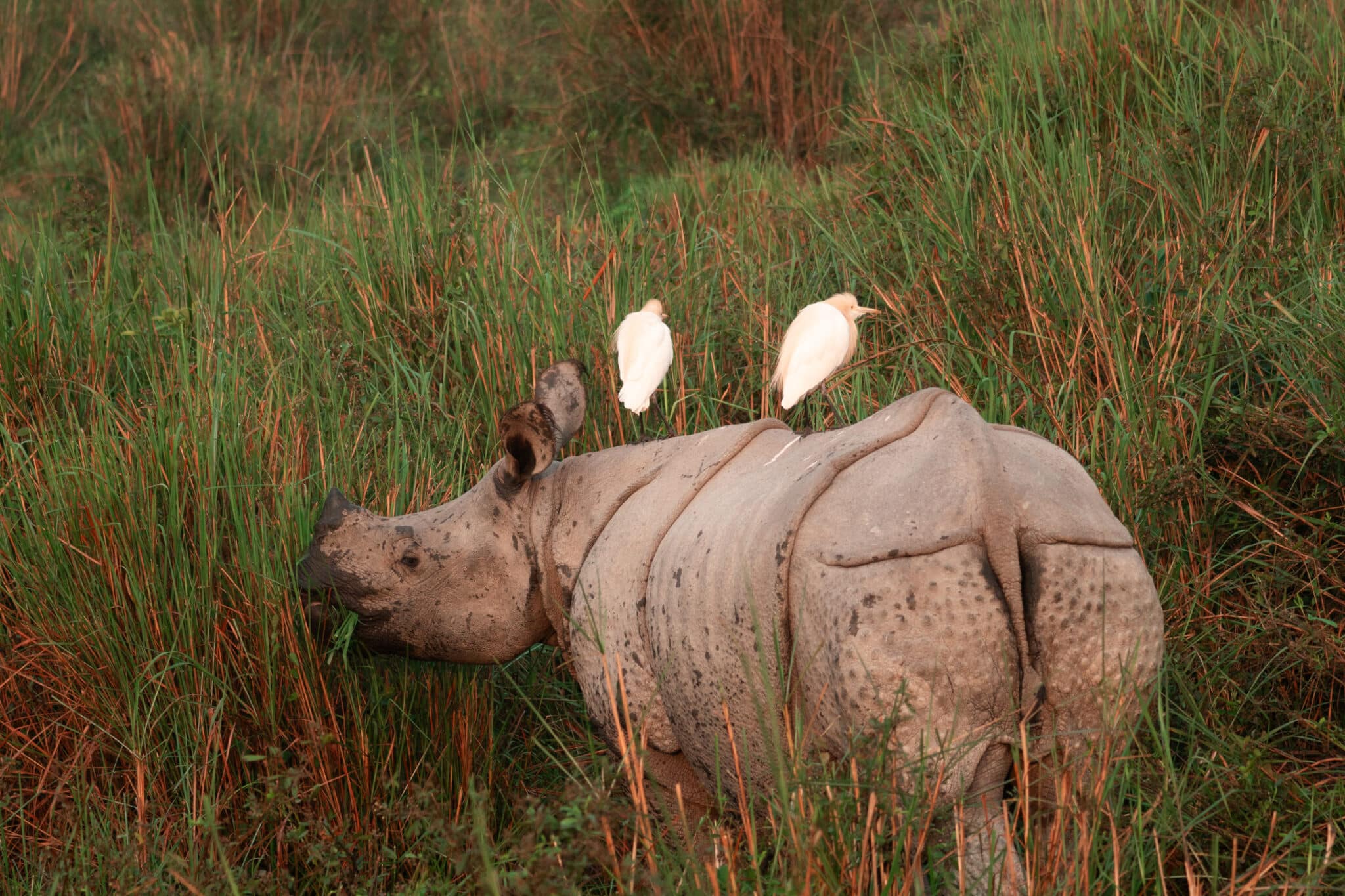
The star of the show! Kaziranga is home to two-thirds of the world's population of the formerly-endangered Indian one-horned rhino. I say formerly endangered, because their status has been upgraded to vulnerable, thanks largely to the conservation efforts at Kaziranga.
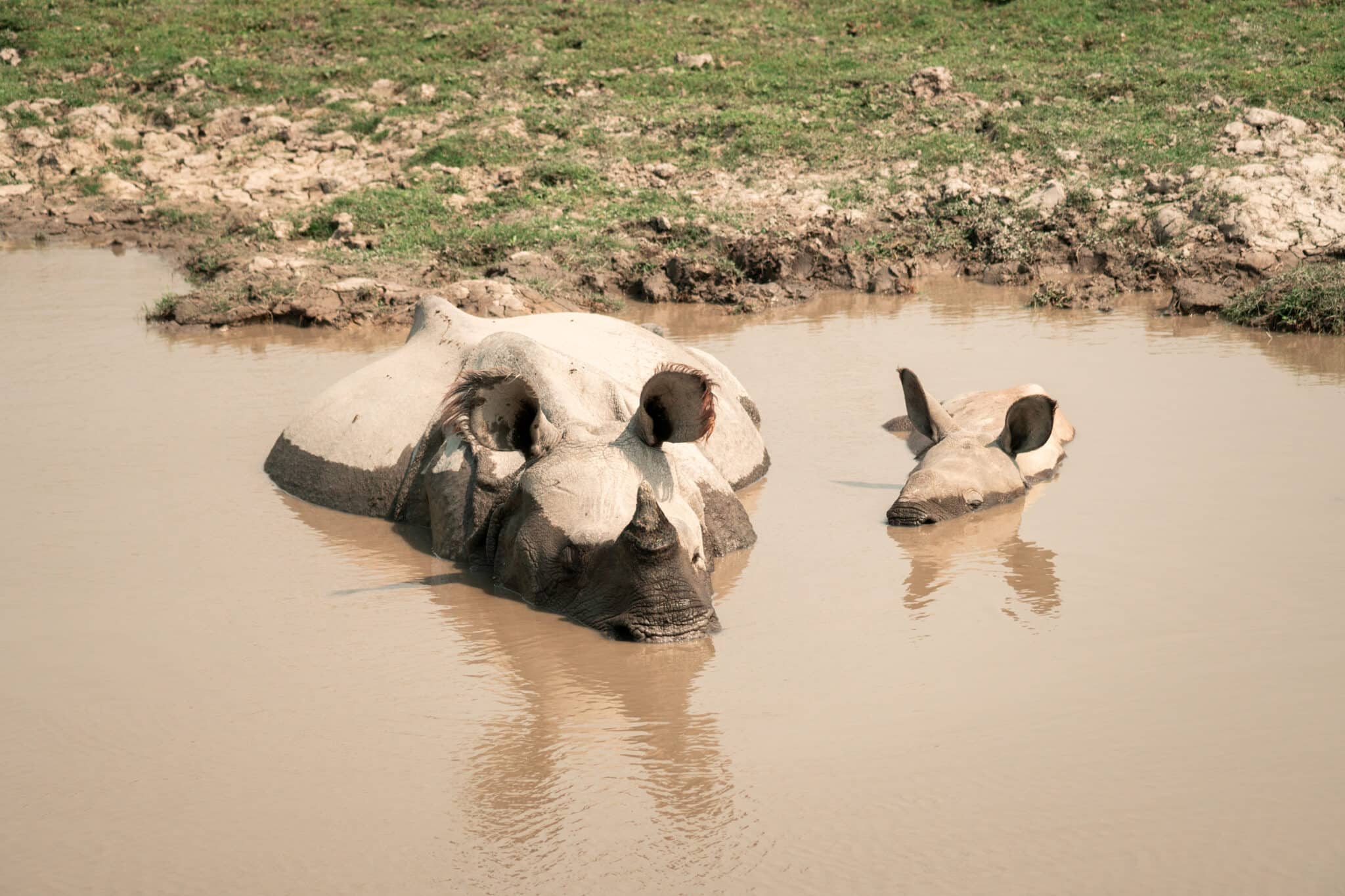
These prehistoric-looking animals are easy to spot, especially in the central and western ranges, often grazing in open grasslands or wallowing about in the muddy ponds. Despite their size, they're surprisingly graceful and so much fun to watch in the wild.
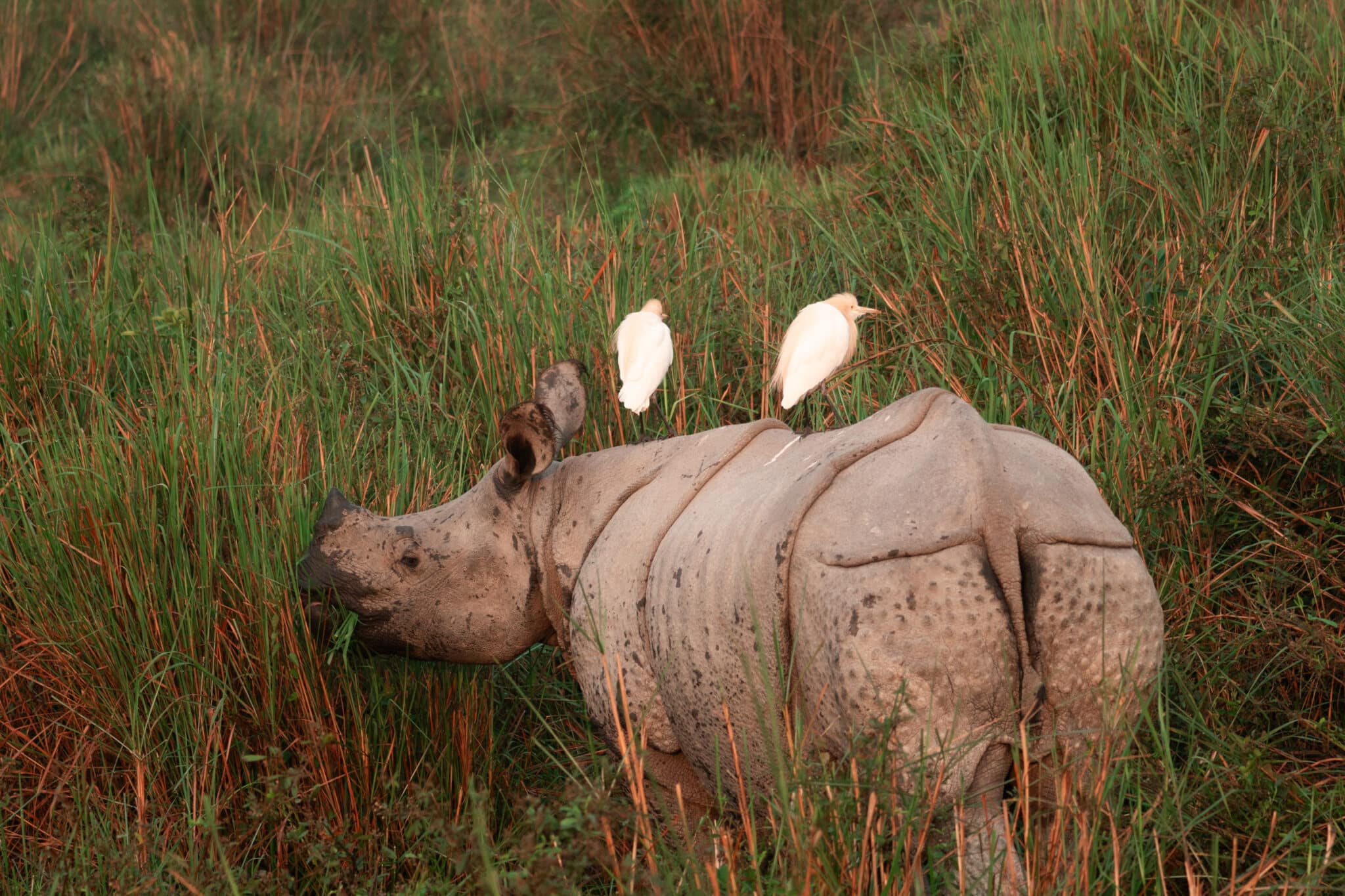
I was honestly expecting it to be hard to spot the rhinos. So imagine my surprise when we spotted a whole herd from the roadside, before even entering the park. :-D The rhinos are sort of comparable to Yellowstone National Park's bison in this regard. There are many rhinos here, and you will see them if you go looking!
Royal Bengal Tiger
The most elusive of Kaziranga's big attractions, is the Royal Bengal Tiger. But seeing one is still very rare. Kaziranga actually has one of the highest densities of tigers in India, but they are masters of camouflage. And the dense vegetation and tall grasses usually keep them well hidden.
I would not plan your trip with the expectation of seeing a tiger - it's a recipe for disappointment. But if you're lucky enough to spot one (even briefly), it's a truly unforgettable moment. Early morning safaris in the central Kohora range give you your best shot - or at least that's what our guides said!
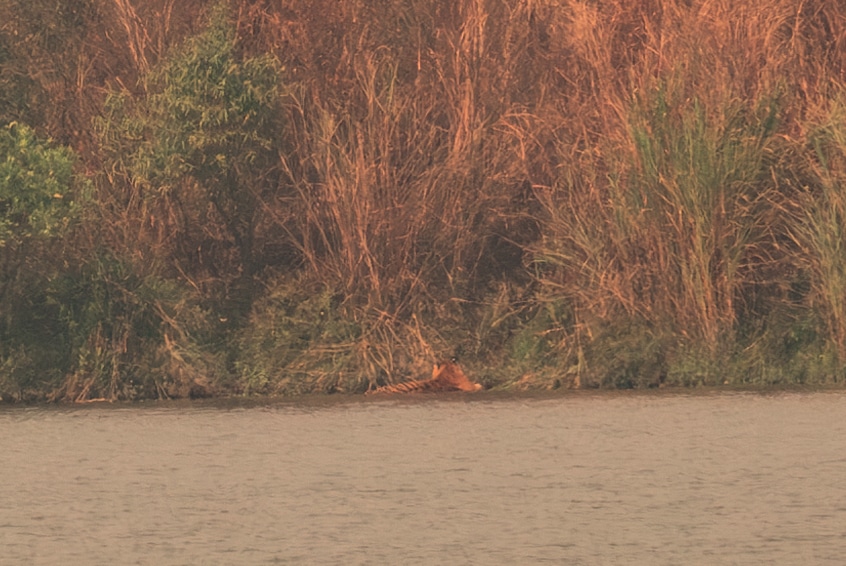
We were lucky enough to spot a tiger on our visit, but it was very far in the distance. It required a long camera lens to see him, and he was still sort of just an orange blob. The shot above is the best one I could manage, even after cropping all the way in! Can you see him in there?
Asian Elephant
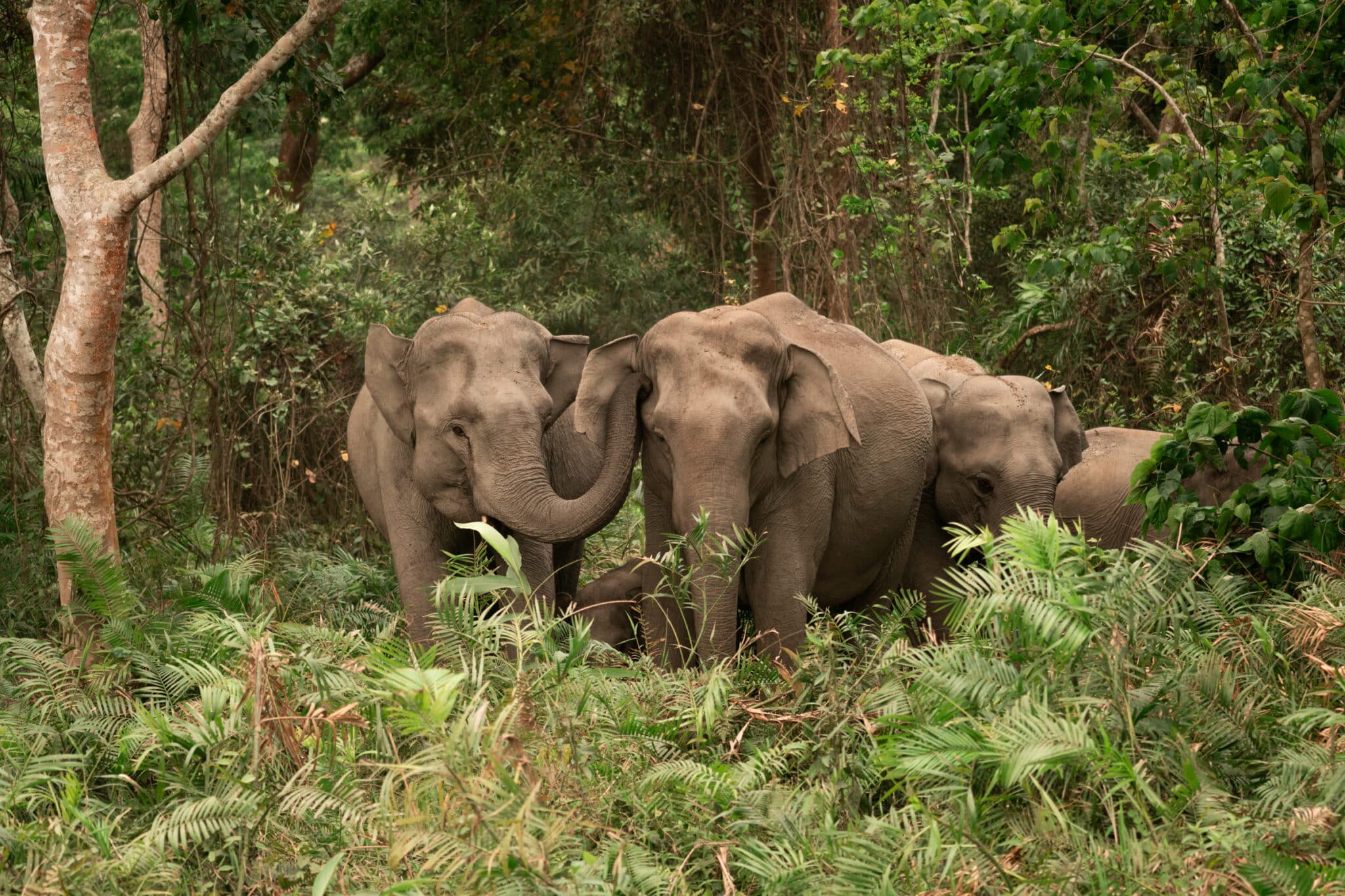
The only thing larger than the rhinos at Kaziranga are the elephants! Wild elephants roam freely throughout the park, often in herds. You might see them near water, crossing trails, or grazing in the tall grasses. You may spot family groups moving together, often with young calves in the Spring. They're most frequently seen in the Bagori and Kohora ranges.
Kaziranga is one of India's most important sanctuaries for this endangered species, with surveys counting over 1,200 elephants within the park and its surrounding reserve. Protection here is critical, as Asian elephants face threats from habitat loss and conflict with humans. Spotting them in Kaziranga isn't just a thrill, it's also a testament to their successful conservation efforts.
Asiatic Wild Water Buffalo
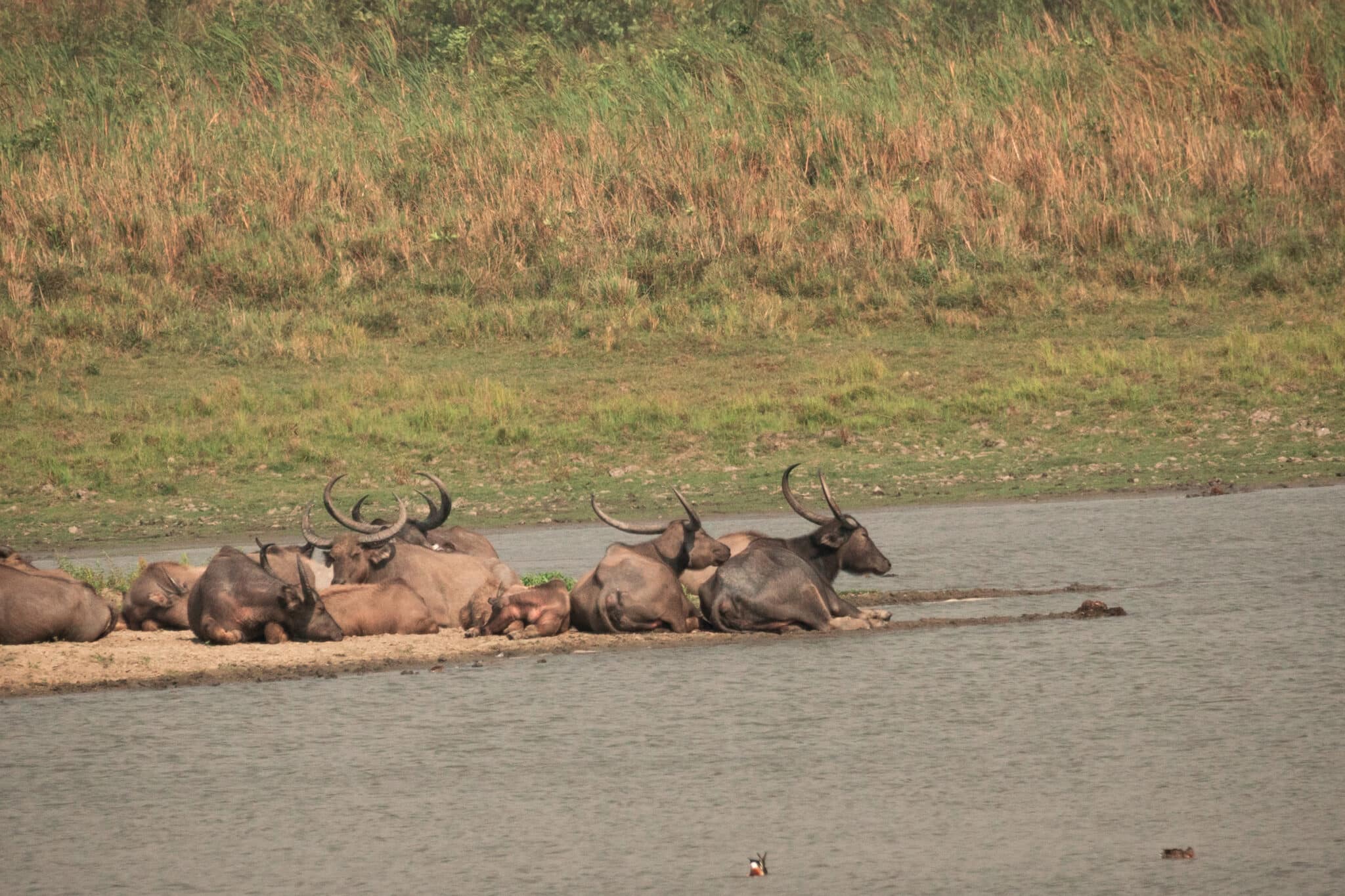
Kaziranga is also home to one of the world's largest populations of water buffalo. And these aren't your average buffalo. Asiatic wild buffalo are massive, with wide, crescent-shaped horns and a strong, intimidating presence.
They often gather in and around waterholes and are commonly seen alongside herds of rhinos. Kaziranga is considered one of the last strongholds for this endangered species, which has a remaining global population of less than 4,000!
Eastern Swamp Deer (Barasingha)
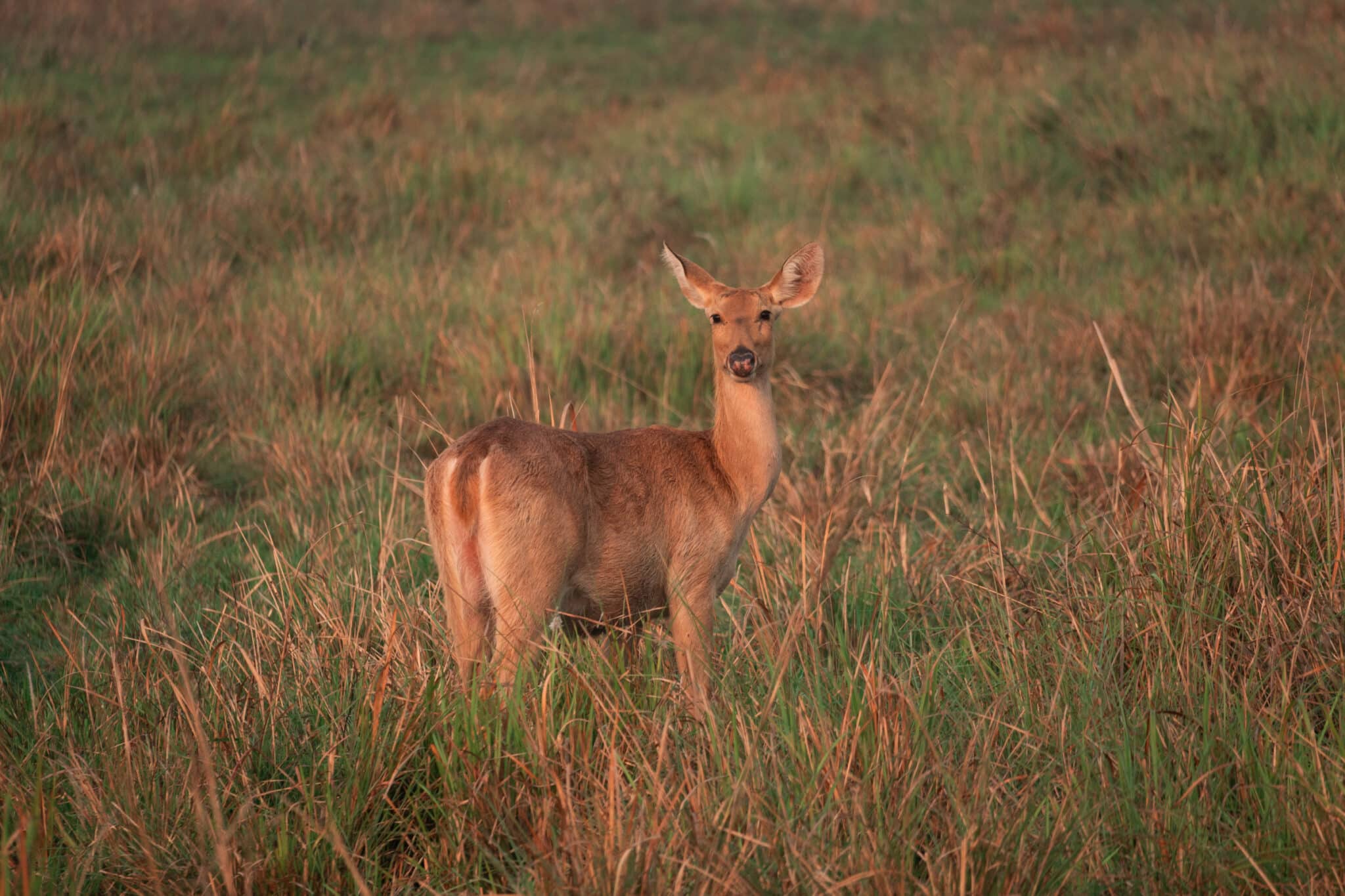
Known for their distinctive antlers (for the males!) and swampy habitat, these adorable deer are found in the tall grasses and marshy areas of the park. They're a beautiful, delicate contrast to the bulkier animals around, and while they can be skittish, they often pause just long enough for a photo if you're quiet.
Indian Bison (Gaur)
The gaur is the largest wild bovine in the world, bigger even than the American bison, and it definitely looks the part. They're less common than rhinos or elephants, but sightings are possible in the more forested parts of the park, especially in the Burapahar range. Their sheer size makes them an impressive animal to encounter in the wild. We didn't venture to Buraphar, and did not spot any bison on our trip.
Birdlife Galore!
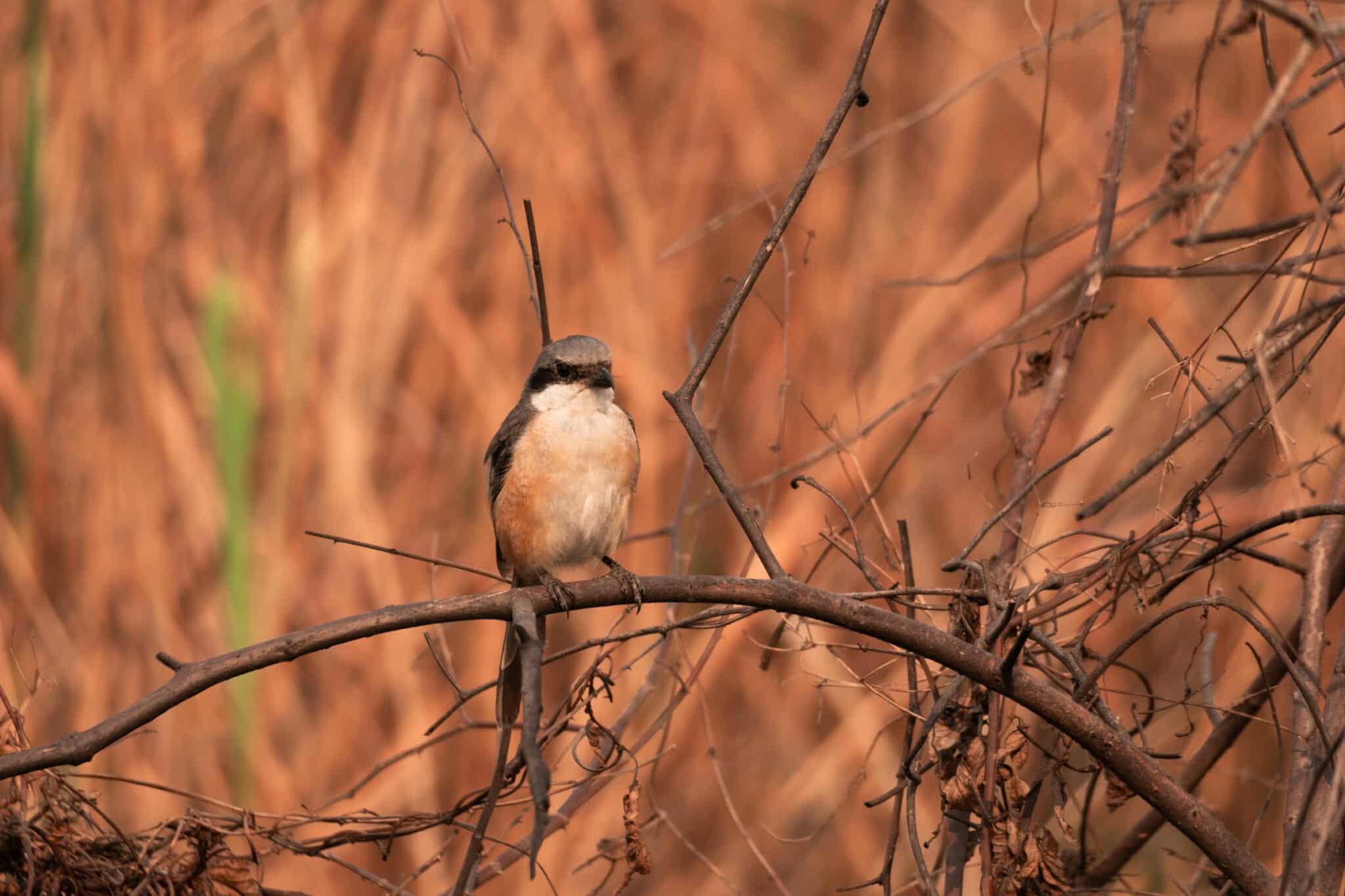
Kaziranga is a birder's paradise, with over 450 species recorded. From colorful hornbills and kingfishers to eagles, pelicans, and migratory waterfowl, the skies and wetlands are constantly alive with activity. Even if you're not usually into birds (like me), it's hard not to be impressed. Bring your binoculars!
Hoolock Gibbon
The Hoolock Gibbon is India's only ape. They live in the dense forest of the Burapahar range, and you'll almost always hear them before you see them. Catching a glimpse requires a bit of luck - if you do spot one, it's usually high in the canopy. We did not get the chance to see gibbons on our trip. Maybe next time!
Things to Do in the Area
Kaziranga National Orchid & Biodiversity Park
I put this botanical garden on our list because I thought my mother-in-law would enjoy the orchid garden. But this place turned out to be way more than just an orchid garden. Your ticket includes access to a variety of exhibits including botanical gardens, several museums… You could easily spend a full day here.
The main highlight here is the orchid botanical garden. It's a large green house filled with every type of orchid you could possibly imagine. We were met by a guide upon entering, who spoke excellent English, and she walked us around the garden explaining all about the plants and horticulture. It was really interesting and the flowers were beautiful to see.
We also took a quick tour through the cultural museum which had many interesting artifacts from traditional life in the Assamese region. We especially liked seeing the various fishing contraptions. And there were also several ladies weaving cloth from scratch! We had a great English speaking guide for this museum as well. (Note that there is no added charge for the guides to walk you through these exhibits- but a tip is appropriate.)
In addition there was a music museum, cactus garden, medicine garden, a small children's playground, and an area where you can dress up in traditional clothes. And there was even a stage where they do a cultural performance and a light show at night!
We were short on time, so we cruised through these smaller exhibits. But we did stop and do some shopping at the market area by the park's entrance. It's a great spot to pick up some souvenirs. Because you can't visit Kaziranga and not leave with a statue of a rhino, right? You can get more details on the park here.
Hathikuli Tea Estate
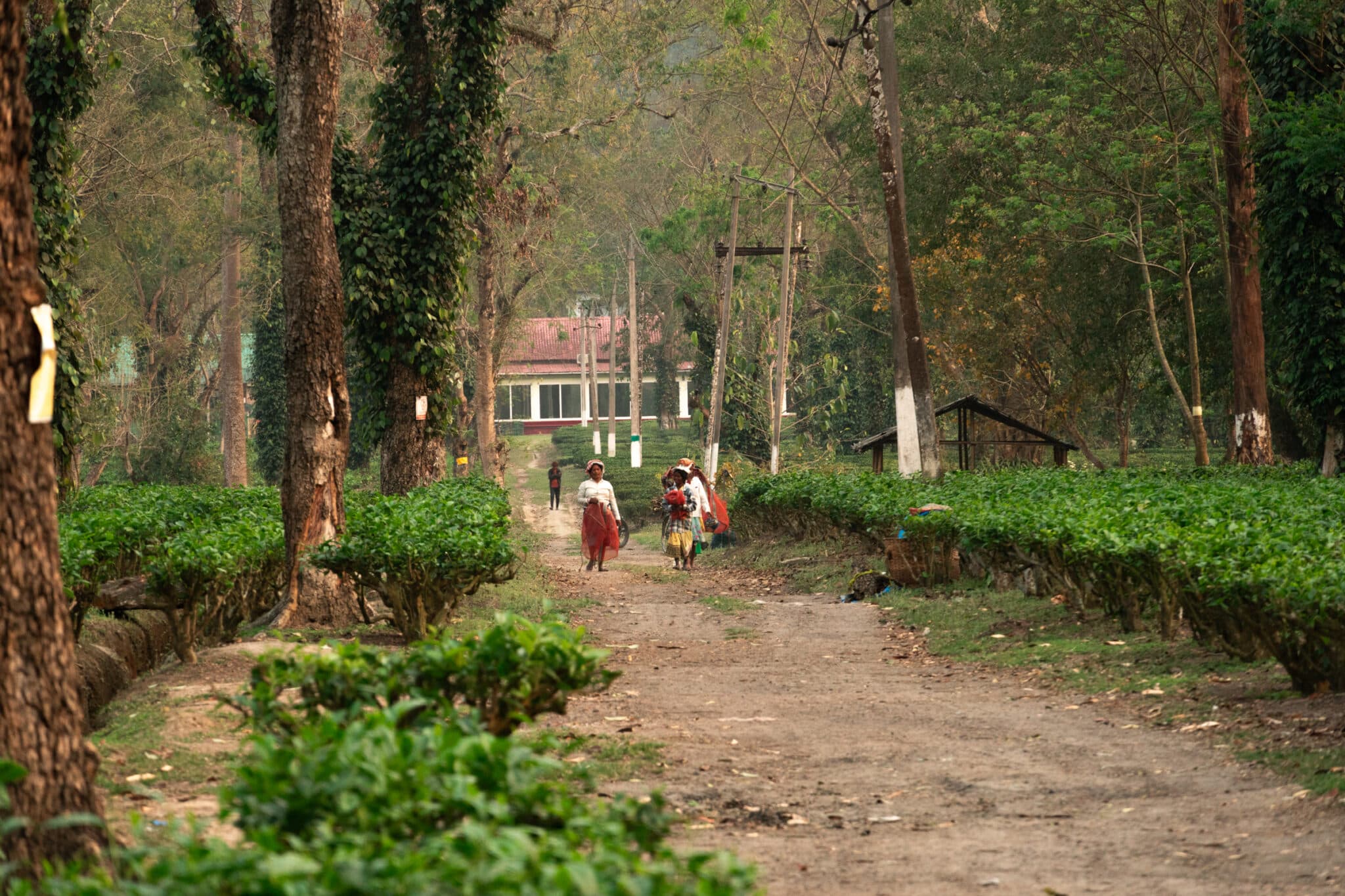
The region is well known for tea production, so take the opportunity to tour one of the many tea estates while you're there. The most well known is Hathikhuli Tea Estate.
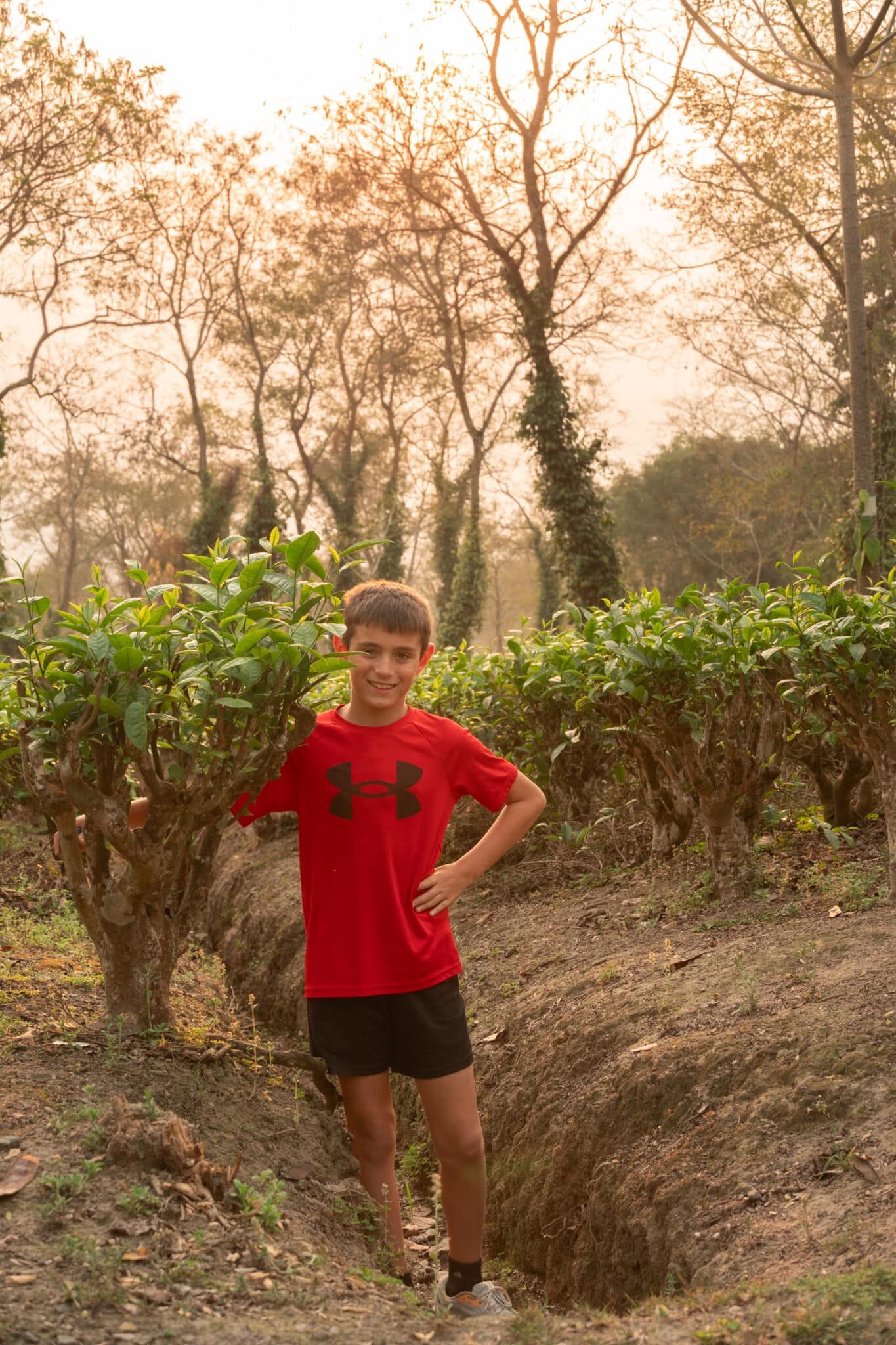
They do offer a tour of the tea factory, but you need to make an appointment in advance for that. We had asked our hotel to arrange one, but it wasn't being offered during our visit. Regardless, we were able to stop by while sightseeing and our driver gave us a mini tour of the grounds. We were able to take a walk in the fields where the tea is grown, and even met some workers who showed us how they harvest the leaves.
The tea shop, Tea Cove, is a cute spot to get a cup of tea. But they didn't have any kind of organized tasting, which was a disappointment. I'm not a tea drinker, so would have enjoyed a Napa-esque tasting with some education on the various types of tea. So... eh… it was kind of a miss for me. If I were to visit the area again, I would try to time my visit to when the factory is operating to see that in action!
Brahmaputra River Excursion
The mighty Brahmaputra River flows just north of Kaziranga and is an essential part of life in Assam. While it's not as heavily touristed as other riverfronts in India, you can arrange for a boat ride or sunset cruise with a little advance planning. Some operators offer dolphin-watching excursions (yes, there are freshwater dolphins here!), and the views of the surrounding hills and countryside from the water are beautiful. If you're looking for something peaceful and scenic to break up your days of dusty safaris, this is a great option.
More Trip Planning Resources
If you're planning your own Kaziranga National Park visit, be sure to check out these other helpful articles:
Leave a Reply