
Jump to:
There's no bad time to visit the Galápagos - wildlife is here year-round, and that's kind of the whole point of the islands. But the two seasons are genuinely different experiences, and knowing what you're trading off (weather, water temps, wildlife behavior, crowds, and price) will help you pick the right window for your own priorities.
The Two Seasons at a Glance
The Galápagos really only has two seasons, and they're driven by ocean currents more than typical "rainy vs dry" weather patterns:
Warm season (December-May): Despite being the rainier of the two seasons, this is actually the sunniest time of year in the Galápagos. Showers tend to be brief and roll through in the afternoon, clearing up fast and leaving plenty of blue sky in between - that combination of sun and rain is what keeps the landscape green. Air temperatures typically run 77-86°F, seas are generally calmer, and the ocean itself is warmer too - great news if you're snorkeling.
Cool season (June-November): A nutrient-rich current brings cooler water and a misty fog called garúa that can hang over the highlands, especially on Santa Cruz. Air and water temps both drop, with air temperatures typically running 68-77°F. Seas can be choppier, and it's drier overall. The upside? That cool, nutrient-rich water is exactly what draws in some of the best marine wildlife of the year.
Ocean Temps for Swimming & Snorkeling
Water temperature swings more than you'd expect for a spot on the equator. Warm season water runs a pleasant 74-76°F, and many people snorkel without a wetsuit. Cool season water can drop into the low 60s, especially July-August, and a wetsuit becomes a lot more appealing at that point.
That said, cold tolerance is personal. We cruised in early June - right at the edge of the cool season - and didn't find the water especially cold. Neither of us adults wore a wetsuit, just a long-sleeved rash guard for a bit of warmth and jellyfish protection. Our son, on the other hand, wore his wetsuit the whole time and loved the extra warmth and buoyancy. If you run cold, or you're planning to be in the water for hours at a time, pack or rent one. See our packing guide for what we'd bring.
If warm, clear water is your top priority, February and March are generally considered the sweet spot - nearly always warm enough to skip the wetsuit, with good visibility and calm seas.
Wildlife by Season
Most Galápagos wildlife is visible year-round, so you don't need to build your entire trip around a calendar. But each season brings its own particular highlights, and a handful of species are so tied to a specific window that they deserve their own mention - more on those below.
Warm Season Highlights (December-May)
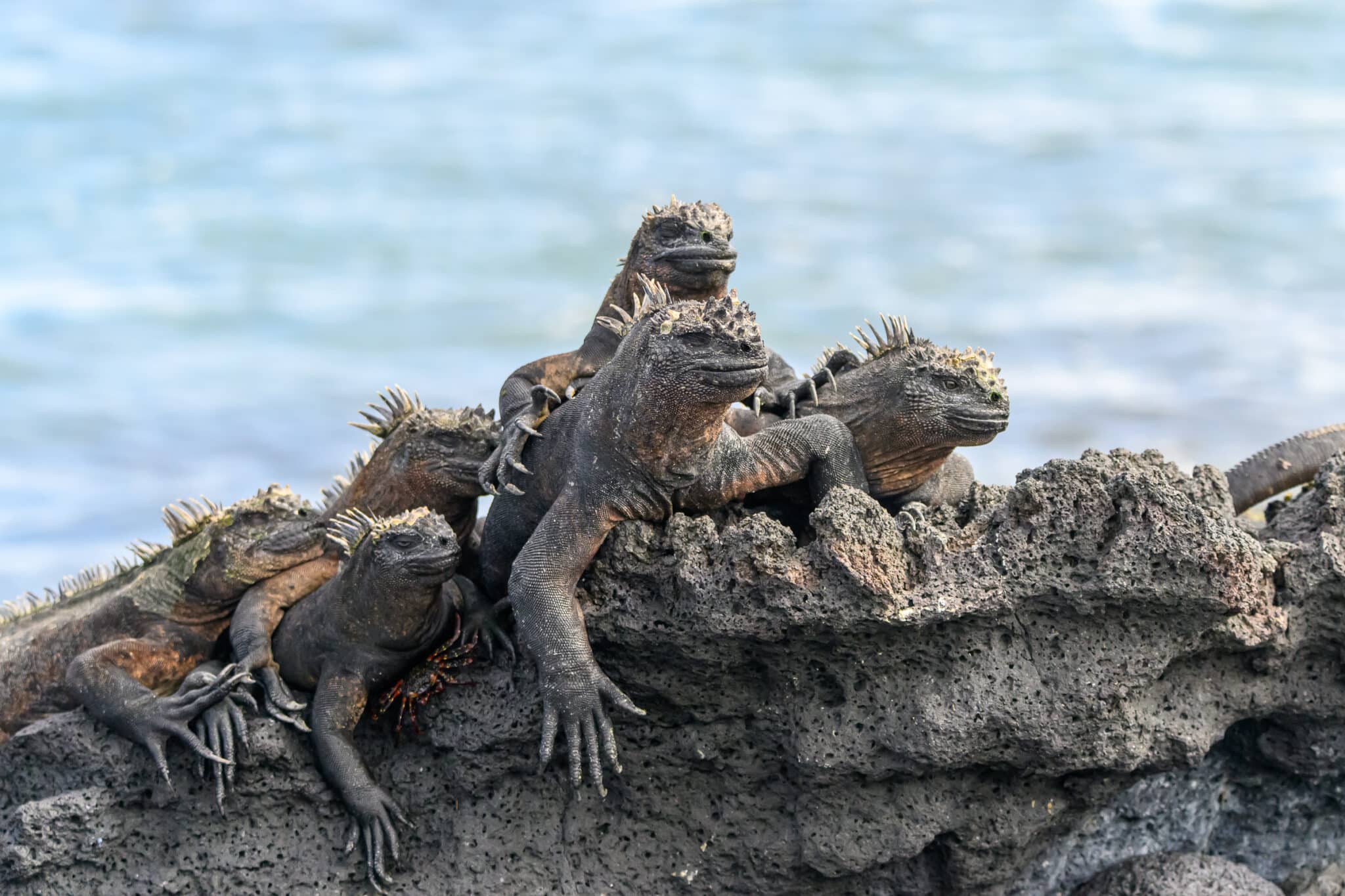
Marine iguanas are at their most photogenic during mating season, when males turn brighter colors. This is especially prevalent on Española, where they turn bright red and green, earning the nickname "Christmas Iguanas". This can be typically be seen from December through March.
The warm season is also when green sea turtles come ashore to nest, a process that runs December through June, with hatchlings emerging toward the tail end of that timeframe, generally March through June.
If you're a birder, you should note that the famous waved albatross are entirely absent from Española during January through March, since they migrate out to open ocean for that stretch of time.
Cool Season Highlights (June-November)
The cool season brings in the nutrient-rich Humboldt Current, and that colder, food-rich water is what draws in some of the best marine wildlife of the year.
Galápagos penguins are noticeably more active during these months, since the cooler water means more of the small fish they feed on. The largest populations can be found in Fernandina and the western coast of Isabela Island, reached by liveaboard cruise. But they can also often be spotted at Los Tuneles and Las Tintoreras on Isabela Island.
It's also sea lion pupping season, running roughly August through November and peaking in September - a great time to see new pups wobbling around on the beaches. Fur seals follow a similar pattern a bit later, mating around September and October, with pups most visible in October.
Over on Fernandina, flightless cormorants ramp up their courtship and nesting behavior too, especially in July.
Special Wildlife Considerations
Here are a few key species that may merit planning around, if they are of interest to you.
Blue-footed Booby. Perhaps the most well-loved of the Galapagos birds, these little guys can be found year-round. But if you're hoping to watch their famous courtship dance, that behavior tends to peak in April thru June. So it spans the tail end of warm season and the start of cold season.
Waved Albatross. This rare bird is found only on Española island, and is only present from April through December. For the rest of the year, they're out on the open ocean. Courtship displays run April-May, chicks are raised June through August, and by December the fledglings have left the nest. If seeing a waved albatross matters to you, build your itinerary around a well-timed stop on Española.
Whale Sharks. The reliable window is June through November, specifically out at Darwin and Wolf islands in the far north of the archipelago. This is advanced liveaboard diving territory, not a stop on a standard cruise or land-based itinerary. So this is really only relevant if you're planning a dedicated diving trip.
Hammerhead Sharks. Hammerheads follow a similar pattern to whale sharks. They're often seen from June through November, peaking July-August, with the biggest schools (sometimes hundreds strong) at Darwin and Wolf. The good news is you don't need a specialized dive trip for a shot at seeing hammerheads. Kicker Rock near San Cristóbal can turn up hammerheads during the cooler months too, and it's accessible on a standard day tour.
Humpback Whales. These majestic creatures are only transient visitors, passing through the archipelago each year. June through September is your best window to spot them!
Crowds & Peak Season Pricing
Peak season runs late December-early January (holiday travel) and June-August (northern hemisphere summer break). Expect the highest cruise and flight prices, and the least availability. Book well in advance if you're traveling during these windows.
Quieter months tend to be May, September, and October - fewer crowds, better tour and cabin availability, and often lower prices, without giving up much in the way of weather or wildlife.
Shoulder Seasons: The Sweet Spot
If we had to point you toward one window, it's May or November - the crossover months between the two seasons. You'll often get a mix of the best of both: relatively calm seas, decent water temps, active wildlife, and noticeably thinner crowds and lower prices than the peak months on either side.
September and October are also worth considering if budget and wildlife density matter more to you than warm water. The cool season is in full swing, but crowds are lighter than the July-August peak.
More Galapagos Trip Planning Resources
Still planning the rest of your Galapagos trip? Here's some more resources that you may find helpful:
Leave a Reply