
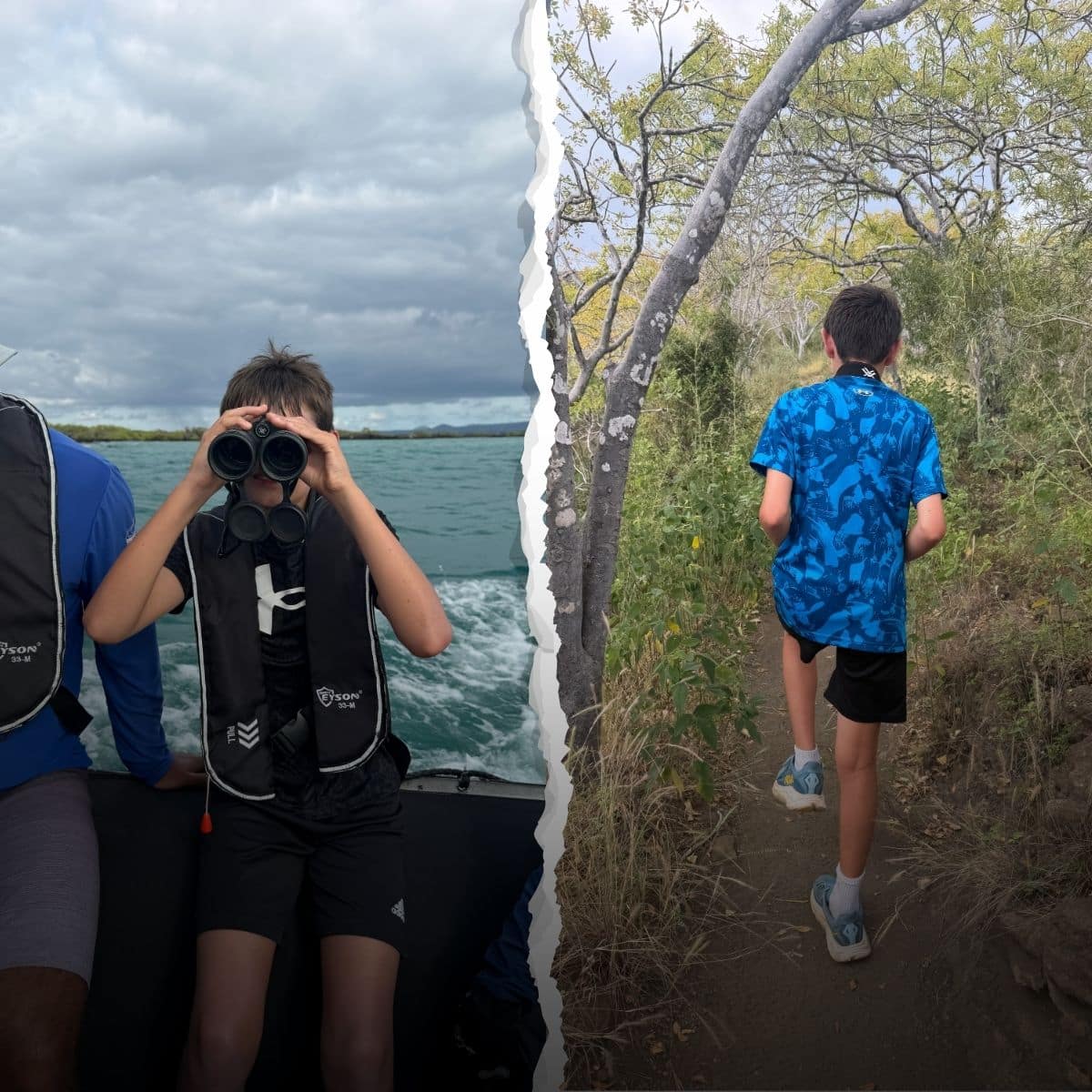
It's the first real decision in planning any Galápagos trip, and it comes before ships, islands, or itineraries: do you book a cruise, or do you base yourself on land and day-trip out from there? We touched on this briefly in our guide to choosing a cruise and promised a full breakdown - so here it is.
Short version: we did a hybrid trip ourselves, spending time on Santa Cruz before boarding a cruise, and we'd recommend that approach if your budget and schedule allow it. But most people have to pick one or the other, so here's how they actually compare.
Jump to:
What a Cruise Trip Looks Like
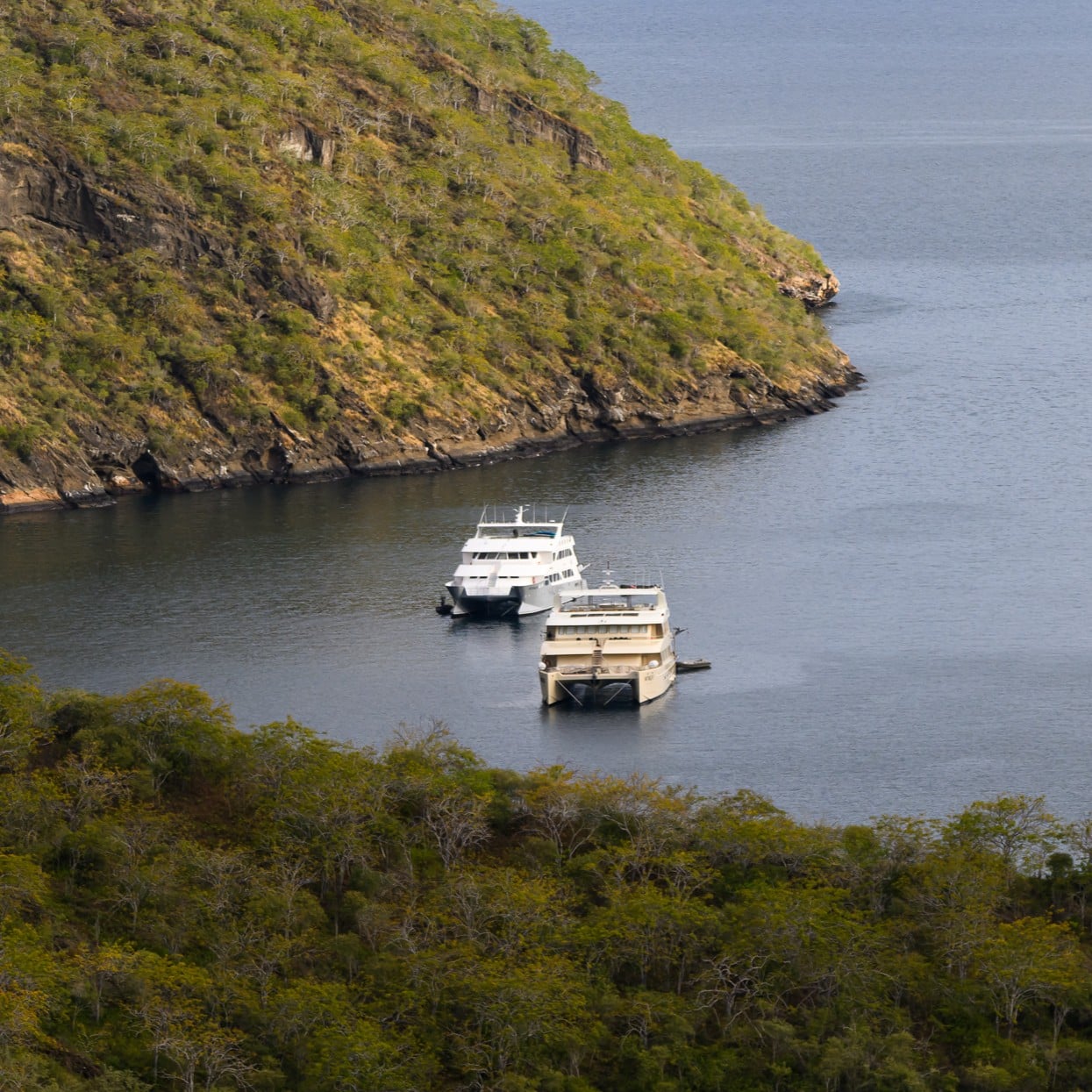
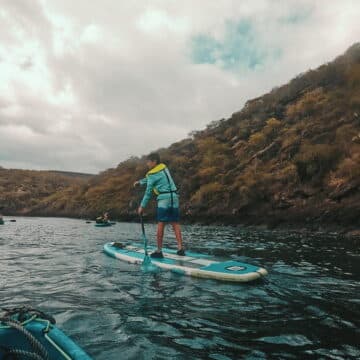
On a cruise, you live aboard a small ship - typically 16-20 guests on the expedition-style boats we'd recommend - that sails between visitor sites overnight while you sleep. You wake up each morning at a brand-new location, take a panga (dinghy) ashore or straight into the water with a naturalist guide, and repeat that a couple of times a day for the length of your itinerary.
The big advantage here is access. A cruise can reach the remote western islands - Fernandina, western Isabela, Genovesa - that simply aren't reachable as a day trip from anywhere you'd be staying on land. We chose our own cruise itinerary specifically to include Punta Espinosa on Fernandina, and it delivered some of the best wildlife viewing of the entire trip.
Pricing is all-inclusive - your cabin, meals, and guided excursions are bundled into one per-night rate, which can range anywhere from $450 to $1,700+ per person, per night depending on ship class. For the full breakdown of what that money gets you and what to expect from the various ship classes, see our guide to choosing a cruise.
What a Land-Based Trip Looks Like
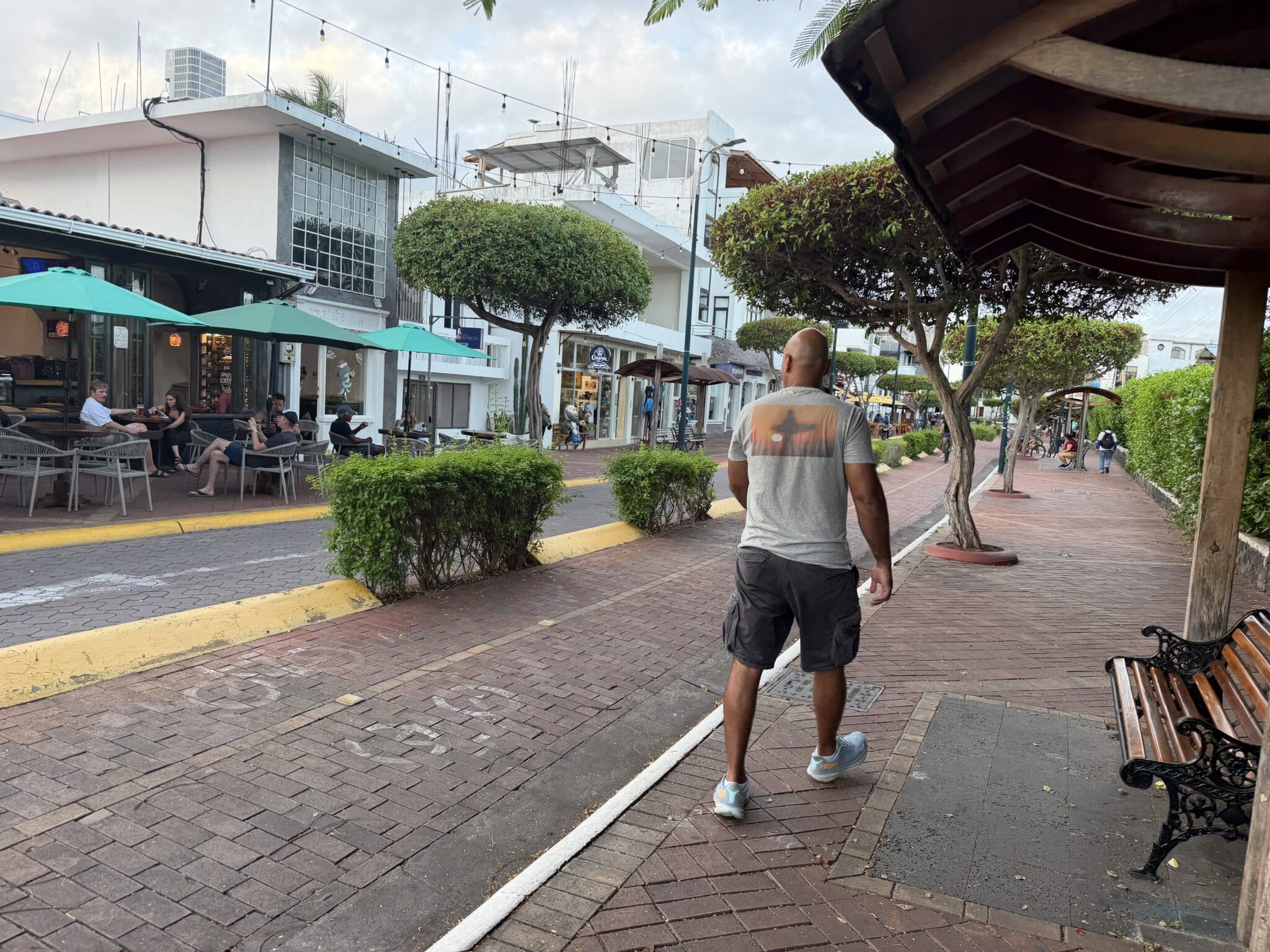
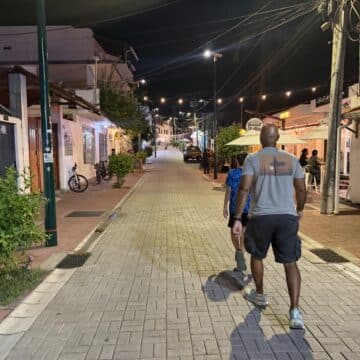
On a land-based trip, you book hotels in one or more of the three inhabited hub towns - Puerto Ayora (Santa Cruz), Puerto Baquerizo Moreno (San Cristóbal), and Puerto Villamil (Isabela) - and book day tours out from each one. We've written full guides to each island here: Santa Cruz, San Cristóbal, and Isabela.
This approach is naturally more flexible and generally cheaper. You're paying for hotels ($50-200+/night depending on comfort level) and day tours ($65-315 per tour) separately, à la carte, rather than one bundled rate. You can skip a day entirely and just relax on the beach, which isn't really an option on a cruise itinerary.
The tradeoff is getting between islands. Ferries run twice daily between the three hub islands, take 2-2.5 hours, and cost $30-38 per person each way - and they're not always a pleasant ride. Small charter flights via Emetebe are faster (40-45 minutes) and more comfortable, but pricier ($150-200 each way) and come with a strict luggage limit. We cover all of this in our Getting There & Getting Around guide.
Wildlife & Site Access
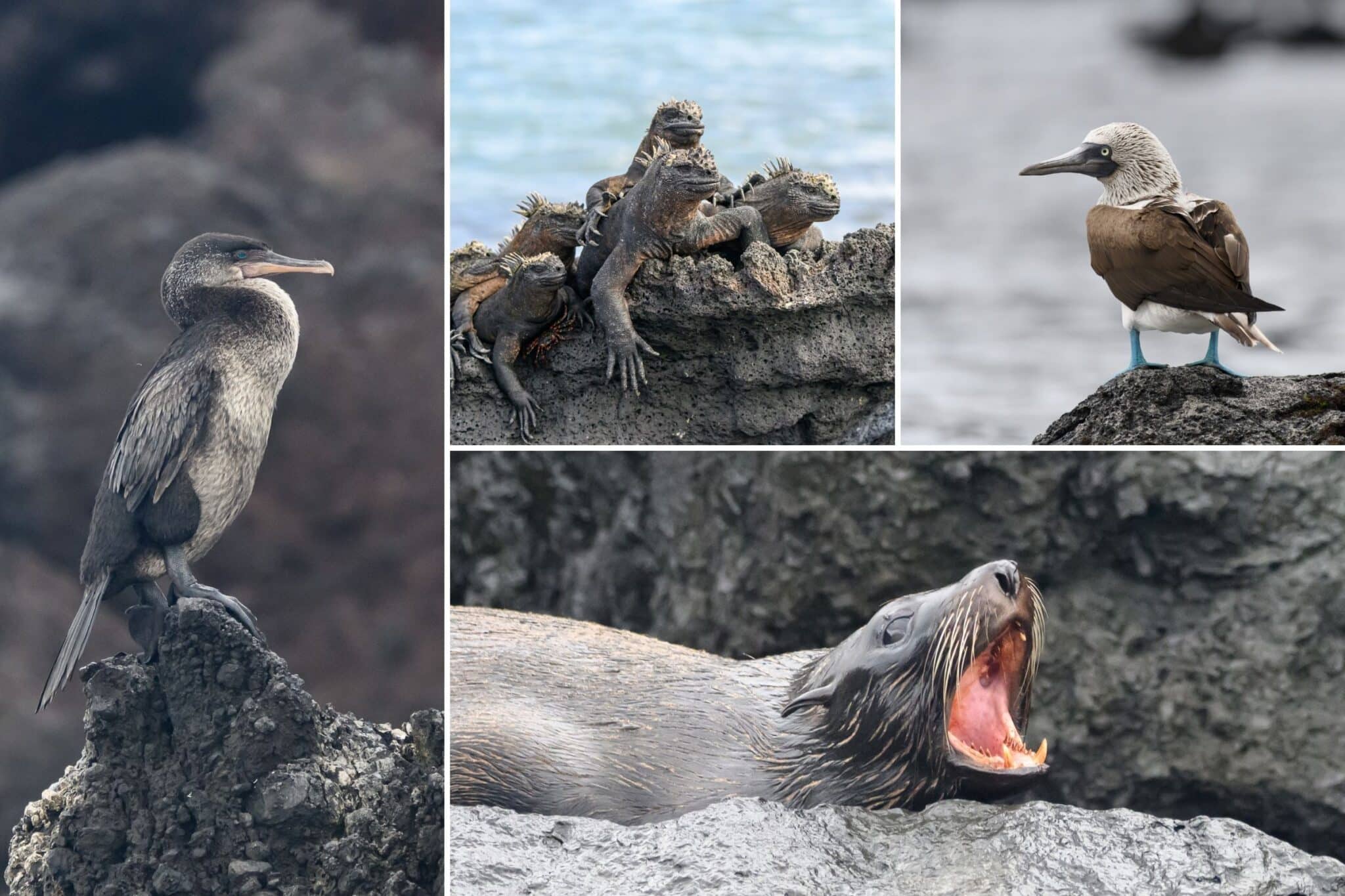
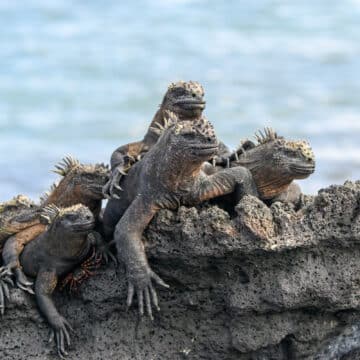
This is where I'll give you my honest, personal take: if incredible wildlife viewing is your main goal, a cruise is going to get you closer to that goal than a land-based trip will. The best, most abundant wildlife sites in the Galápagos tend to be the farthest-flung ones, and those are cruise-only territory.
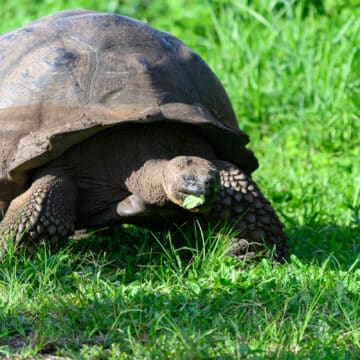
That said, don't let this scare you off a land-based trip - it's a very good option, and the wildlife you'll see from the three hub islands is still excellent. Between DIY sites like Tortuga Bay and Cerro Tijeretas, and day tours to places like Bartolomé, Kicker Rock, and Los Tuneles, you'll come away with a very full wildlife checklist. It's a difference of degree, not of quality.
It's also worth noting that the majority of visitor sites inside the national park require a certified naturalist guide by law, whether you're cruising or land-based. So a land-based trip isn't really about "seeing things on your own" so much as it is about booking your guided excursions individually, à la carte, instead of having them bundled into a cruise itinerary.
I've put together a full island-by-island breakdown of what's DIY, what's a guided day tour, and what's cruise-only if you want to see exactly how that shakes out. I recommend browsing that article to see which sites are most interesting to you as you start to plan, and how they can each be accessed.
Cost Comparison
Even at the budget end (~$450/night), a week-long cruise runs upwards of $3,000 per person, and that's before flights to the islands. A land-based trip of the same length can cost quite a bit less - modest hotels, a handful of day tours, and inter-island ferries can bring a week down into the $1,500-2,500 per person range, depending on how many tours you book and how comfortable a hotel you choose.
The flip side is that a cruise is a fixed, predictable cost with everything bundled in, while a land-based trip requires more active planning and a bit more budget creep - it's easy to keep adding "just one more tour" once you're there. Check out my guide to Galapagos trip costs for more help with budget planning.
Comfort, Pace & Seasickness
A cruise means near-constant movement - overnight repositioning between islands, plus panga rides multiple times a day. If you're prone to seasickness, that's worth taking into consideration. Smaller ships tend to feel it more than larger ones.
A land-based trip puts you on solid ground every night, which is a real relief for some travelers. But it's not entirely smooth sailing (sorry, couldn't help it!) either. The interisland ferries themselves cross open ocean and can be very rough, especially on afternoon crossings. If you're island-hopping by ferry, book the early morning departure when you can.
Which Should You Choose?
A few rules of thumb, based on what we'd tell a friend:
Choose a cruise if: wildlife variety and abundance is your top priority, you don't mind a higher fixed cost for the convenience of an all-inclusive itinerary, and you're comfortable on a moving ship.
Choose land-based if: you're traveling with very young kids, want more flexibility and downtime, are working with a tighter budget, or simply prefer to sleep in the same bed every night.
Do both if you can! A few land-based days on Santa Cruz or San Cristóbal followed by a shorter 4-5 night cruise gives you the best of both worlds. Time to acclimate and explore at your own pace, plus access to the remote sites you can't reach any other way. If I had all the time in the world, I would spend a few nights on each of three main islands and then take a cruise to the outer islands. Maybe when I retire!
More Galapagos Trip Planning Resources
However you decide to structure your trip, the good news is that there's no wrong answer here - every route through the Galápagos delivers wildlife you won't see anywhere else on Earth.
Still planning the rest of your Galapagos trip? Here's some more resources that you may find helpful:
- How to Choose a Galapagos Cruise - ship classes, budget, and itineraries
- Our Ecogalaxy Cruise Review - a day-by-day look at what a Galapagos cruise actually looks like
- Galapagos, Island by Island - a full breakdown of every island and visitor site in the archipelago
- Galapagos Islands: Getting There & Getting Around - flights, fees, ferries, and money logistics
- Things to Do on Santa Cruz Island
- Things to Do on San Cristóbal Island
- Things to Do on Isabela Island
- What to Pack (and not pack) for a Galapagos Cruise! - our real packing list
Leave a Reply